Tangerine vs Sweet Orange Oil: How to Choose
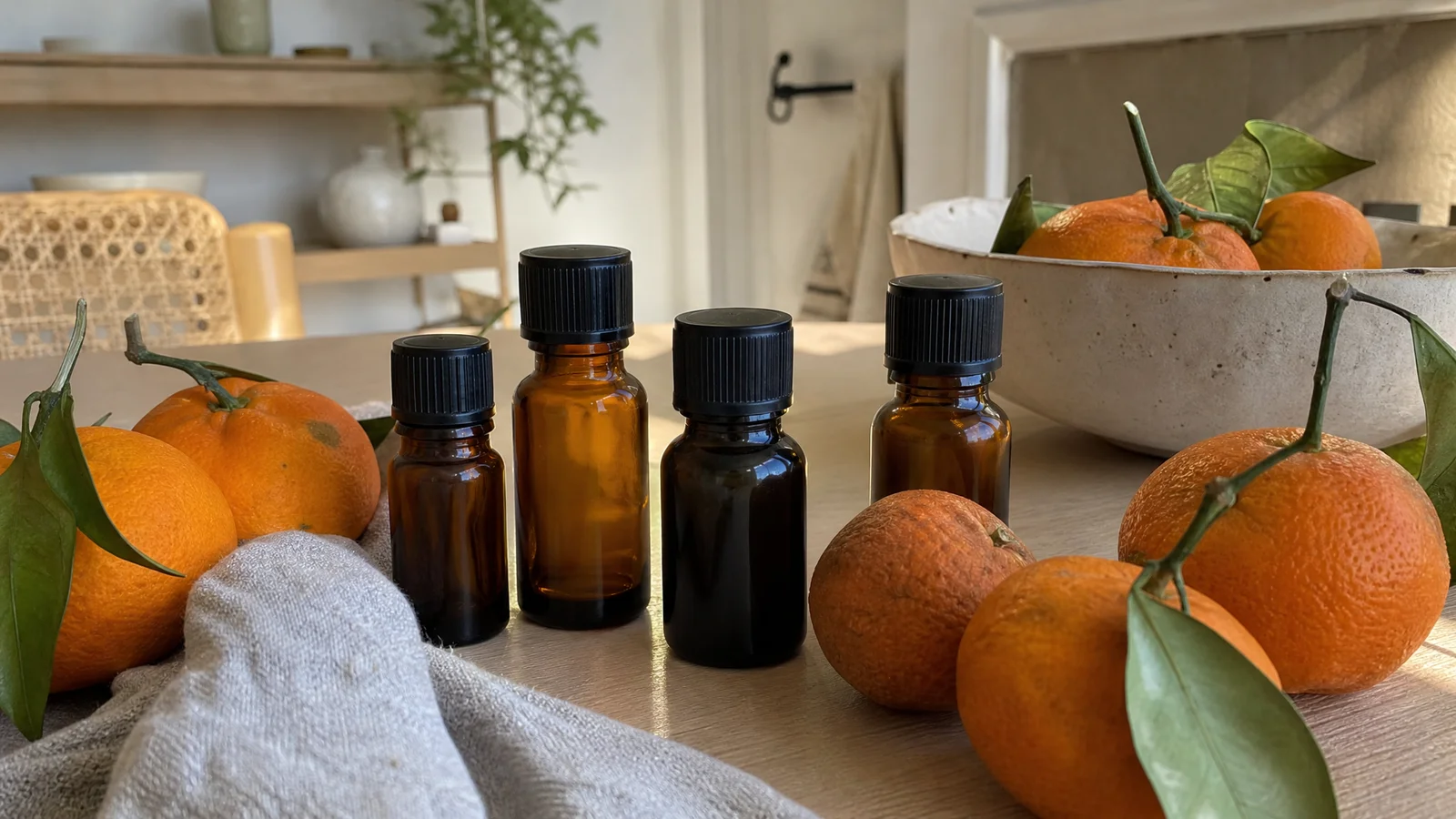
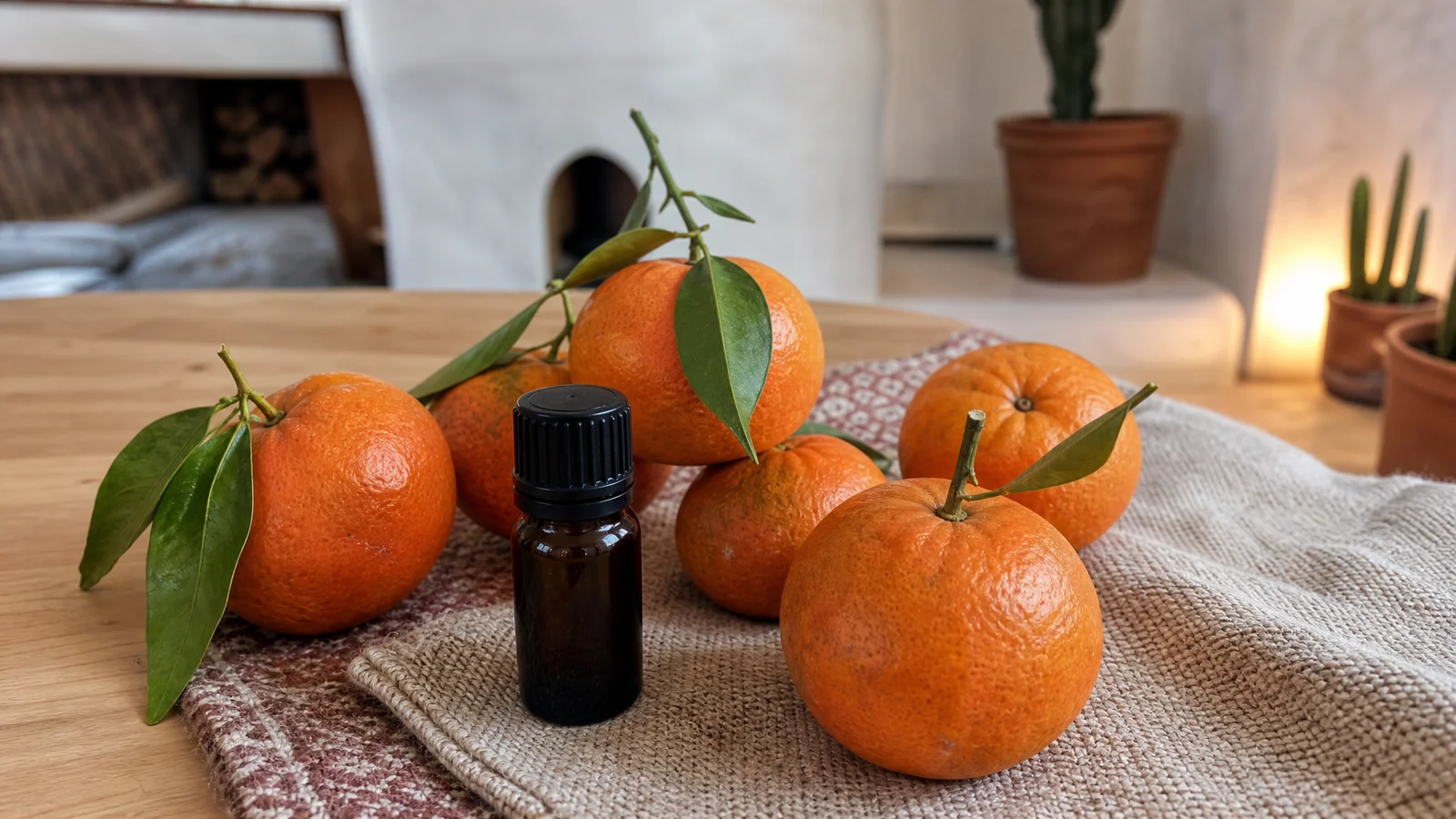
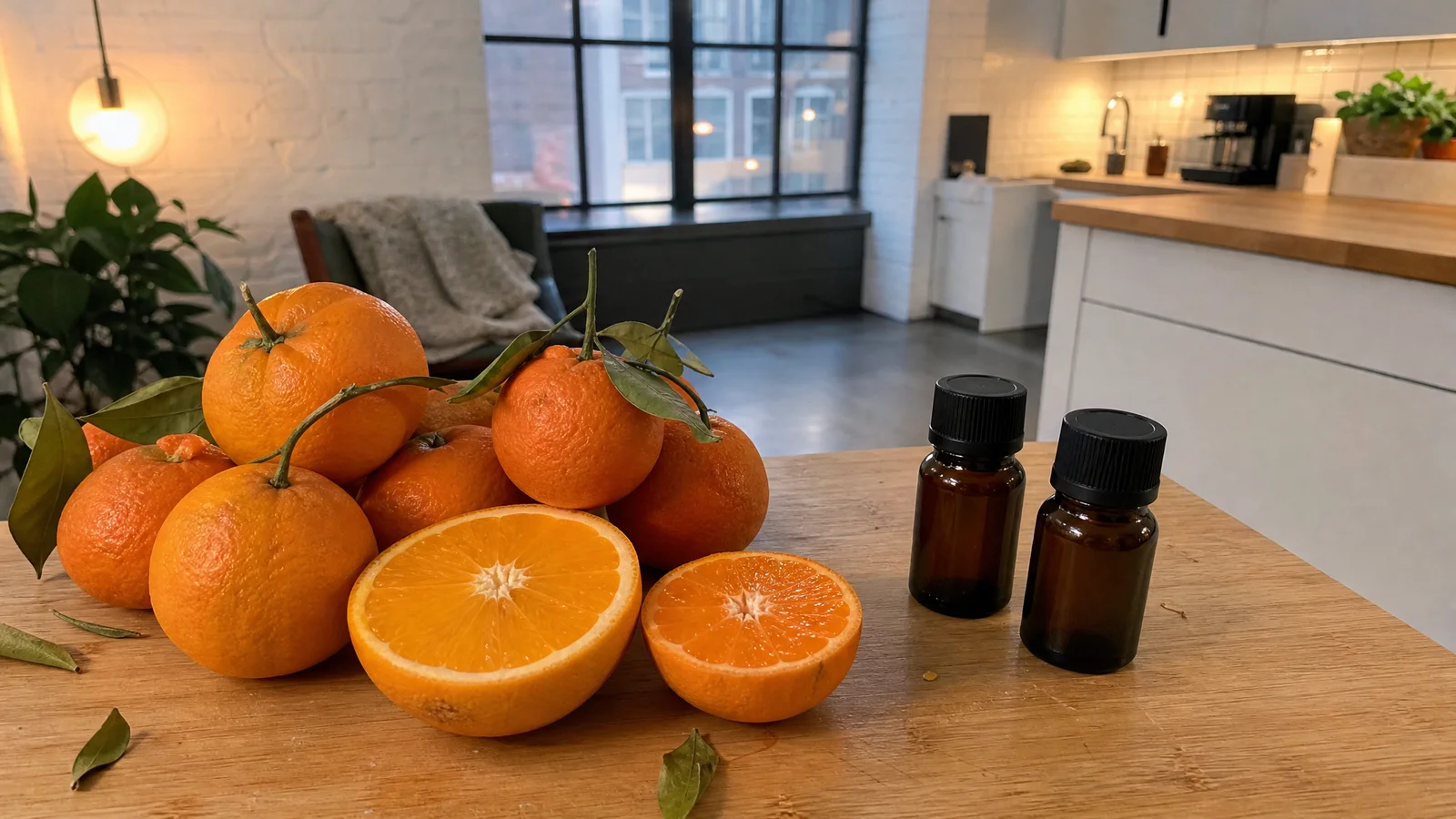
On a shelf, tangerine and sweet orange oil look like twins: orange-gold, sunny, citrusy. In the bottle they behave alike too, which makes swapping them tempting. They are not identical, though, and knowing where they differ makes it easier to choose.
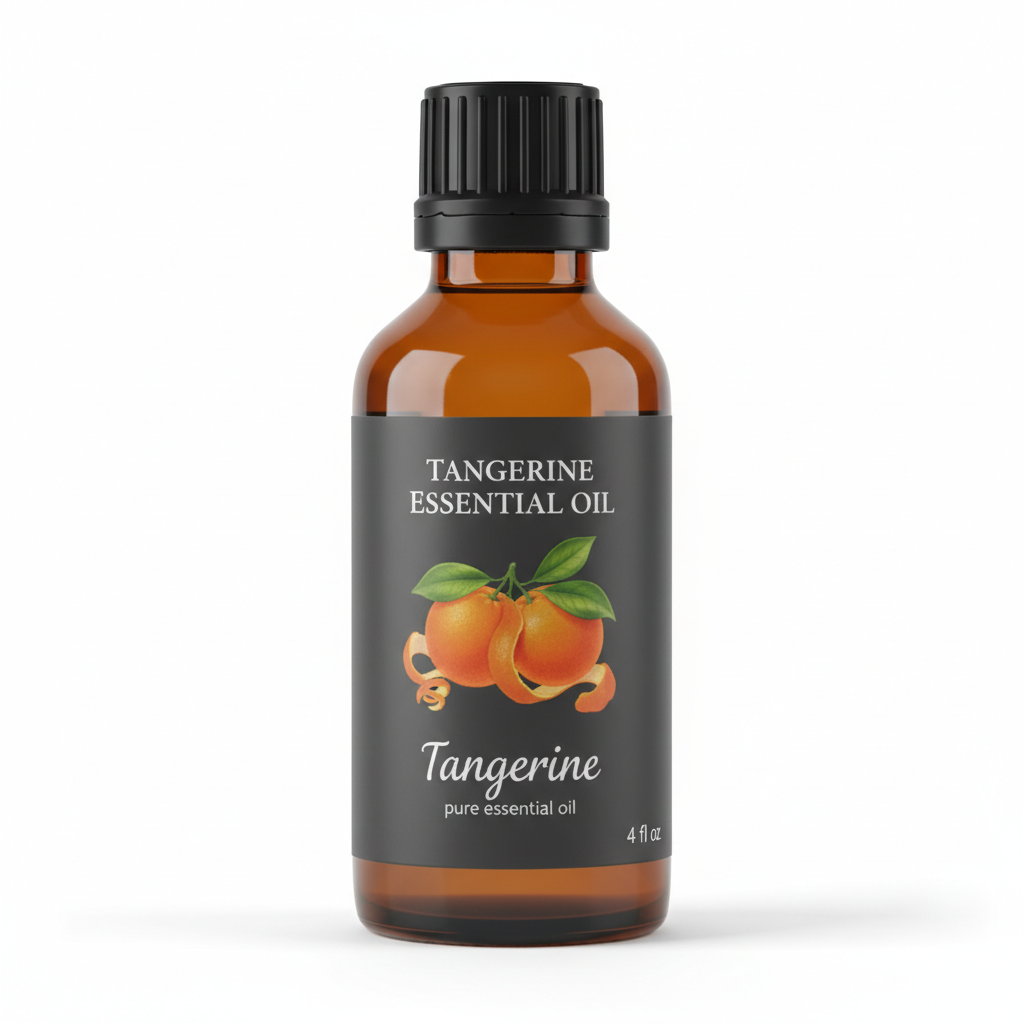
Tangerine Essential Oil
Our own Tangerine Essential Oil, in sizes from 0.5 oz to bulk.
From $12.99
Shop Now →Two oils built on limonene
Both are mostly limonene. The European Food Safety Authority's specification for expressed sweet orange oil sets limonene at 93 to 97 percent, and five batches it reviewed came in at about 94 to 95 percent. For expressed mandarin oil, the closest EFSA analysis to tangerine, limonene is 65 to 80 percent, with gamma-terpinene as a strong second at 13 to 22 percent. That second component is one way a mandarin-type oil differs on paper from a straight orange. Tangerine can vary, so it is worth asking for a gas chromatography report if you need to know exactly; the certificate we publish for one batch of our oil lists density, refractive index and optical rotation, and you can ask us in writing through the contact page for more. Our report-reading guide shows what a composition report looks like.
How they smell
We describe our tangerine as vivid, juicy and sweet, candy-bright, a top note with sparkle. We sell no sweet orange, so we will not claim to out-describe it, and we suggest smelling both before choosing if you can. What we can say is that the two blend well together: sweet orange is on the list of oils we name as partners for tangerine, alongside vanilla, cinnamon, neroli, bergamot and ylang ylang.
The same storage rules
Because both are limonene-rich, both oxidise the same way. In a patch-test study of 2,900 dermatitis patients, 5.2 percent reacted to a standardised oxidised limonene preparation, while limonene that had not been oxidised was not allergenic or only very weakly so. The practical habits are the ones we use for tangerine: a tight cap, a cool shelf out of the light, and an amount you will use within typically 12 to 18 months. The storage guide goes through them.
Sun and skin
Here the evidence is more nuanced. EFSA reported that furanocoumarins were below detection in five batches of expressed sweet orange oil, yet a 2022 laboratory survey using a more sensitive method found some: about 140 parts per million in navel orange oil and about 69 in Valencia, against about 94 in Brazilian tangerine and about 2 in an Italian sample. Different methods, different samples, and no one answer. Our advice for tangerine is therefore plain: dilute to 0.5% to 2%, patch test, and keep freshly treated skin out of strong sun. Treat any cold-pressed citrus oil the same way. For more, see our sun-sense article.
Smelling them side by side
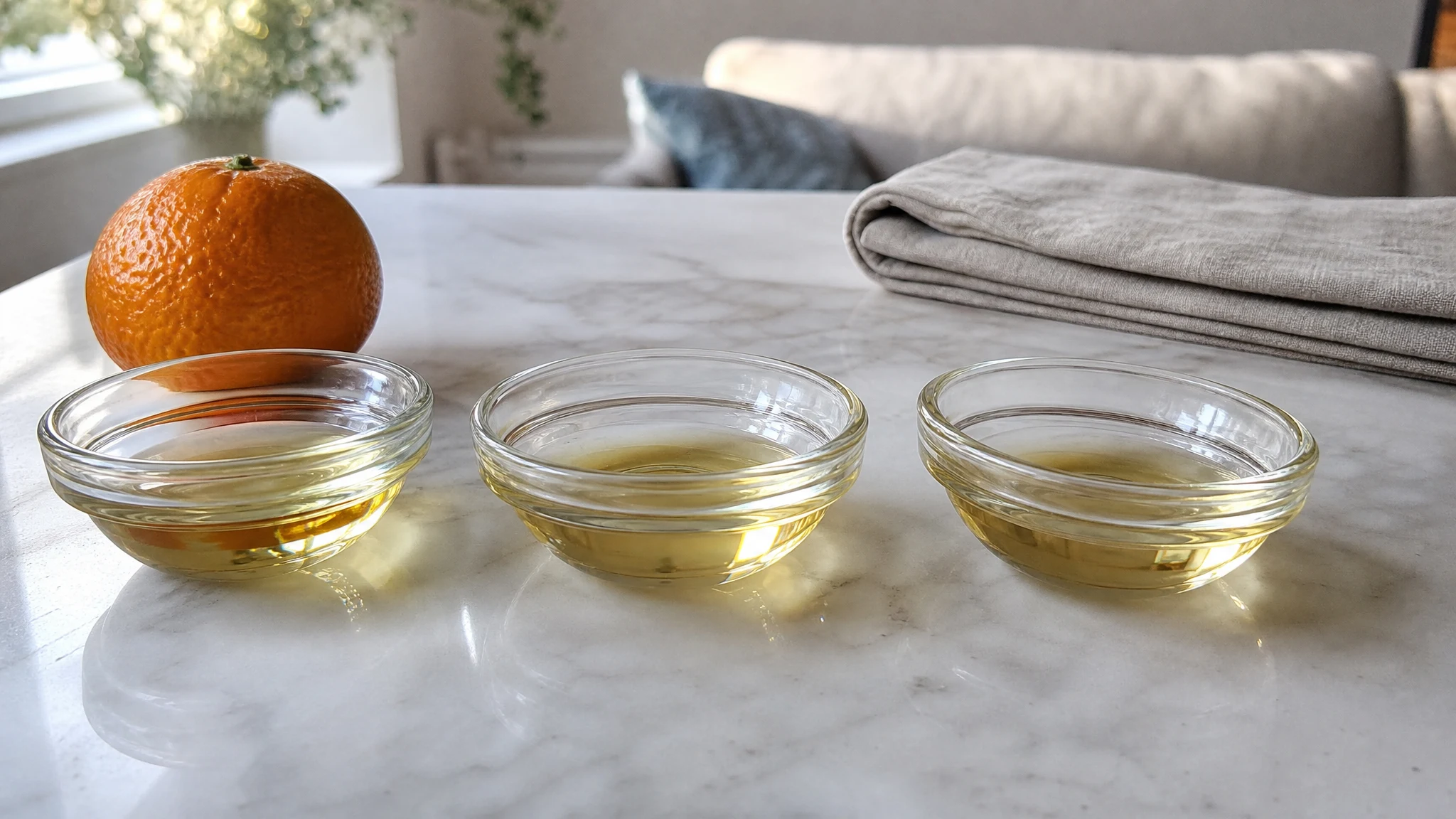
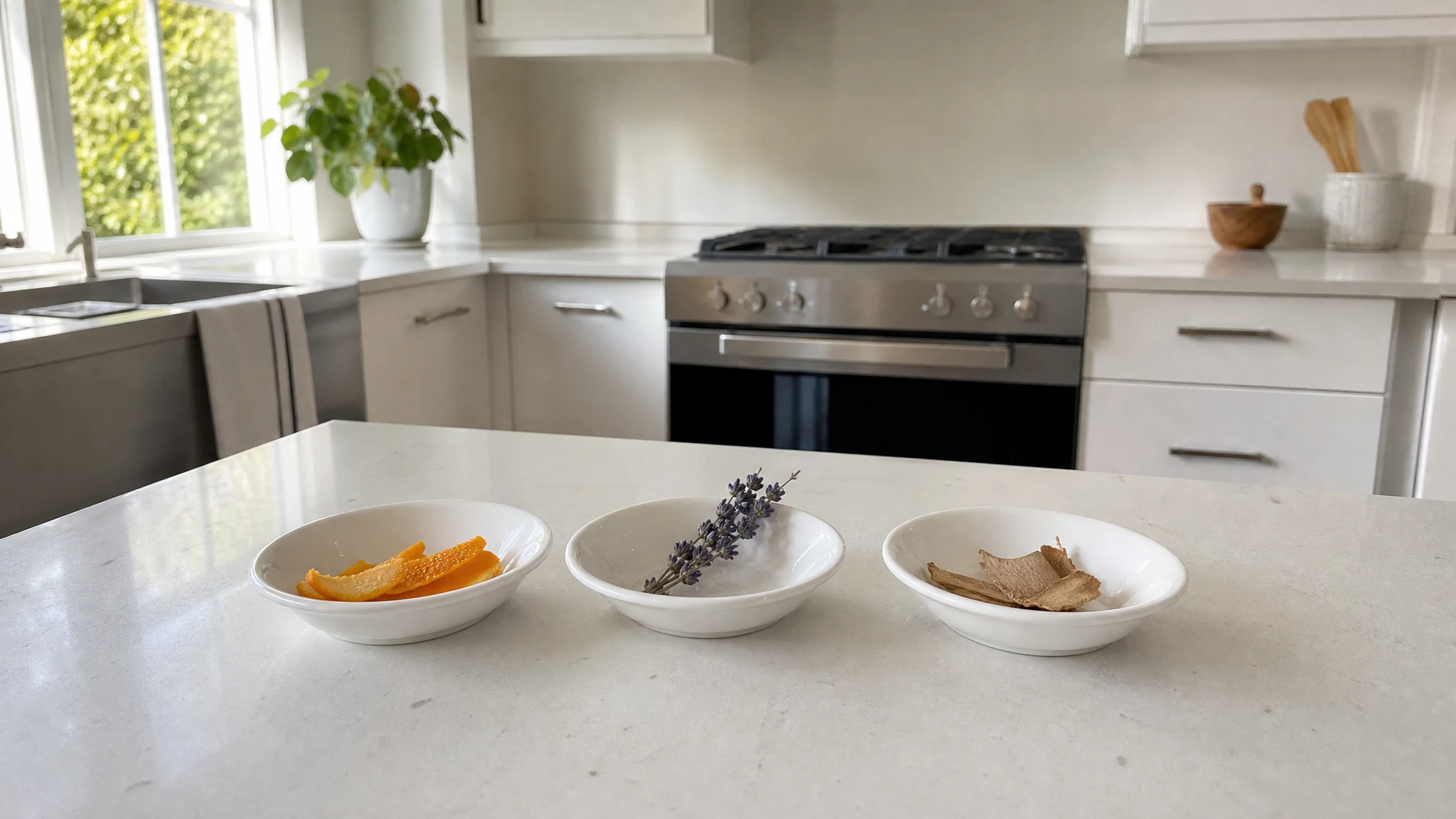
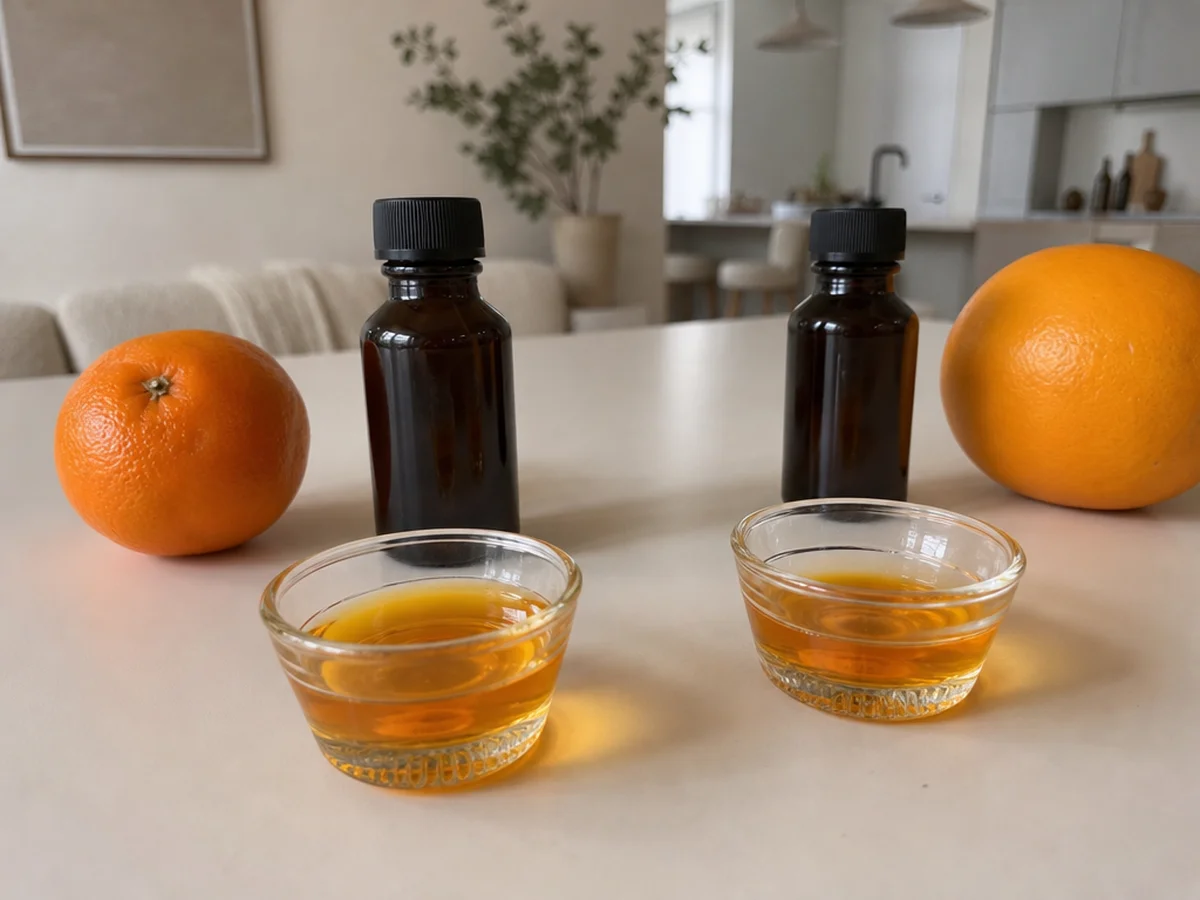
Put a drop of tangerine on one paper strip and a drop of sweet orange on another, then fan them under your nose like a hand of cards. Take your time and smell the strips again after ten minutes and after an hour. Notice which one you keep returning to, and which one thins out first. It takes a few minutes, costs next to nothing and teaches you more than any description, including ours.
Two voices, one tune
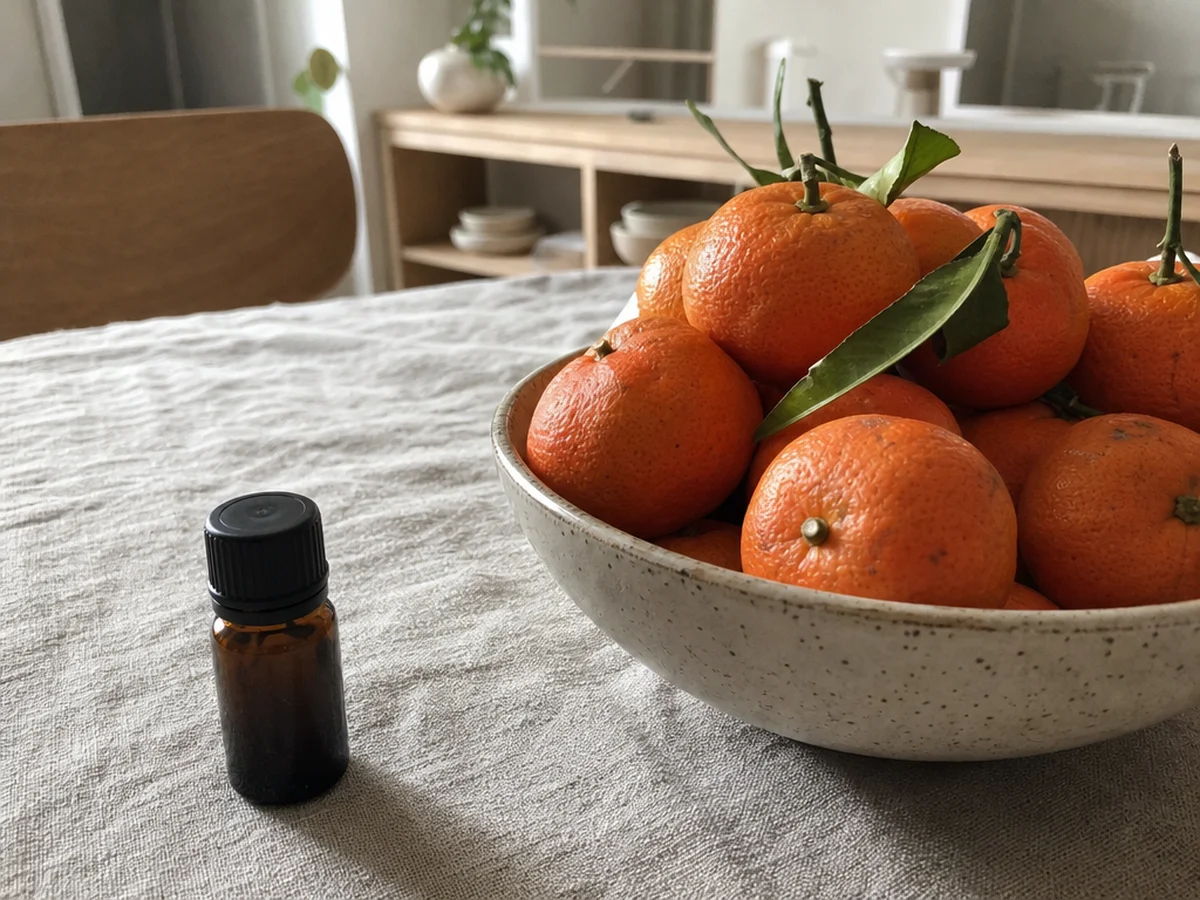
Think of them as two voices singing the same tune. In a diffuser, one drop of tangerine and one of sweet orange make a friendly pair, and it takes seconds to find out whether you like it. In anything that touches skin, count both oils toward one total, since the percentage that matters is the sum.
A sunny-afternoon test
If you want to see the difference for yourself, try each oil on its own in the diffuser on separate days, with the same number of drops and the same room. Keep notes on how quickly each one fills the space and how it smells when you walk back in after an hour. Notes beat memory every time, and they make your next order a confident one.

Choosing between them
- Choose tangerine when you want a lively, candy-bright top note with a little more sparkle, for example in a cinnamon and vanilla diffuser blend.
- Choose sweet orange (from a craft or aromatherapy supplier) when you want a straightforward orange and a recipe that specifically calls for it.
- Use both when a blend wants depth. Start with fewer drops of each than a single-citrus recipe suggests and adjust by nose.
For help turning drops into dilutions, our dilution guide does the sums, and our mandarin comparison covers tangerine's closest relative.
A last practical note: because we sell neither a diffuser nor a carrier oil, a trip to a craft or home store is part of any project, and the diffusing and dilution guides above tell you what to look for. Start with the smallest bottle of whichever oil you choose, and you will learn your preference quickly. Our tangerine is in the shop, and if you use it regularly, see our bulk page and our guide to buying tangerine oil in bulk.
Either way, you are choosing between two sunny oils, and there are worse problems to have on a grey afternoon.
Tangerine Essential Oil
Tangerine Essential Oil from our own shop, in sizes from 0.5 oz to bulk.
From $12.99
Shop Now →Sources & Further Reading
- Safety and efficacy of feed additives consisting of expressed sweet orange peel oil and its fractions from Citrus sinensis (L.) Osbeck for use in all animal species (FEFANA asbl) (EFSA Journal, 2021)
- Safety and efficacy of a feed additive consisting of expressed mandarin oil from the fruit peels of Citrus reticulata Blanco for use in all animal species (FEFANA asbl) (EFSA Journal, 2021)
- An international multicentre study on the allergenic activity of air-oxidized R-limonene (Contact Dermatitis, 2013)
- Authentication of Citrus spp. Cold-Pressed Essential Oils by Their Oxygenated Heterocyclic Components (Molecules, 2022)