Tangerine vs Mandarin Oil: Which Suits You Better?
Ask ten people whether a tangerine is a mandarin and you will get a few shrugs and an argument. The honest answer is that they are close cousins and the words overlap, which makes the choice between the two oils more about aroma and paperwork than about a hard line between fruits.
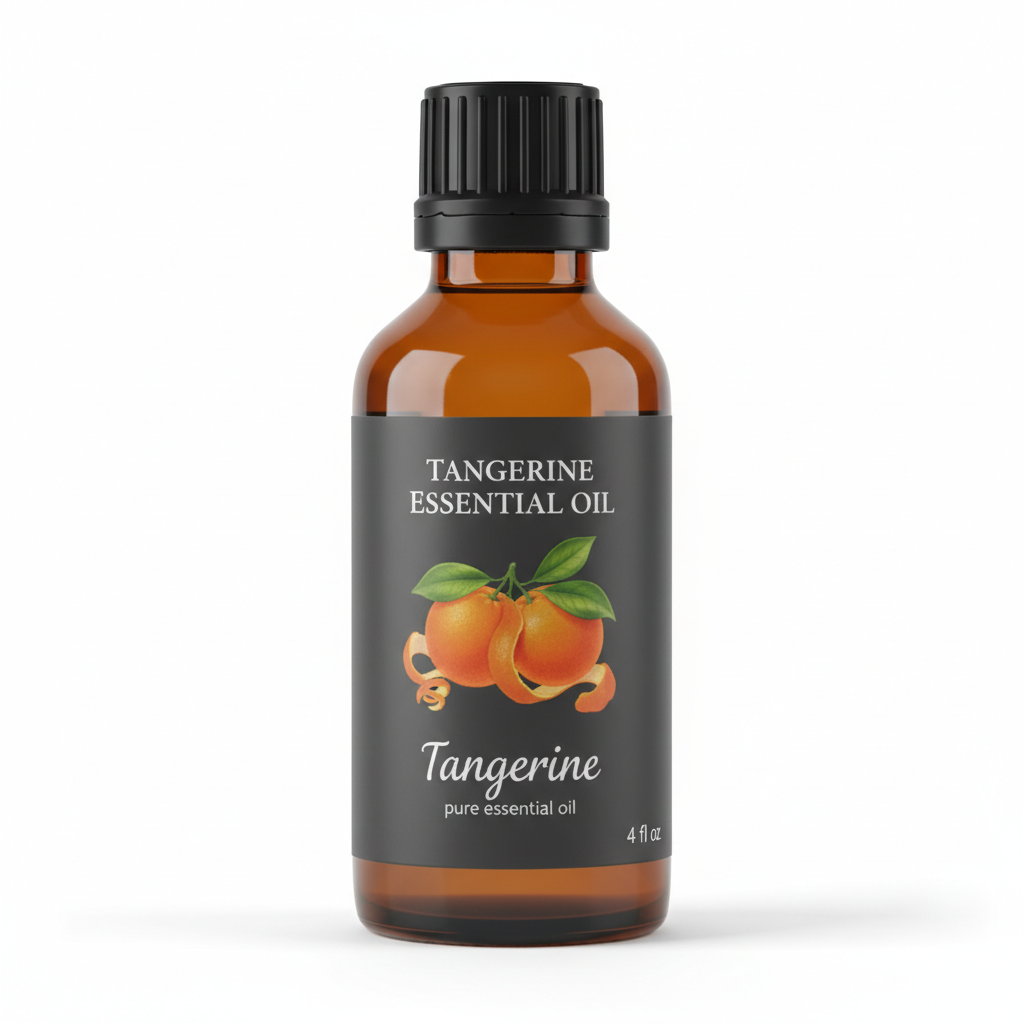
Tangerine Essential Oil
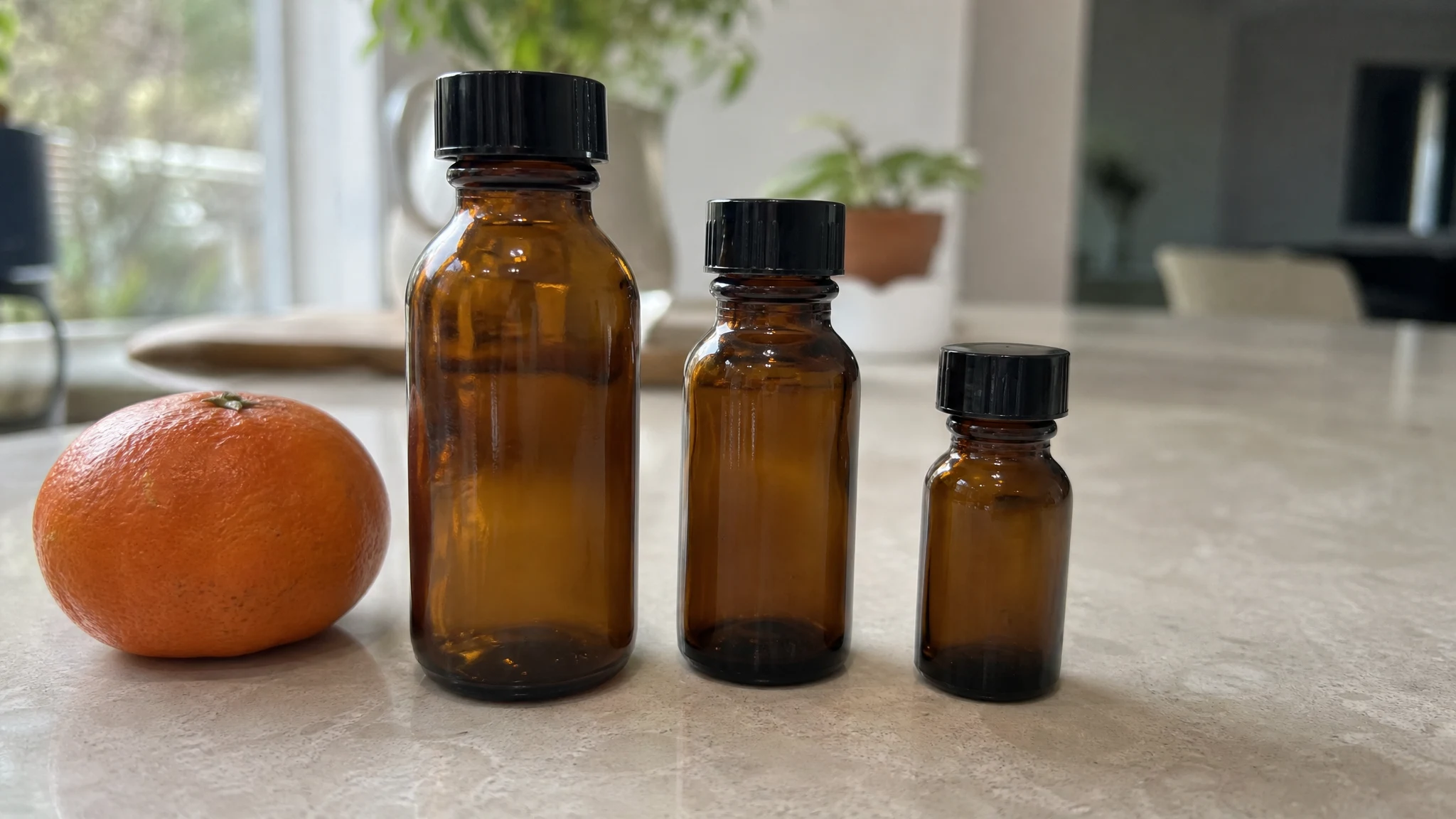
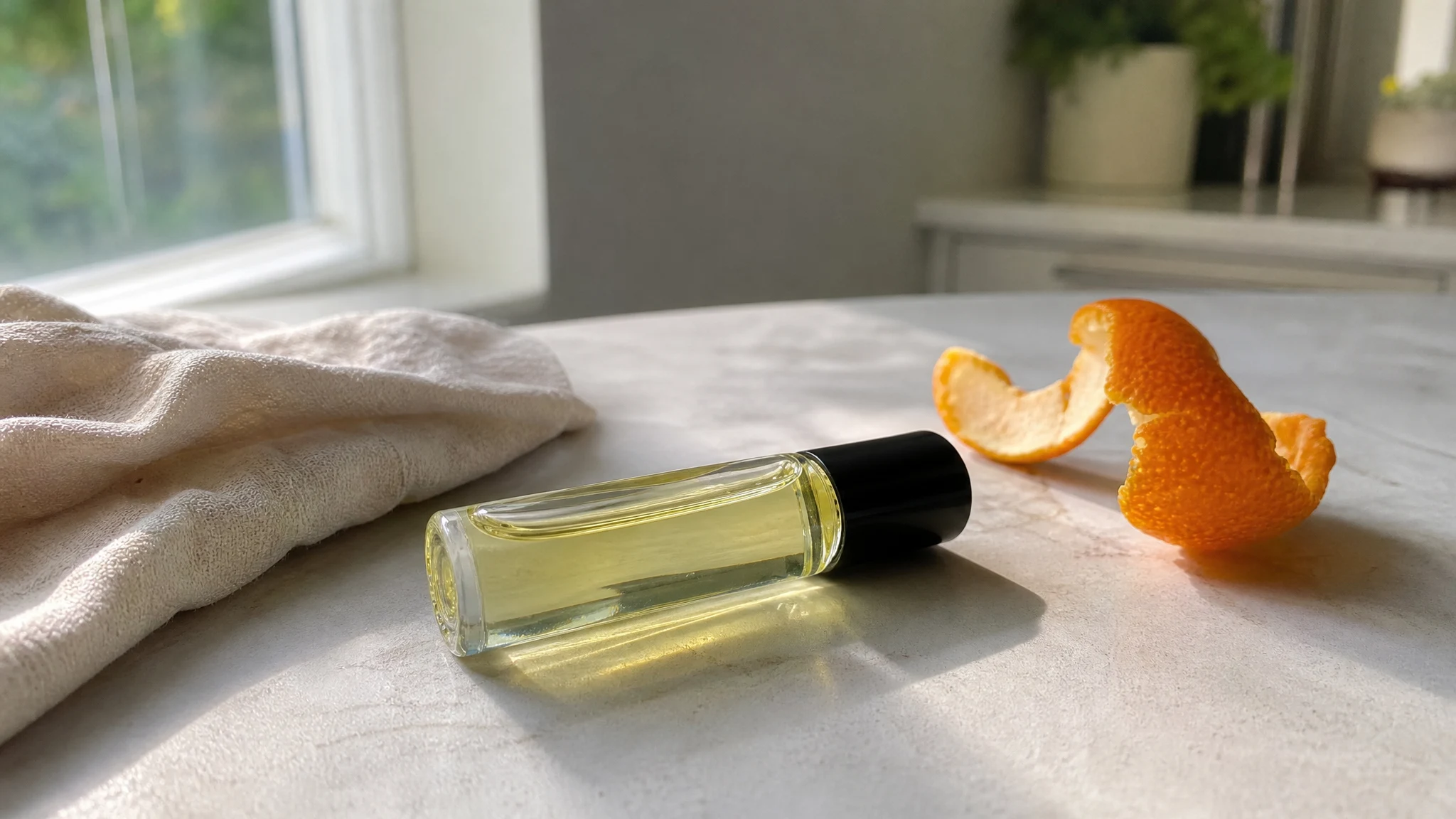
Our own Tangerine Essential Oil, in sizes from 0.5 oz to bulk.
From $12.99
Shop Now →Same family, different filing
The European Food Safety Authority treats tangerines and satsumas as belonging to the same species as the mandarin, Citrus reticulata Blanco. A large 2022 survey of cold-pressed citrus oils filed tangerine, clementine and mandarin on separate lines, and a 2025 review of citrus genetics explains the gap: one classification lumps similar fruit together, another gives every variety its own species. The certificate we publish for one batch of our oil names Citrus reticulata. We sell tangerine only and have no mandarin to promote, so our interest here is helping you choose.
How they smell
We describe our tangerine as vivid, juicy and sweet, candy-bright, with more sparkle and less floral hush than mandarin. That is the cleanest way we know to put it: if you want the sunnier, zestier note, tangerine is the one; if you would like a little more floral hush, mandarin is the neighbour to look at, and you will find it at a craft or aromatherapy supplier. Both are top notes, so both are best fresh.
What the numbers add
Composition gives a more interesting picture. EFSA's specification for expressed mandarin oil puts limonene at 65 to 80 percent and gamma-terpinene at 13 to 22 percent, and ten batches it reviewed averaged about 66 percent limonene. A 2021 study of commercial and premium reference oils recorded a premium tangerine sample at about 93 percent limonene with gamma-terpinene near 3 percent, and several of the mandarin oils it bought online looked closer to sweet orange. In other words, the name on the bottle does not reliably predict the profile, and one sample is not a rule. A gas chromatography report is the way to see which kind of oil you are holding. If you would like one for ours, ask us in writing through the contact page; the certificate we publish lists density, refractive index and optical rotation for one batch. Our report-reading guide shows what to look for.
Why we are happy to say "smell both"
It might seem odd for a shop with one oil to tell you to go and sniff another, but we would rather you end up with the bottle you will actually enjoy. A scent you love gets used, finished and reordered. A scent you chose by name alone often sits in a drawer. Give yourself ten quiet minutes, a clean tissue and a window for fresh air between sniffs, and trust what your nose tells you.
Sun and skin
The Tisserand Institute puts both expressed mandarin and expressed tangerine on its list of citrus oils with extremely small amounts of furanocoumarins, not enough to make them phototoxic. The 2022 survey shows the numbers still vary: tangerine from Brazil about 94 parts per million, Italian tangerine about 2, and mandarin oils between roughly 19 and 38. For that reason our advice for our own oil is simple: dilute to 0.5% to 2%, patch test, and keep freshly treated skin out of strong sun. The sun-sense article has the detail.
A side-by-side smelling session
The best comparison costs almost nothing. If you can get a small bottle of mandarin from a craft or aromatherapy supplier, put a drop of each on separate paper strips, label them and smell them together. Take one slow sniff of the tangerine, rest your nose for a minute, then smell the mandarin. Pay attention to which one makes you want another sniff. Try again an hour later and the next day, because first impressions are often not the ones that stay. Write down the words you use, whether it is sherbet, zest, candy or flower. Your own words are better than ours.
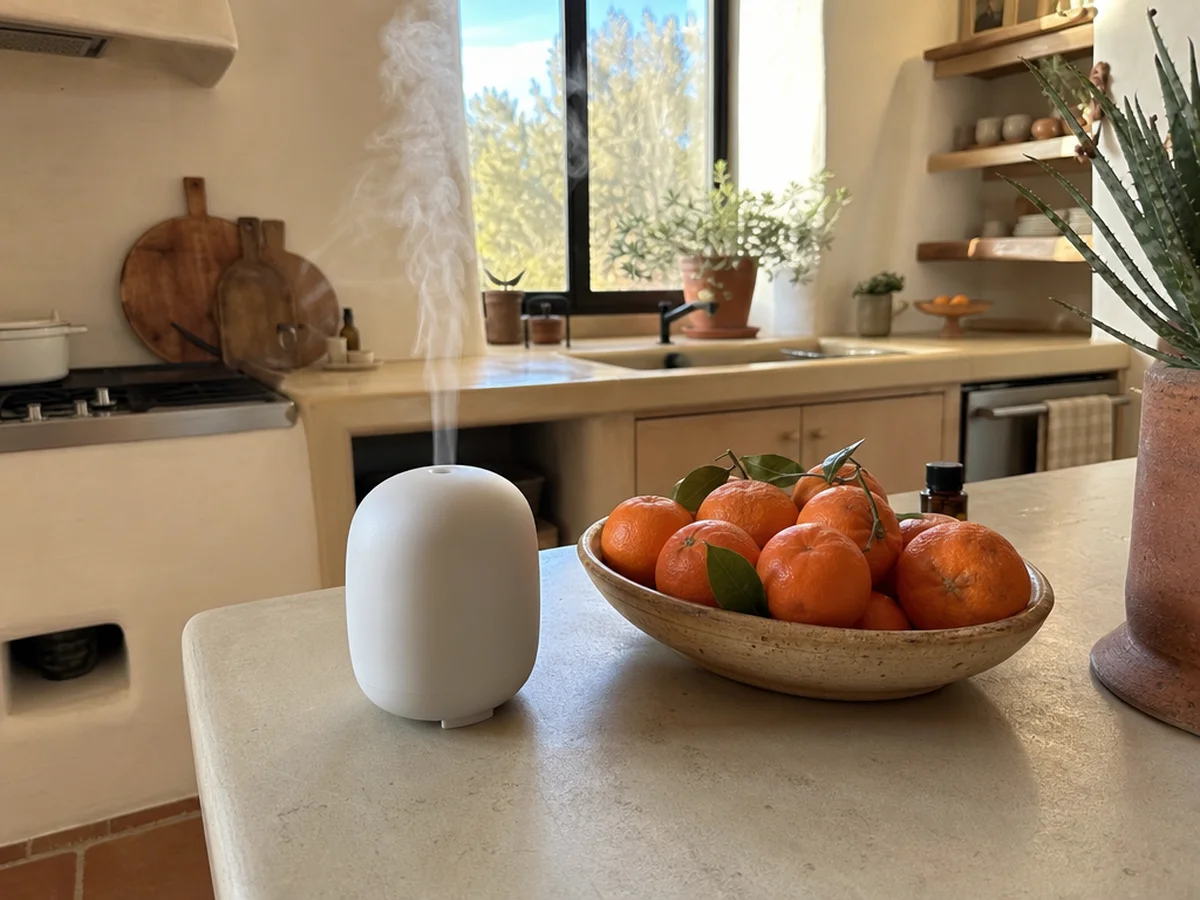
A word on swapping: in a diffuser, a drop more or less hardly matters. In a leave-on blend, be stricter. Keep the overall percentage you chose, adjust by nose in tiny steps, and write the final number down.
Which to reach for
For diffuser blends with cinnamon and vanilla, or a diluted body oil with neroli or ylang ylang, tangerine's bright edge is lovely. If a recipe calls for mandarin, you can use tangerine, start with a few drops fewer than the recipe says and adjust by nose. That is our suggestion, not a rule. If you prefer sweet orange as a partner, our sweet orange comparison is next, and the overview covers the basics.
One habit applies to both oils: both are strongest in the weeks after opening, so keep the cap tight and the bottle cool and plan to use them while they are bright.
Whichever you pick, buy the bottle you will use up while it is fresh, and enjoy a smell that is hard to beat in the cold months.
Whatever you decide, keep it light. Both oils are happiest when they are fresh, and the real test is the one you run with your own nose.
Tangerine Essential Oil
Tangerine Essential Oil from our own shop, in sizes from 0.5 oz to bulk.
From $12.99
Shop Now →Sources & Further Reading
- Safety and efficacy of a feed additive consisting of expressed mandarin oil from the fruit peels of Citrus reticulata Blanco for use in all animal species (FEFANA asbl) (EFSA Journal, 2021)
- Authentication of Citrus spp. Cold-Pressed Essential Oils by Their Oxygenated Heterocyclic Components (Molecules, 2022)
- Genomics unlocks the potential of genetic resources for citrus breeding (Breeding Science, 2025)
- Type and magnitude of non-compliance and adulteration in neroli, mandarin and bergamot essential oils purchased on-line: potential consumer vulnerability (Scientific Reports, 2021)
- Phototoxicity: essential oils, sun and safety (Tisserand Institute)