Is Tangerine Oil Better in Winter? What Ripening Changes
Tangerines turn up as the days get short, piled in bowls and tucked into stockings, and their peel is at its most fragrant just when we want something bright in the house. It is easy to assume the oil must follow the calendar and be at its best in winter. The science is more interesting than that, and it is worth knowing before you go looking for a "harvest-year" bottle.
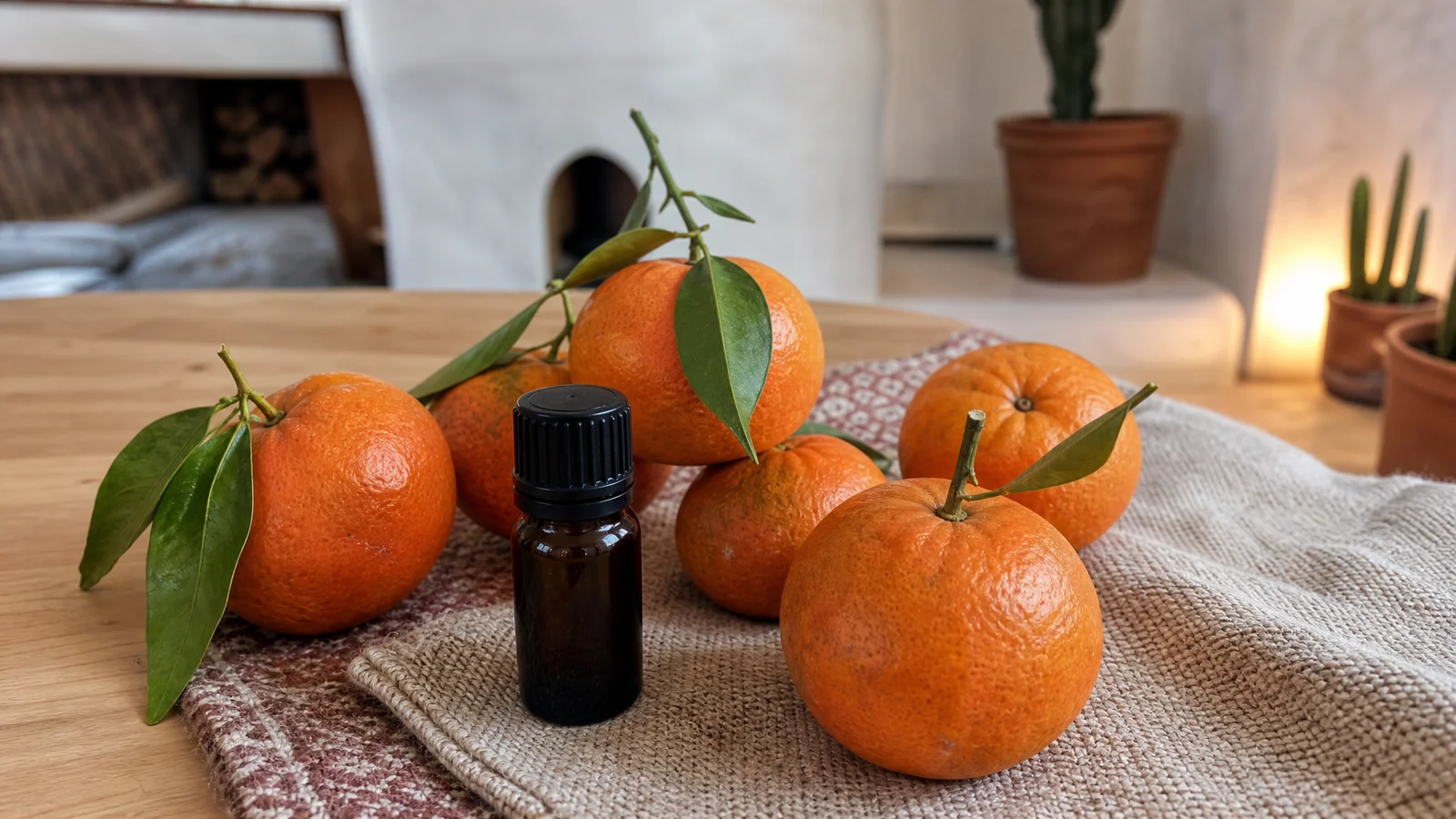
Tangerine Essential Oil
Our own Tangerine Essential Oil, in sizes from 0.5 oz to bulk.
From $12.99
Shop Now →A peel that keeps changing
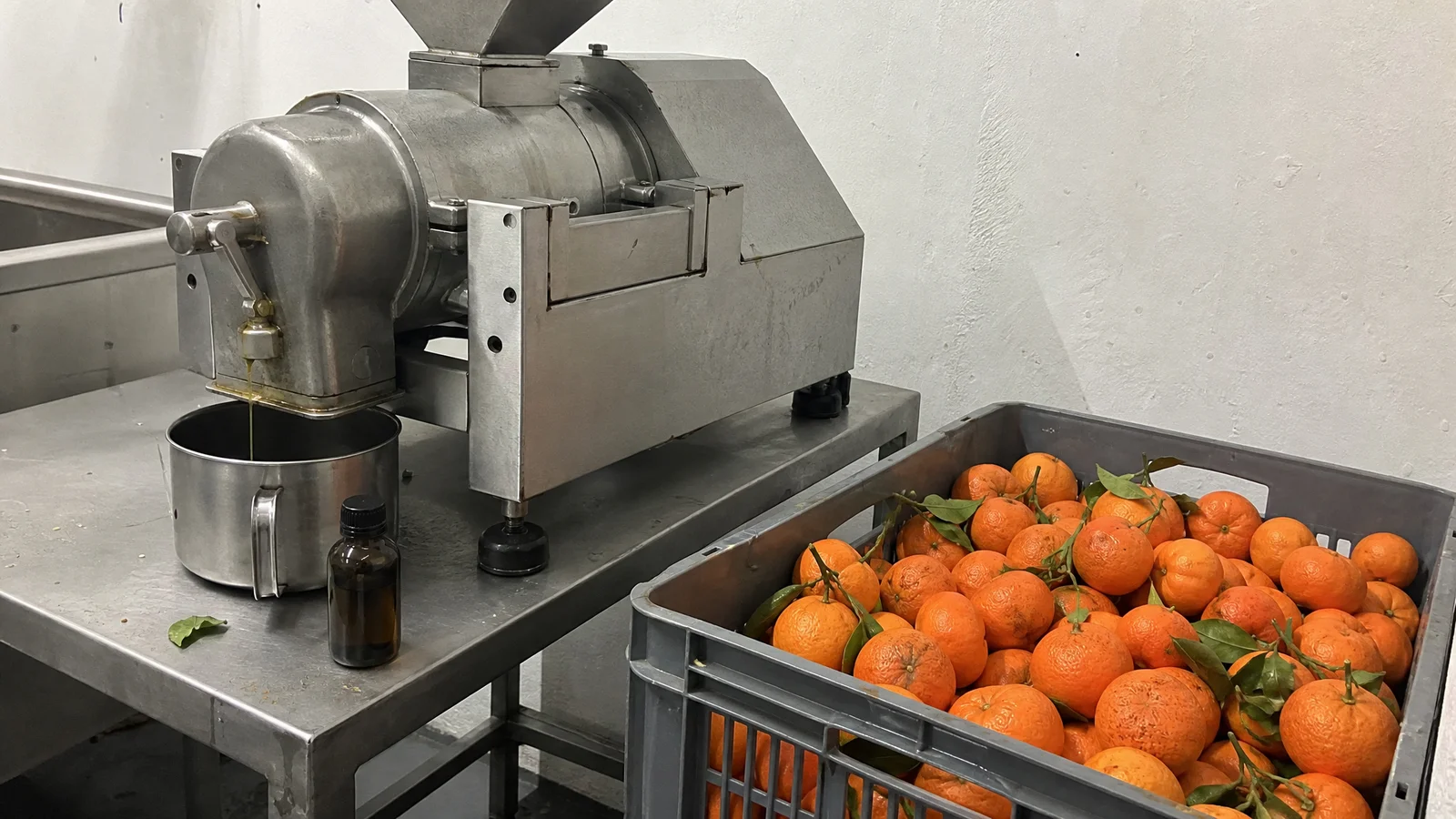
The clearest look at ripening we found comes from Tunisia. Researchers picked a mandarin (Citrus reticulata, cultivar Elarbi) at three stages, green, yellow and fully orange, and distilled the oil from the peel each time. The result was a surprise. The amount of oil peaked in the middle stage, at 2.70 percent of the peel, and fell to 1.13 percent in the fully orange fruit. The make-up shifted too: limonene dipped from about 65 percent in green fruit to about 52 percent at the yellow stage, then climbed back to 69 percent when the fruit was orange. Gamma-terpinene, the second big player, followed the same dip and recovery.
The lesson is that ripening reshapes the oil, but not in a straight line. A bigger review of mandarin oil studies, which pooled 24 composition profiles, found that limonene in peel averaged about 77 percent with a wide spread from roughly 58 to 88 percent. In one cultivar series within it, limonene rose steadily from 68 to 80 percent as the peel matured. Different fruit, different trends.
To put the yield in perspective, 2.70 percent means about 2.7 g of oil from 100 g of fresh peel in that experiment. That is a lot of fruit behind every little bottle, which is part of why we like to see it used while it is bright.
Reading the fruit bowl
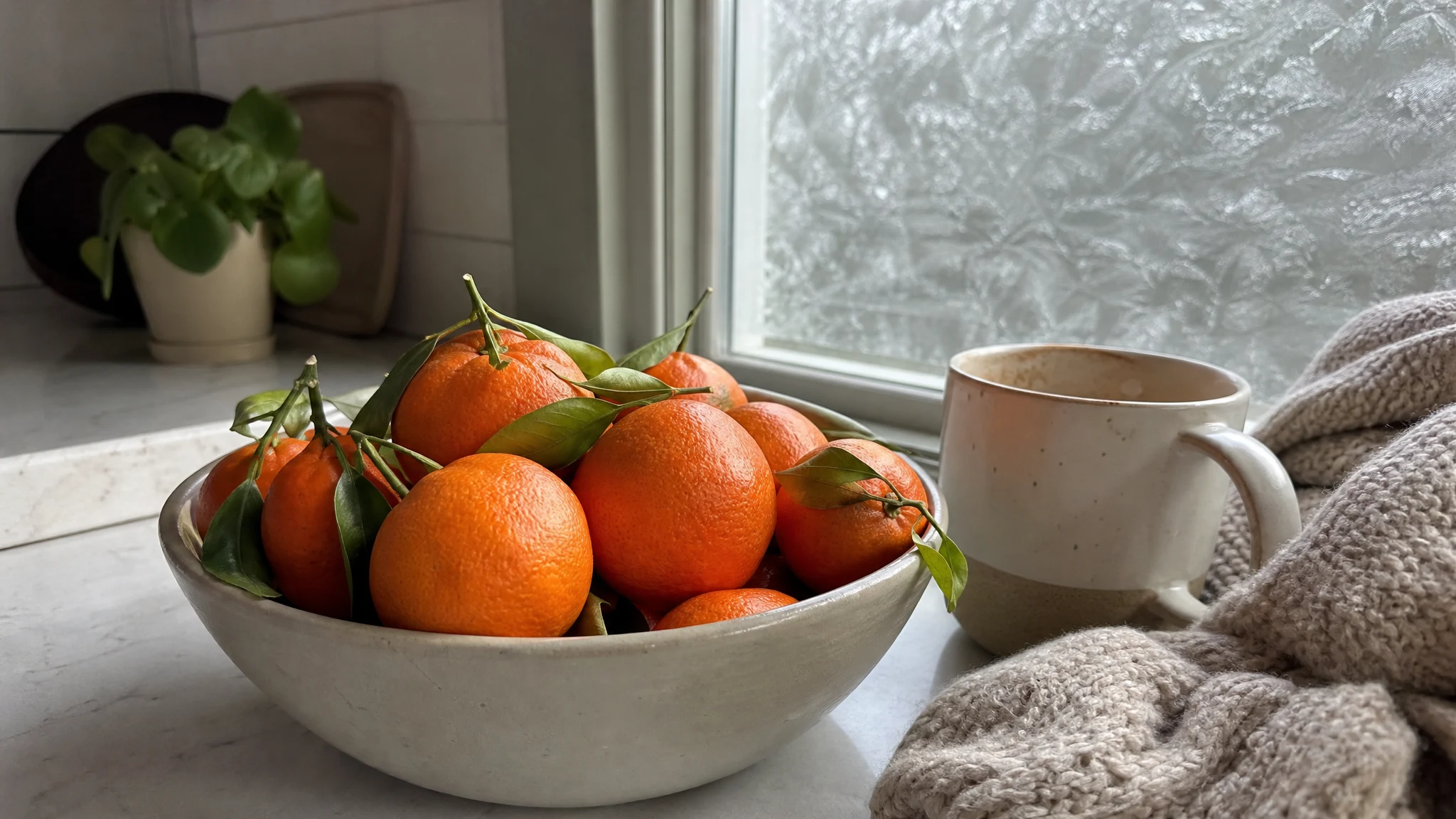
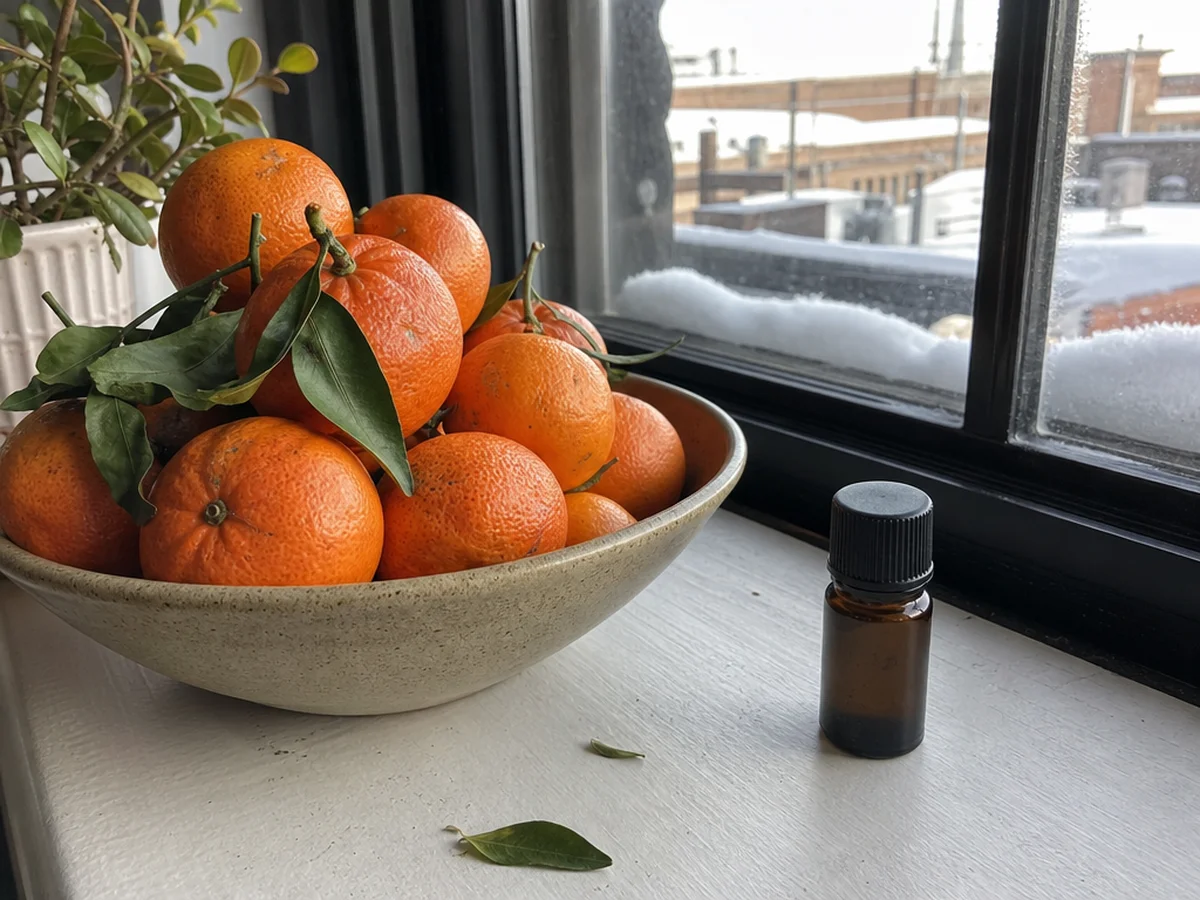
You can learn a lot from the fruit itself. Scratch the peel of a tangerine with a fingernail and smell your thumb: that sweet, juicy, sparkling smell is what we love in the bottle. If you can find fruit at different stages of ripeness, compare them side by side and see whether you notice a difference. It is the same story the research tells, only in your kitchen, and a lovely, free way to train your nose for the oil.
Why the calendar is only part of the story
Both of those studies looked at distilled or unspecified extraction, not at a cold-pressed oil tracked month by month, so we treat them as an explanation of why oils vary, not as a promise about any season's bottle. Place matters as well. In a 2022 survey of cold-pressed citrus oils, tangerine oil from Brazil carried about 94 parts per million of furanocoumarins and an Italian sample about 2. Same fruit name, very different numbers.
So a bottle carrying the word "winter" would tell you little. What does tell you something is a batch document. The certificate of analysis we publish covers one batch and lists its density, refractive index and optical rotation. If pressing date, origin or a full composition report matters to you, ask us for it in writing through the contact page and keep the reply with your order.
The big picture is that the oil is a living, varying thing. That is part of its charm: a bottle of tangerine is a snapshot of a peel, not a recipe that never changes. We think that is a good reason to smell your bottle when you open it, rather than assuming.
A winter habit worth keeping
When the fruit bowl is full, give the oil a small place in the routine too. Smell the bottle on the first day, write the date on the label, and check in with it every few weeks. You will learn more about how it holds up from that little habit than from any chart.
What to ask when you want details
If the season, the origin or the pressing date matters to your project, write to us before you order and ask plainly. Keep the answer in your records alongside the batch number. It is a small bit of paperwork, and it lets you plan around the facts instead of the calendar.
Making the most of the season anyway
None of this stops us enjoying tangerine in winter, and our own pairing suggestions lean right into it: tangerine with cinnamon and vanilla in a diffuser, or a gently diluted massage blend with neroli or ylang ylang. Because tangerine is a top note, it is at its most vivid in the months right after you open the bottle, so buying a size you will use over a winter or two suits it well. The sizes post works through the drop arithmetic, and the diffusing guide covers the practical side.
One seasonal habit is worth keeping from the fruit bowl: peel oil and sun do not always mix. Our guidance is to keep freshly treated skin out of strong sunlight, even though tangerine is among the expressed citrus oils described as low in furanocoumarins. The sun-sense article explains what the authorities say. And if you are weighing tangerine against its closest relative, our mandarin comparison is the next stop.
Enjoy the fruit while it is in season. The oil will be just as good company when the bowl is empty.
Tangerine Essential Oil
Tangerine Essential Oil from our own shop, in sizes from 0.5 oz to bulk.
From $12.99
Shop Now →Sources & Further Reading
- Changes of peel essential oil composition of four Tunisian citrus during fruit maturation (Scientific World Journal, 2012)
- Citrus reticulata Essential Oil as a Bioactive Food Ingredient: Composition Variability, Extraction, Functional Bioactivities, and Cross-Study Quantitative Analysis (Food Science and Nutrition, 2026)
- Authentication of Citrus spp. Cold-Pressed Essential Oils by Their Oxygenated Heterocyclic Components (Molecules, 2022)
- Phototoxicity: essential oils, sun and safety (Tisserand Institute)