Perfume Notes Explained: Where Tangerine Fits In
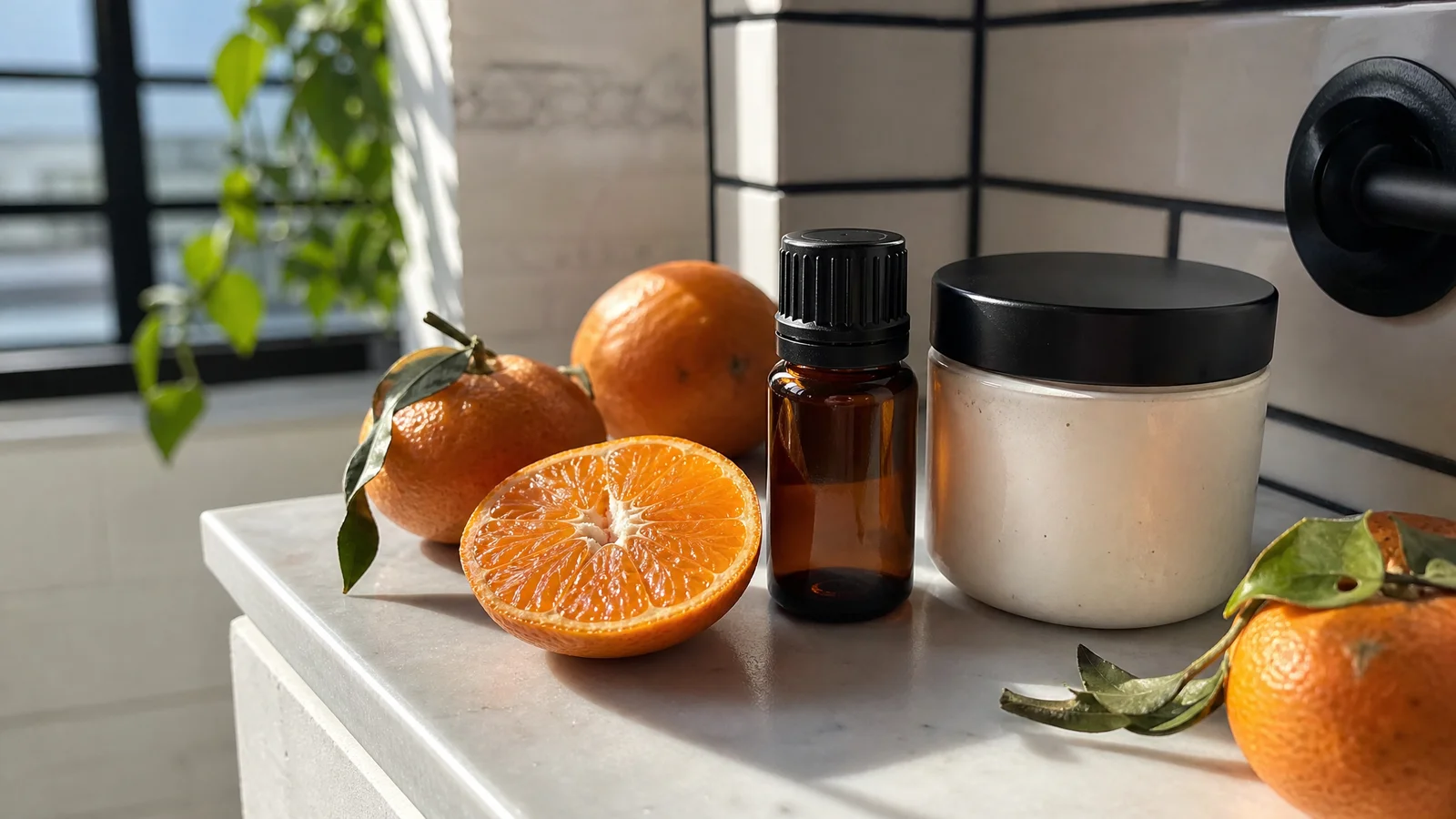
Ask three blenders how to build a blend and you will hear about notes: top, middle, base. It is one of the most useful ideas in aromatherapy and perfumery, and also one of the most misunderstood, because the notes are really a story about speed. Tangerine, bright and juicy, is about as fast as scents get.
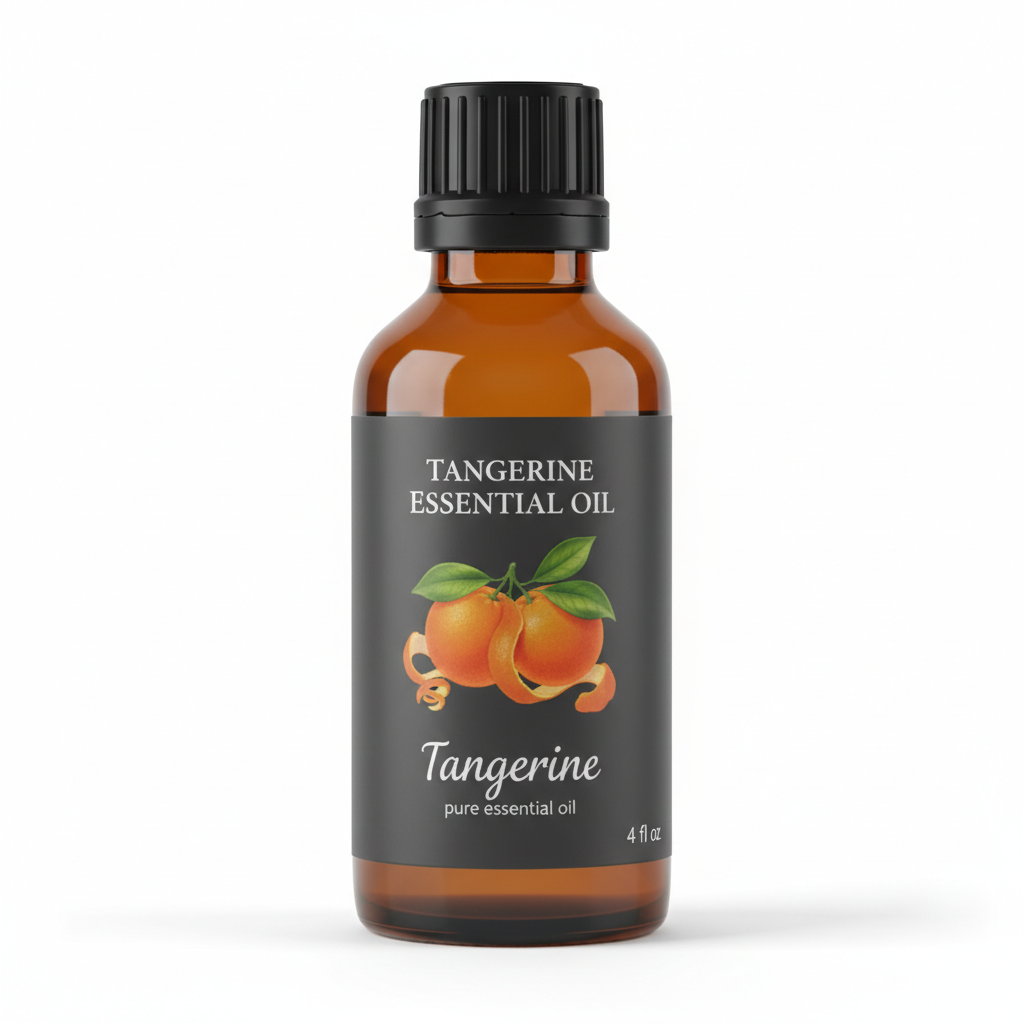
Tangerine Essential Oil
Our own Tangerine Essential Oil, in sizes from 0.5 oz to bulk.
From $12.99
Shop Now →Notes are about how quickly a scent leaves
When a perfumer calls something a top note, they mean it is the first thing you smell and the first to fade. Base notes are the opposite: slow to appear, slow to leave. You can see the logic in a few numbers for single molecules that stand in for each position. Limonene, the main aroma component of citrus peel oils, boils at about 175 to 176 C. Linalool, found in many floral oils, boils at about 198 C. Vanillin, the signature of vanilla, boils at about 285 C (PubChem records). A lower boiling point means a molecule slips into the air more readily, so it reaches your nose sooner and is gone sooner.
An essential oil is a mixture, not one molecule, so treat those three as a way to picture the idea rather than as data for any oil. Our shop lists tangerine as a top note that fades faster than heavier oils, and that matches the picture: lively on opening, quieter later.
What that means for building a blend
Because the gaps between notes are big and uneven, there is no magic ratio. You will see "30% top, 50% middle, 20% base" repeated all over the internet, but we could not trace it to a primary source, so we treat it as a starting guess you adjust by nose, never a rule. A better habit is to decide what you want to remember about the blend, then give that scent enough company to last. If tangerine is the star, a slower partner gives its sparkle something to stand on. We list vanilla, cinnamon, neroli, sweet orange, bergamot and ylang ylang as good partners for tangerine. We sell only tangerine, so you would find those at a supplier who stocks them.
The surprise: at skin strength, the base note nearly disappears
Here is the part that catches people out. Suppose you want a 10 g roller with tangerine at 1%, which is our suggestion for a first blend (our range for skin is 0.5% to 2% in a carrier, and starting low is simply good manners for skin). That is 0.1 g of tangerine, or about 2 to 3 drops, using the density of 0.846 on the batch Certificate of Analysis we publish.
Now say you want the oils in a 60% tangerine, 30% floral, 10% vanilla proportion, by weight. The concentrate has to weigh about 0.167 g in total, so the floral part comes to about 0.05 g, roughly one drop, and the vanilla part to about 0.017 g, well under a drop. All of that goes into roughly 9.83 g of carrier. This is arithmetic on paper rather than a recipe we have bottled, and it makes one lesson plain: at skin strength your base note is a whisper. That is why diluted citrus blends smell soft and close to the skin rather than grand, and it is not a mistake in your blending.
The practical advice follows from it. Weigh your oils on a small scale rather than counting drops, because a drop of a thick material and a drop of thin citrus oil are not the same amount. If you do count, the Tisserand Institute's reviews of drop size found that drops per millilitre vary from about 20 to 40, so decide on one convention and stick to it. Our dilution guide shows the maths in full.
Let your nose do the first test
Before you measure anything, give yourself a few minutes with a plain paper strip. Put a drop of tangerine on it, sniff right away, then again after five minutes and once more after an hour. You will notice the sparkle arrive first, then soften, then thin out to something quiet and sweet. Do the same with a partner scent and hold the two strips together. That little ritual teaches you more about notes than any chart, and it costs nothing but patience.
Citrus adds up
If you reach for more than one citrus oil, remember they are all rich in limonene. Three citrus oils at 1% each is three times the limonene of one. Limonene is also the part of citrus oil that reacts with air, so freshness matters more in a blend than most people expect: a blend is only as fresh as its oldest citrus ingredient. In the study of 2,900 dermatitis patients, the allergen was air-oxidised limonene, not fresh limonene, which is exactly why we recommend a small bottle and a tight cap (more in our storage guide).
Also check partners' own limits before you mix. Spice oils such as cinnamon and clove carry tighter limits than citrus, and IFRA's citrus standard restricts expressed bergamot, cold-pressed lemon and lime, among others, in leave-on products for skin exposed to sun. IFRA lists cold-pressed tangerine, by contrast, at a typical 50 ppm of the furocoumarin that matters, a level it describes as not high enough to need special restrictions when the oil is used alone. As a habit, we would still keep fresh sun off newly applied blends.
Where to go next
For pairings, our tangerine blends guide goes oil by oil, and the perfume oil article shows how a top note can be given an anchor. Learn the notes, weigh your oils, and let the nose have the last word.
Tangerine Essential Oil
Tangerine Essential Oil from our own shop, in sizes from 0.5 oz to bulk.
From $12.99
Shop Now →Sources & Further Reading
- PubChem. 1-Methyl-4-Prop-1-En-2-Ylcyclohexene (limonene), CID 22311: boiling point. pubchem.ncbi.nlm.nih.gov
- PubChem. Linalool, CID 6549: boiling point. pubchem.ncbi.nlm.nih.gov
- PubChem. Vanillin, CID 1183: boiling point. pubchem.ncbi.nlm.nih.gov
- Tisserand Institute. How big is a drop? tisserandinstitute.org
- IFRA Standard 089 (Amendment 49), 2020. Citrus oils and other furocoumarins containing essential oils. ifrafragrance.org
- Bråred Christensson J et al., 2013. An international multicentre study on the allergenic activity of air-oxidized R-limonene. Contact Dermatitis 68(4):214-223. PubMed 23510342