What Is Cold-Pressed Tangerine Oil? From Peel to Bottle
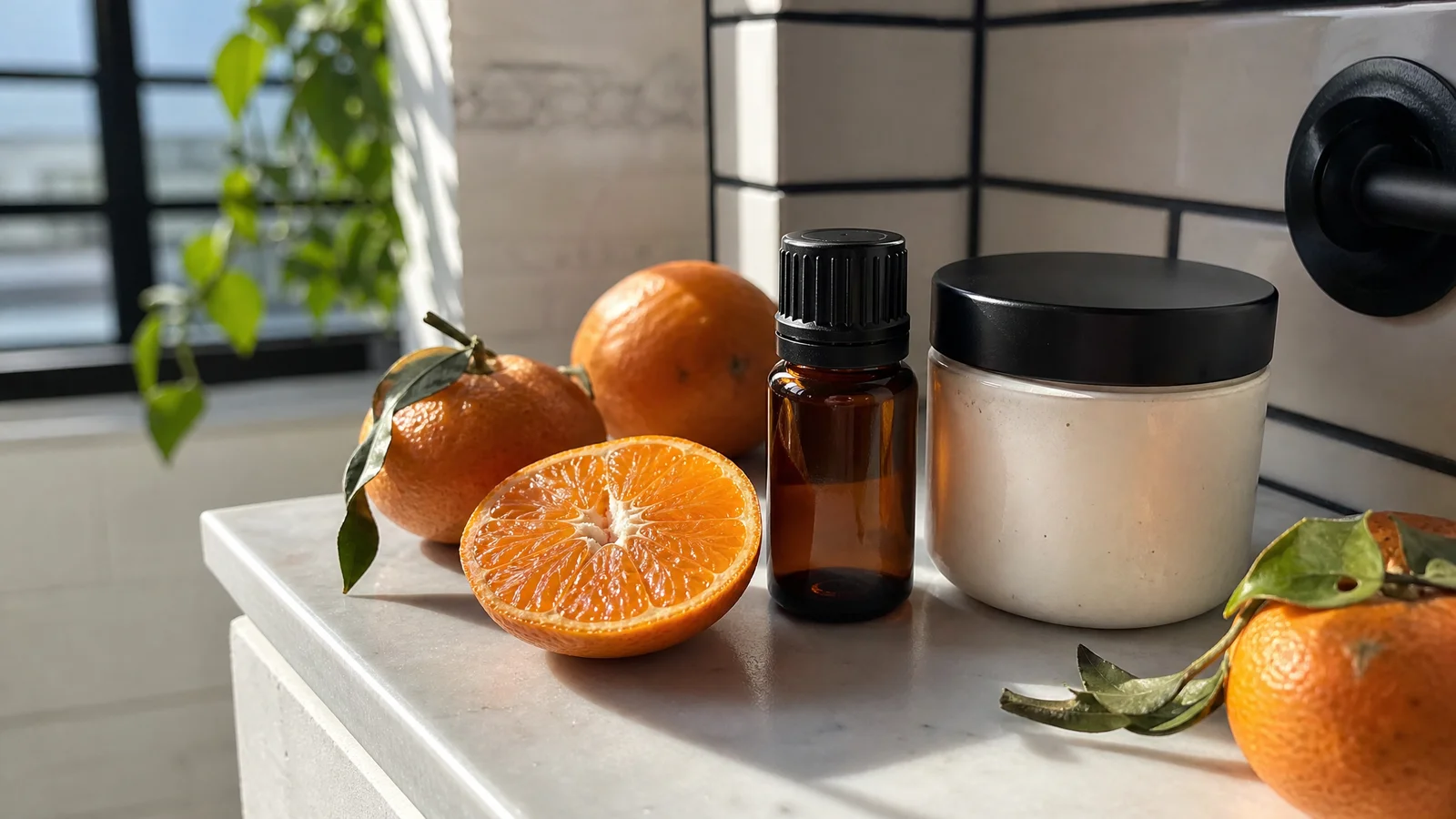
Squeeze a tangerine peel near a lamp and you will see a fine mist spray off it. That mist is the oil, and it is the reason a tangerine smells like a tangerine before you have even tasted it. Cold-pressed tangerine oil is, at heart, that same burst of aroma collected on purpose, without a still and without a flame.
Tangerine Essential Oil
Our own Tangerine Essential Oil, in sizes from 0.5 oz to bulk.
From $12.99
Shop Now →The oil is already waiting in the peel
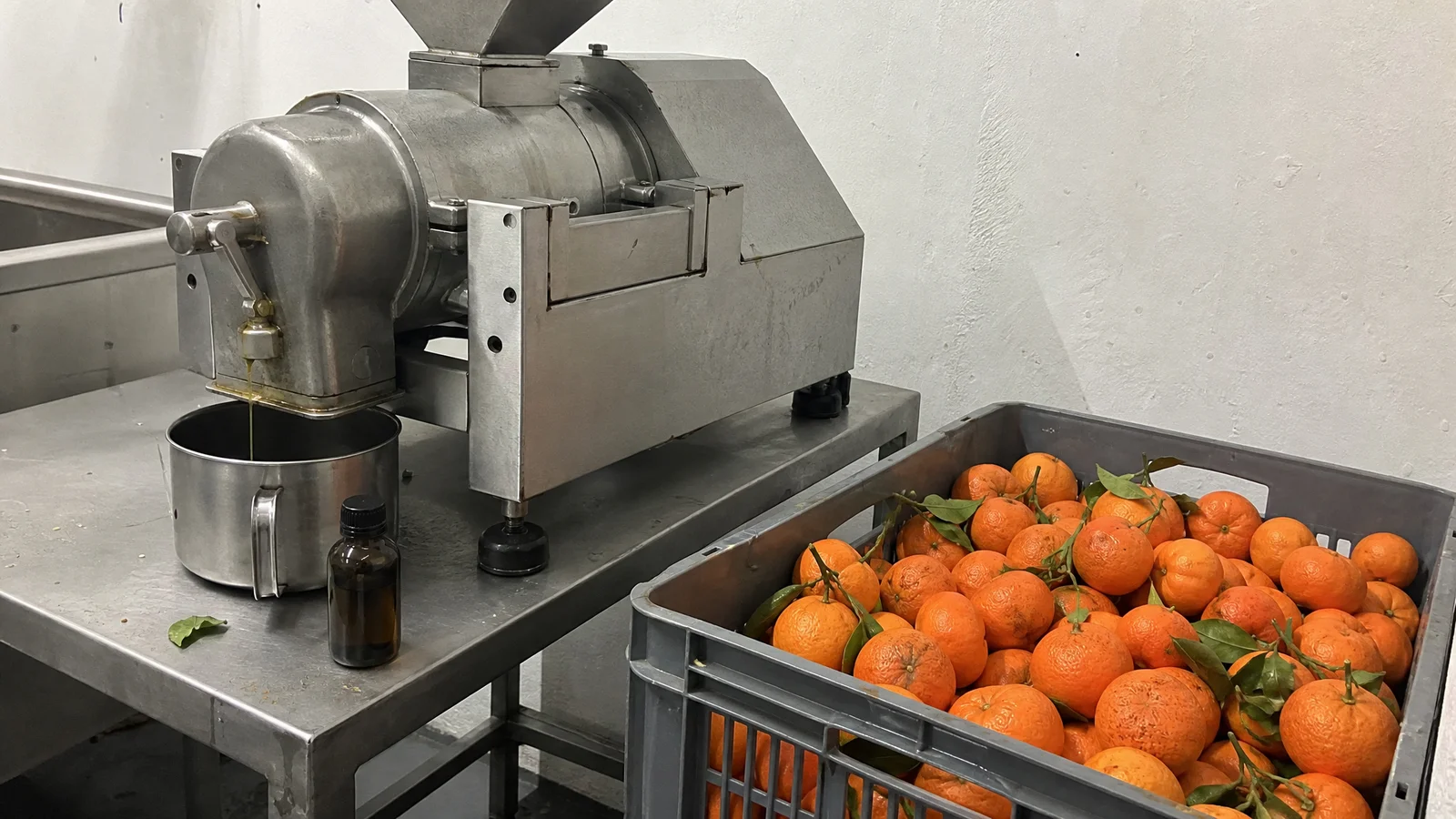
Citrus peel is dotted with tiny oil sacs, which is why the surface feels slightly pebbled. Getting the oil out is a matter of breaking those sacs and collecting what spills. The European Food Safety Authority describes one version of this for mandarin oil, a close relative of tangerine: the surface of the fruit is scarified, water is sprayed over it to carry the released oil away, the watery suspension is filtered to remove bits of cell debris, and a centrifuge separates the oil from the water. Nothing in that description calls for heating the oil to drive it out, and that is all "cold" really means here. It is not chilled; it is simply not cooked.
The oil we sell is described on our Certificate of Analysis as cold pressed, with peel as the part used, and that is how we describe it on our shop page too: cold-pressed from the ripe peel. It is a good moment to enjoy that detail, because it is the reason the bottle smells so much like the fruit.
Why citrus gets pressed when most oils get distilled
Most essential oils, from lavender to peppermint, are steam-distilled. Citrus peel can be distilled as well, but you end up with a different product. The Tisserand Institute notes that distilled citrus oils contain virtually no furanocoumarins, the sun-sensitising molecules found in some citrus peels, while an expressed oil carries along whatever the peel held. In other words, pressing and distilling are not two routes to the same bottle. A cold-pressed oil is the peel's own oil, collected rather than re-made by heat, and that is the reason the label matters.
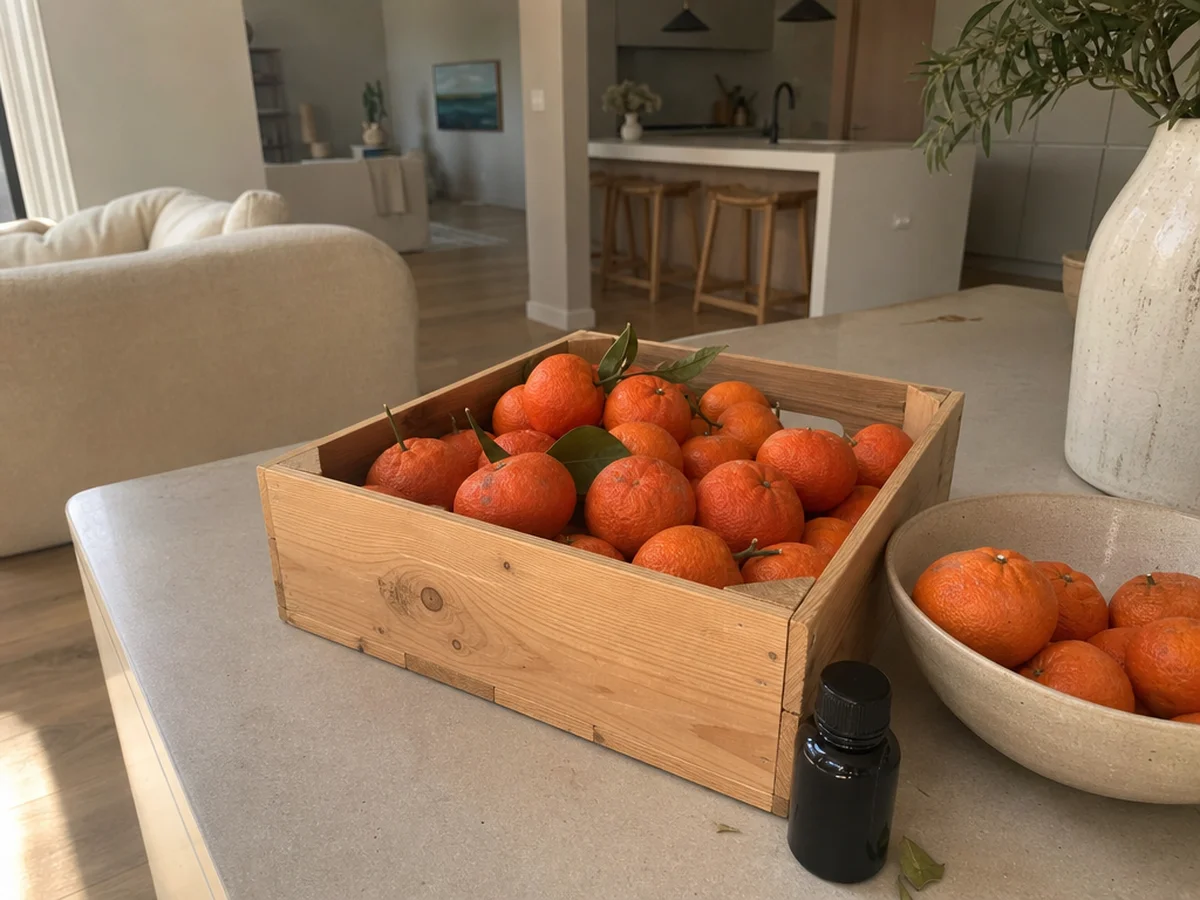
Why two tangerine oils can differ
Because the oil is simply what the peel contains, it reflects the fruit. A 2022 study that screened 374 cold-pressed citrus oils reported total furanocoumarins of about 94 parts per million in a Brazilian tangerine oil, against about 2 parts per million in an Italian one. Same kind of process, very different fruit. A review of mandarin-type oil compositions found something similar for the main aroma component, limonene: peel samples ranged from about 58% to about 88%, and one study followed limonene climbing as the fruit matured.
The takeaway is friendly rather than worrying. Cold-pressed oil is a natural product, so it has a natural range, and a single number on a spec sheet describes one batch on one day. That is also why we like to point people to the batch details whenever they matter. The Certificate of Analysis we publish for one batch lists a relative density of 0.846, a refractive index of 1.474 and an optical rotation of +94 degrees at 20 C, each inside the range printed on the certificate. If you want GC-MS data, origin or a pressing date for your own purposes, ask us in writing through the contact page and we will tell you what we can document.
What the process means for the bottle on your shelf
Pressed peel oil is mostly limonene, and limonene is happiest when it is not left open to air. Researchers who patch-tested 2,900 dermatitis patients found that 5.2% reacted to deliberately air-oxidised limonene, while fresh limonene is a very weak allergen at most. That is not a reason to worry about a fresh bottle. It is a reason to enjoy it while it is bright, keep the cap on and buy the size you will finish; our storage guide walks through the habits.
A two-minute experiment for your kitchen
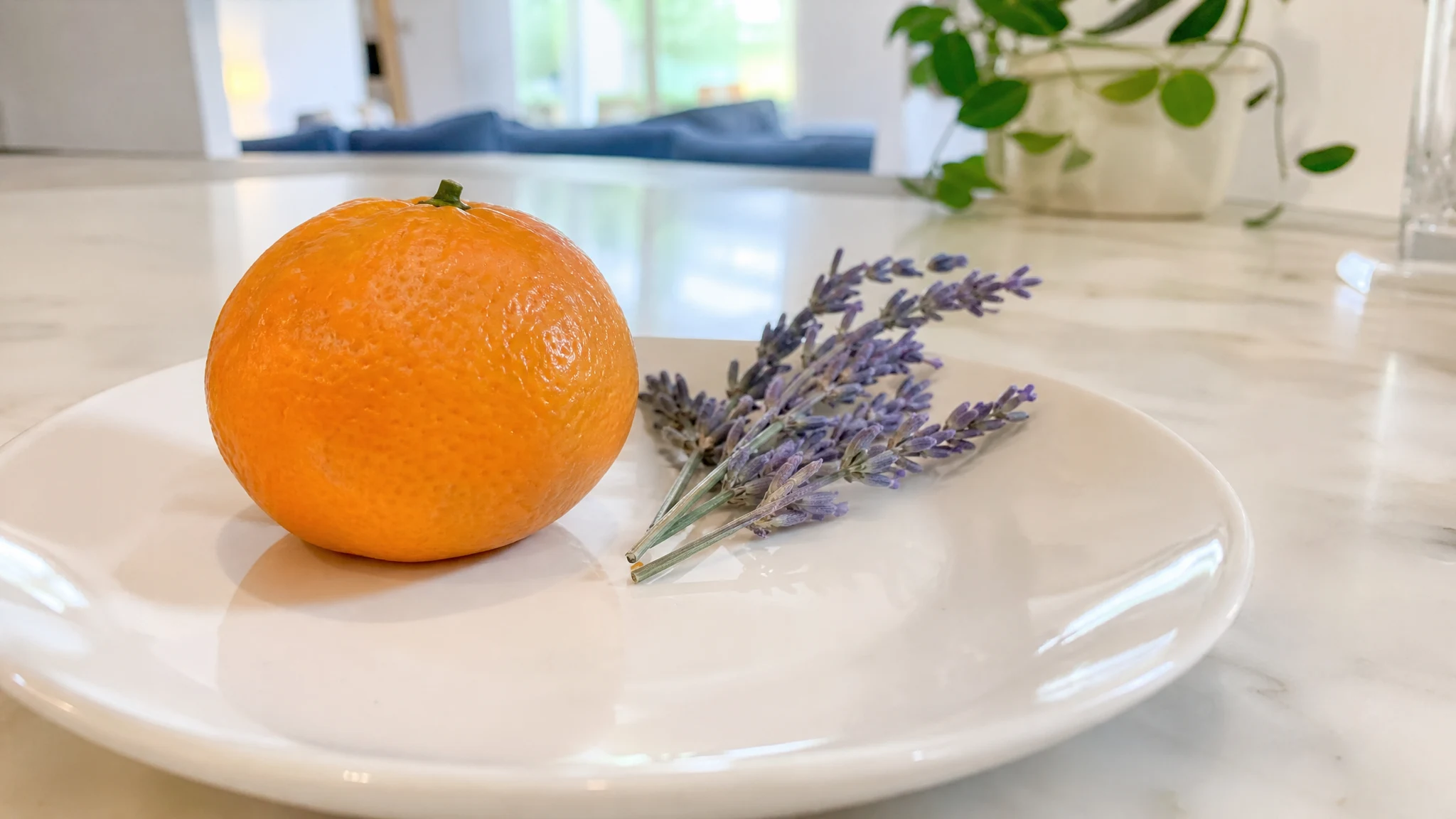
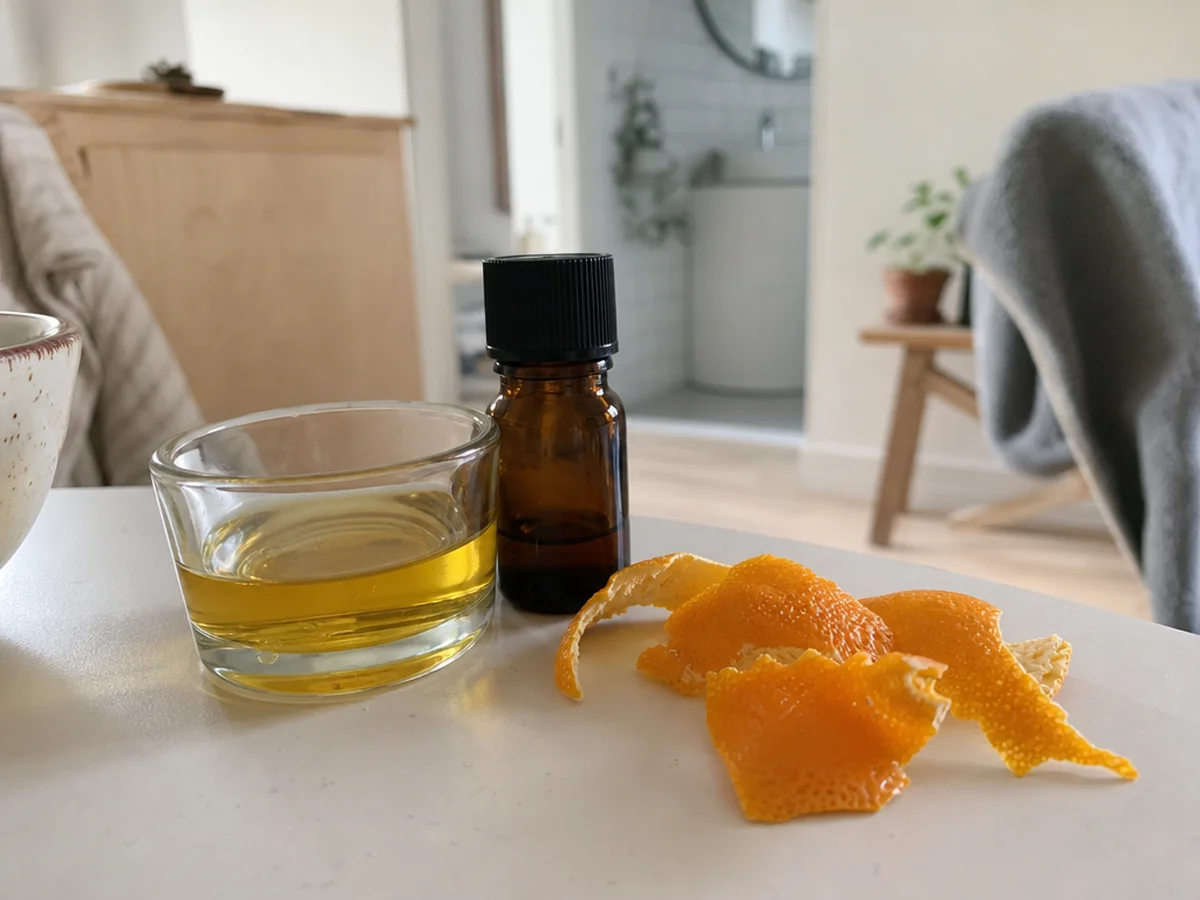
Take a ripe tangerine and a dark plate or a dark countertop. Hold the fruit a few inches above it, bend a piece of peel sharply with the skin facing out, and look closely at the light. You will often catch a faint spray, and a sweet, sharp aroma will reach you a second later. Rub the peel between your fingers and the scent deepens and softens, then fades within a few minutes. That quick rise and fall is exactly what we mean by a top note, and it explains why a bottle of peel oil smells so lively when you first open it.
Three questions worth asking about any cold-pressed oil
- Pressed or distilled? The label should say, because it changes what is in the bottle.
- Which batch is this? A batch number on the paperwork should match the bottle.
- What does the report actually cover? A density and refractive index tell you one thing, a GC-MS report another; our guide to reading a citrus GC/MS report explains the difference.
When you open a bottle for the first time, give it a moment. Smell it from a short distance, then again from the cap. You will notice how the oil smells brighter and sharper than the fruit itself, because it holds the whole peel's worth of aroma in a few drops. It is a lovely thing to share with a friend, and it is the best way to understand why people who work with citrus oils talk about them with such affection.
If you are curious how tangerine differs from its cousin, our tangerine and mandarin comparison picks up the naming question, and our introduction to tangerine oil covers the basics. Whatever the oil, the next time you peel a tangerine, take a moment to enjoy the spray from the peel. That is the thing we are all trying to bottle.
Tangerine Essential Oil
Tangerine Essential Oil from our own shop, in sizes from 0.5 oz to bulk.
From $12.99
Shop Now →Sources & Further Reading
- EFSA FEEDAP Panel, 2021. Safety and efficacy of a feed additive consisting of expressed mandarin oil from the fruit peels of Citrus reticulata Blanco for use in all animal species (FEFANA asbl). EFSA Journal 19(6):e06625. Europe PMC PMC8190682
- Tisserand Institute. Phototoxicity: essential oils, sun and safety. tisserandinstitute.org
- Dosoky NS, Satyal P, Setzer WN, 2022. Authentication of Citrus spp. Cold-Pressed Essential Oils by Their Oxygenated Heterocyclic Components. Molecules 27(19):6277. Europe PMC PMC9572141
- Zhang J et al., 2026. Citrus reticulata Essential Oil as a Bioactive Food Ingredient: Composition Variability, Extraction, Functional Bioactivities, and Cross-Study Quantitative Analysis. Food Science & Nutrition 14:e72380. Europe PMC PMC13594552
- Bråred Christensson J et al., 2013. An international multicentre study on the allergenic activity of air-oxidized R-limonene. Contact Dermatitis 68(4):214-223. PubMed 23510342