How to Read a Citrus GC/MS Report in 4 Steps
A GC/MS report looks intimidating: a page of compound names, a column of percentages and, if you are lucky, a chromatogram that resembles a mountain range. Read in the right order, though, it tells a neat story about what is in the bottle, and a few simple checks cover most of what a curious buyer needs.
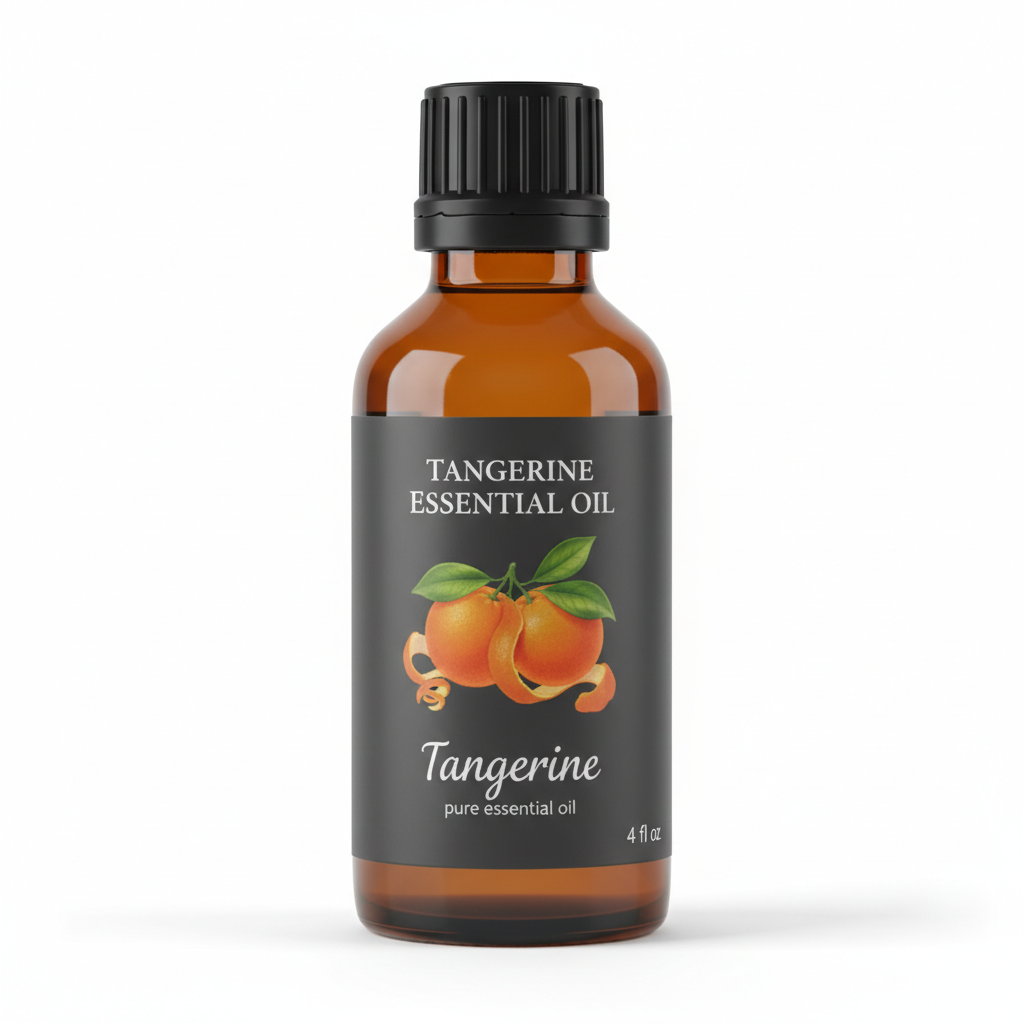
Tangerine Essential Oil
Our own Tangerine Essential Oil, in sizes from 0.5 oz to bulk.
From $12.99
Shop Now →First, make sure the page belongs to your bottle
A report describes one sample on one day. Look for a batch number that matches the one on your bottle, a test date and the name of the lab. Without a batch match, a report is a good picture of some oil, just not necessarily yours. The Certificate of Analysis we publish for one batch lists density, refractive index and optical rotation; if you need GC-MS for your own purposes, ask us in writing through the contact page and get the answer in writing.
Second, put limonene against the right fruit
Limonene is the headline number for citrus peel oils, but a good number depends on the fruit. The European Food Safety Authority specifies expressed mandarin oil at 65% to 80% d-limonene, and ten measured batches in the same file averaged about 66%, with gamma-terpinene at roughly 22%. Expressed sweet orange oil, by contrast, is specified at 93% to 97% limonene. A compiled review of 24 mandarin-type oil profiles found a peel mean around 77%, with a wide spread of roughly 58% to 88%, because fruit maturity and method both matter.
So a bottle sold as tangerine with limonene in the mid-90s looks more like sweet orange than a mandarin-type oil. That is our reading of two EFSA files and not a verdict, and it is a perfectly fair question to put to a seller.
Third, read the supporting cast
Limonene alone cannot separate a mandarin-type oil from an orange one, which is where the smaller components earn their place. EFSA's mandarin specification also lists gamma-terpinene at 13% to 22%, alpha-pinene at 1.0% to 3.5%, myrcene at 1.0% to 2.0% and methyl N-methyl anthranilate at 0.15% to 0.7%. The sweet orange file has no gamma-terpinene in its specification at all. A report for a mandarin-type oil that shows these companions in plausible amounts is reassuring; one where they are missing deserves a friendly question.
Why does this matter? A 2021 study of mandarin, neroli and bergamot oils bought online found that only 1 of 11 commercial mandarin oils met every chromatographic specification of the relevant ISO standard, and two samples looked like roughly 95% limonene with no methyl N-methyl anthranilate, which the authors describe as an important odorant of mandarin oil. Reading the minor components is how that kind of gap is spotted.
Fourth, mind the method
Numbers from different methods do not line up perfectly. In EFSA's sweet orange file, GC-FID gave 94.4% to 94.8% limonene for five batches while GC-MS averaged 92.4%, and the document notes that GC-MS tends to underestimate d-limonene. Compare a GC-MS result with a GC-MS reference when you can.
What a GC/MS report cannot tell you
- Sun-sensitising compounds. Furanocoumarins sit at parts per million and are measured with other methods, such as the UPLC-MS/MS used in the 2022 citrus screen that reported about 94 ppm in one Brazilian tangerine oil and about 2 ppm in an Italian one.
- Freshness. A clean report from last year says little about a bottle that has been open since. The oil keeps reacting with air after the test; see our storage guide.
- Origin and pressing date. A report describes a sample, not where the fruit grew or when the oil was made.
- Residues. A composition report is not a residue screen; ask for one separately if it matters to you.
Keep your nose in the conversation
A report is a wonderful companion to your senses, but it does not replace them. Smell the oil on a paper strip when it arrives and again a few weeks later. Citrus peel oil should smell like fresh fruit skin, bright and sweet, not flat, sharp or faintly turpentine-like. If the page says one thing and your nose says another, treat that as a good reason to ask a question.
It also helps to keep the report with the bottle. Staple the page to your order record, write the date you opened the oil on it, and you will always know which sheet goes with which batch.
Questions we would send a seller
Keep the email short and friendly. Ask for the batch number, the test date, the lab name and the method, and ask whether the report is for the exact bottle you are ordering. Most good sellers are glad to be asked. A cheerful, specific reply tells you a lot about how they run things, and a long silence tells you something too.
A quick checklist
Batch number matches your bottle. Test date and lab are named. Limonene sits near the reference for the stated fruit, measured by the same method. Gamma-terpinene and its companions appear in sensible amounts. Anything else you care about, such as residues or furanocoumarins, arrives in its own report.
A report is one tool among three, alongside the label and a seller who answers questions. For more, our cold-pressing article, the limonene chemistry post and the tangerine and mandarin comparison explain the rest. With these four checks, the mountain range turns into a story you can read.
Tangerine Essential Oil
Tangerine Essential Oil from our own shop, in sizes from 0.5 oz to bulk.
From $12.99
Shop Now →Sources & Further Reading
- EFSA FEEDAP Panel, 2021. Safety and efficacy of a feed additive consisting of expressed mandarin oil from the fruit peels of Citrus reticulata Blanco for use in all animal species (FEFANA asbl). EFSA Journal 19(6):e06625. Europe PMC PMC8190682
- EFSA FEEDAP Panel, 2021. Safety and efficacy of feed additives consisting of expressed sweet orange peel oil and its fractions from Citrus sinensis (L.) Osbeck for use in all animal species (FEFANA asbl). EFSA Journal 19(11):e06891. Europe PMC PMC8603005
- Zhang J et al., 2026. Citrus reticulata Essential Oil as a Bioactive Food Ingredient: Composition Variability, Extraction, Functional Bioactivities, and Cross-Study Quantitative Analysis. Food Science & Nutrition 14:e72380. Europe PMC PMC13594552
- Pierson et al., 2021. Type and magnitude of non-compliance and adulteration in neroli, mandarin and bergamot essential oils purchased on-line: potential consumer vulnerability. Scientific Reports 11:11096. Europe PMC PMC8160360
- Dosoky NS, Satyal P, Setzer WN, 2022. Authentication of Citrus spp. Cold-Pressed Essential Oils by Their Oxygenated Heterocyclic Components. Molecules 27(19):6277. Europe PMC PMC9572141