How to Store Tangerine Oil So It Stays Bright
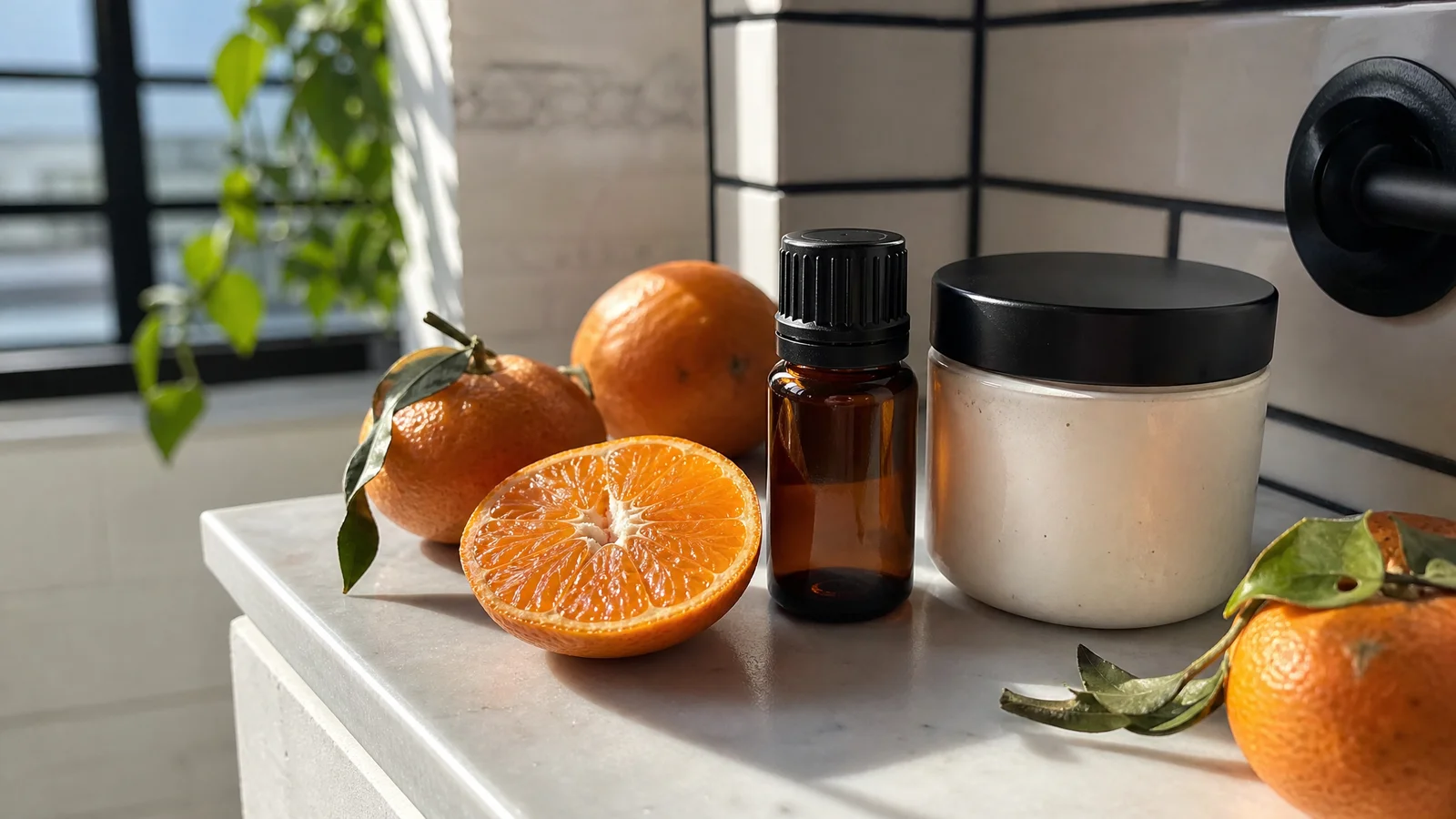
Open a fresh bottle of tangerine oil and the first breath is a burst of sunshine: juicy, sweet, a little sparkly. Bottle storage is how you keep that first breath going for as long as possible. The good news is that the habits are simple, and none of them cost anything.
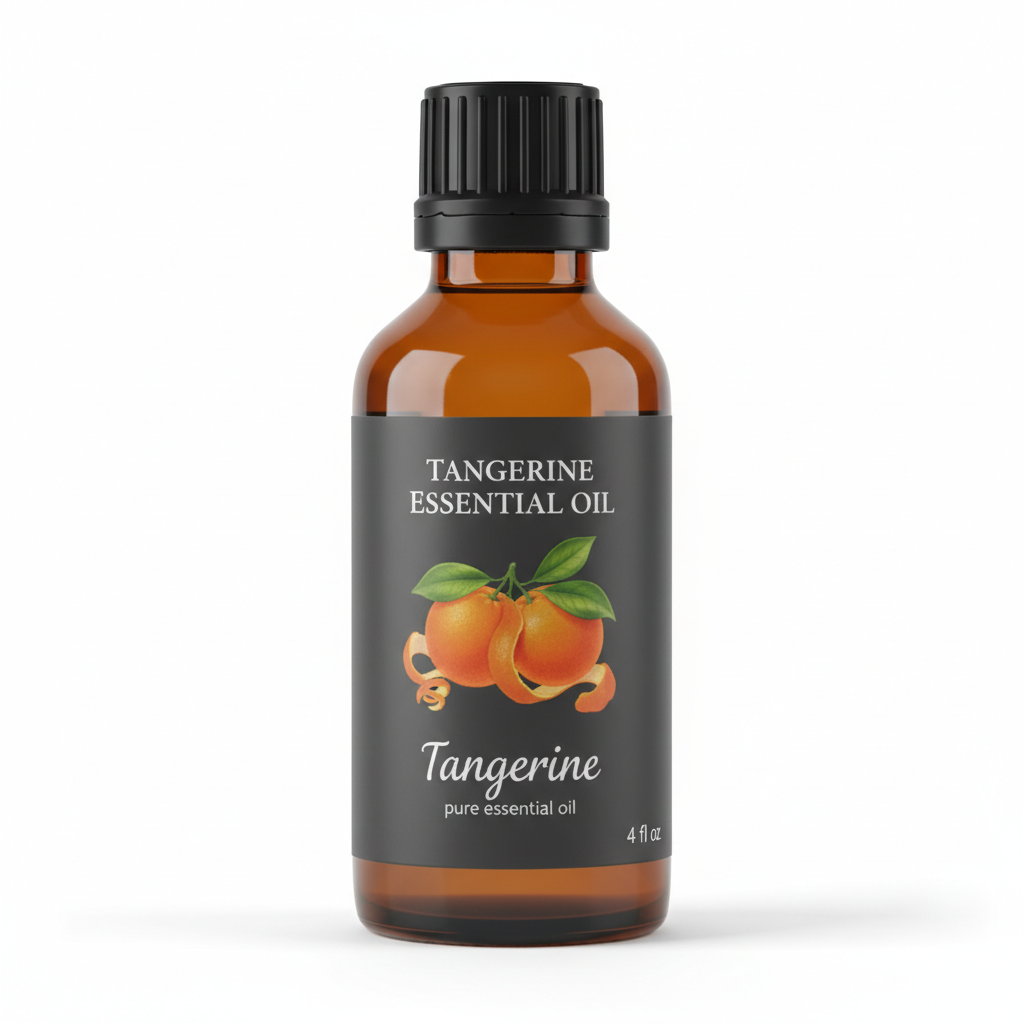
Tangerine Essential Oil
Our own Tangerine Essential Oil, in sizes from 0.5 oz to bulk.
From $12.99
Shop Now →Why citrus oils care about air
Tangerine peel oil is mostly limonene, and limonene reacts with oxygen. In 1992, researchers compared limonene that had been exposed to air with limonene that had not. In guinea pigs, the air-exposed limonene caused sensitisation and the unexposed did not. They identified carvone and limonene oxides among the main oxidation products as the potent ones. That was an animal study of limonene itself, so applying it to a finished oil is a sensible inference rather than a measurement.
Human studies point the same direction. A multicentre study of 2,900 dermatitis patients found 5.2% reacted to oxidised limonene, while the authors noted that pure limonene is not, or only very weakly, an allergen. A Danish registry of 6,719 patients reported positive reactions to limonene hydroperoxides in 1.6%. These were people referred to dermatology clinics, so the figures do not describe the general public. What they show is that the fresh oil is not the concern. The aged, air-exposed oil is the thing worth avoiding, and that is entirely in your hands.
How long does a bottle stay bright?
Sources give a window rather than a date. The Tisserand Institute says most essential oils keep well for at least one to two years before oxidation starts to take effect. EFSA's file on expressed mandarin oil gives a shelf life of at least 12 months in tightly closed containers kept cool, dry and out of light. We say typically 12 to 18 months with the cap tight and the bottle away from sunlight and warmth. Those fit together nicely: about a year is the floor, and good storage can stretch it.
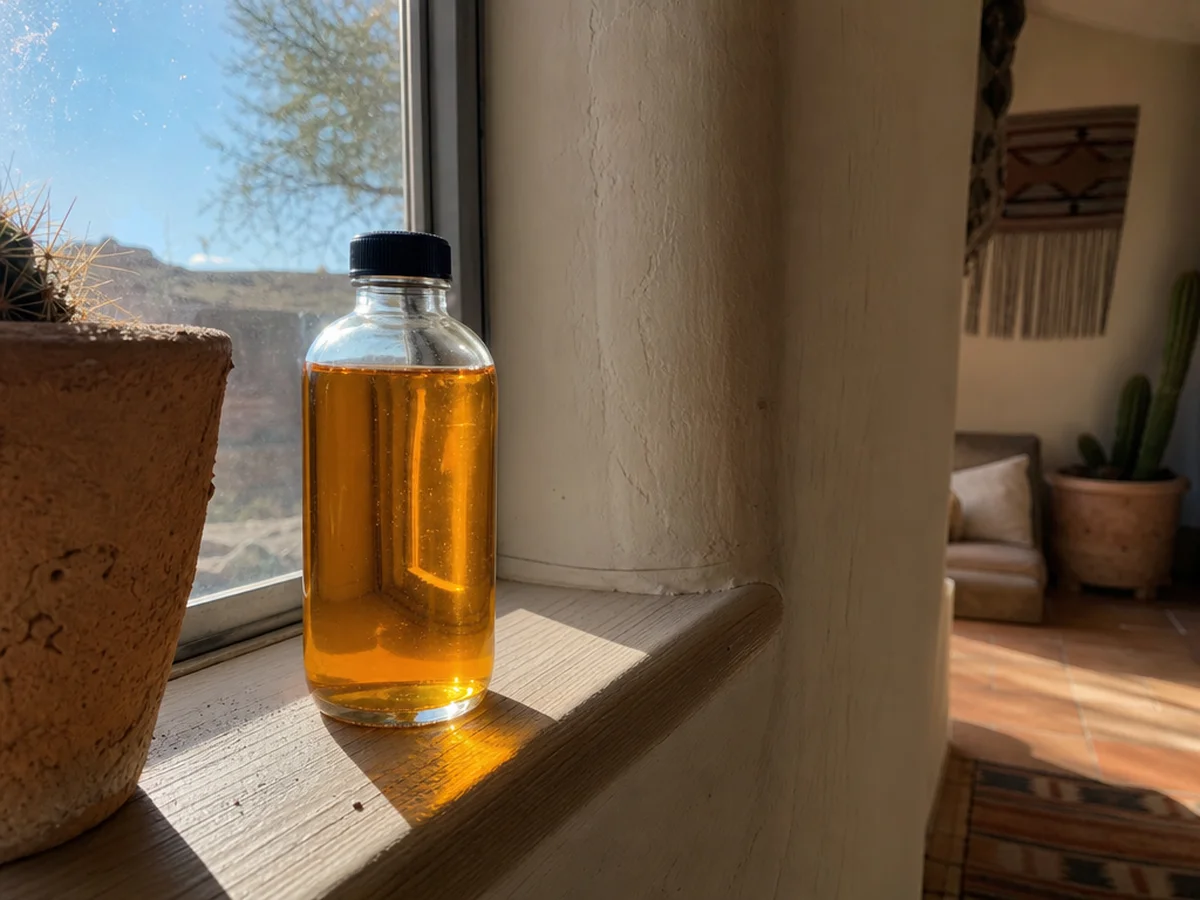
The nose and the skin run on different clocks. Tangerine is a top note that fades faster than heavier oils, and the aroma is at its strongest in the months right after opening. A bottle can smell a little less bright long before anything else about it changes. Because there is no easy home test that tells scent fade from oxidation, our advice is to use a fresh bottle for anything that stays on skin once it is clearly past its best.
Four habits worth having
- Buy the size you will finish. The Tisserand Institute notes that the more air in the bottle, the faster the oil oxidises, and a bottle that is a quarter full holds a lot of air. A smaller bottle you use up is better than a larger one you nurse along. The sizes guide helps you pick.
- Keep the cap on. Open, pour, close. Do not leave the bottle open on the bench while you measure.
- Keep it out of light and warmth. A cupboard away from the stove and the window does the job.
- Keep it cool. Refrigeration is the one step with a number attached: Tisserand says it about doubles an oil's useful life.
If you use the refrigerator
Keep the bottle sealed, inside a small container so it cannot pick up other smells, and let it come to room temperature before opening so condensation does not form on the neck and drip in. That second tip is our reasoning from Tisserand's point that citrus oils sometimes go cloudy when moisture gets into the bottle, which then speeds oxidation.
Decanting once, not weekly
If you buy a larger bottle than you can finish in a reasonable time, pouring part of it into a smaller, clean, full glass bottle leaves less air above the oil. We think that makes sense once, at the start. Every transfer lets in a little air and a chance for water or dust, so it is not a weekly habit.
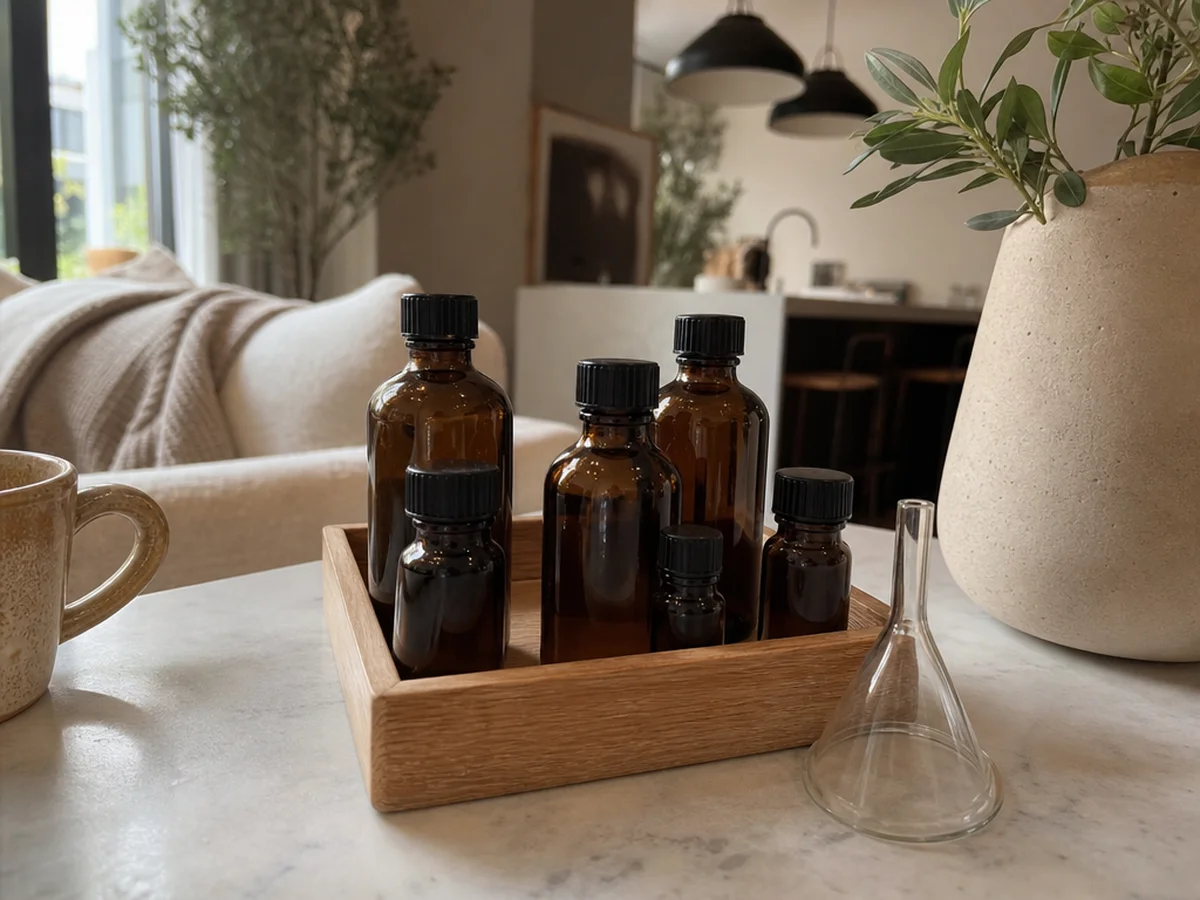
A home for the bottle
Pick one spot and make it the bottle's permanent address: a shelf in a bedroom closet, a drawer in a cool hallway, a box on a pantry shelf away from the stove. Consistency matters more than perfection. A bottle that lives in one cool, dark place is easier to keep track of than one that wanders between the bathroom, the windowsill and a purse. If you have more than one oil, a small box with a lid keeps them together and out of sight.
How to check a bottle you already own
Tisserand lists three signs: the smell loses some of its brightness (hard to judge without a fresh bottle to compare), citrus oils sometimes go cloudy, and very old oils can thicken. Thickening usually takes many years, so it is a late sign. Writing the opening date on the label is a free and useful habit. If a bottle smells flat, we would keep it out of leave-on blends, and anyone with a history of reacting to scented products can ask a dermatologist or pharmacist.
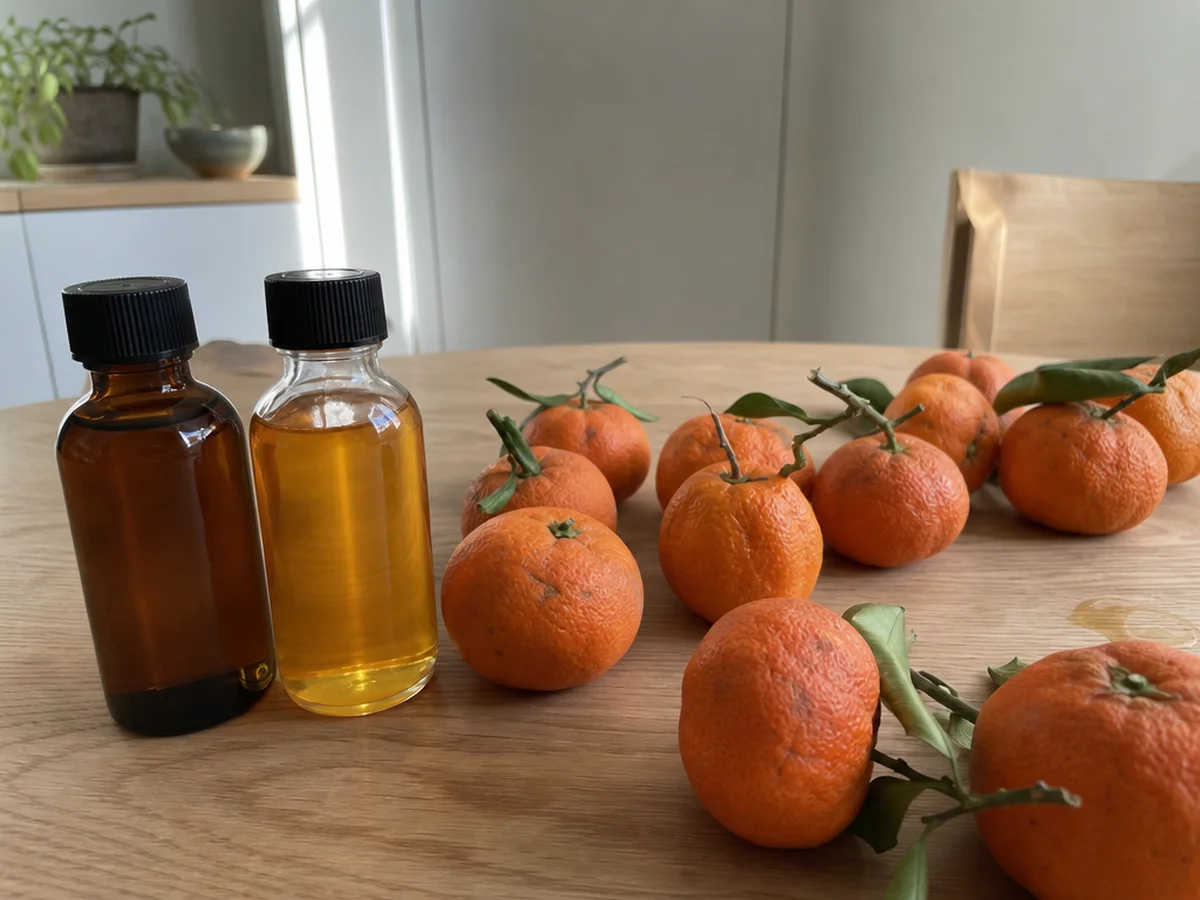
A diluted blend is a different story: mix small amounts and use them promptly, and see our dilution guide for the maths. To learn how the oil gets into the bottle in the first place, take a look at our cold-pressing article.
Give the bottle a quick sniff every month or two, right at the cap, and let yourself enjoy it. You will get to know how it smells when it is bright, and that makes it much easier to tell when it is not.
Small bottle, tight cap, cool and dark, dated label: that is the whole recipe for keeping tangerine bright.
Tangerine Essential Oil
Tangerine Essential Oil from our own shop, in sizes from 0.5 oz to bulk.
From $12.99
Shop Now →Sources & Further Reading
- Tisserand Institute. Is my bottle of essential oil oxidized or no longer good to use? tisserandinstitute.org
- Karlberg AT, Magnusson K, Nilsson U, 1992. Air oxidation of d-limonene (the citrus solvent) creates potent allergens. Contact Dermatitis 26(5):332-340. PubMed 1395597
- Bråred Christensson J et al., 2013. An international multicentre study on the allergenic activity of air-oxidized R-limonene. Contact Dermatitis 68(4):214-223. PubMed 23510342
- Botvid S et al., 2026. Ten Years of Patch Testing to Hydroperoxides of Limonene and Linalool: Prevalence, Patterns and Clinical Insights. Contact Dermatitis 94(5):504-514. PubMed 41638887
- EFSA FEEDAP Panel, 2021. Safety and efficacy of a feed additive consisting of expressed mandarin oil from the fruit peels of Citrus reticulata Blanco for use in all animal species (FEFANA asbl). EFSA Journal 19(6):e06625. Europe PMC PMC8190682