Tangerine Oil on Stickers? What Limonene Can and Can't Do
The orange-peel trick is old kitchen lore: rub a bit of citrus on a sticky label and it lets go. There is real chemistry behind the idea, because the main component of tangerine peel oil, limonene, is a solvent. There is also a good reason to think twice before pointing a cosmetic oil at a sticker, and it comes from the same chemistry.
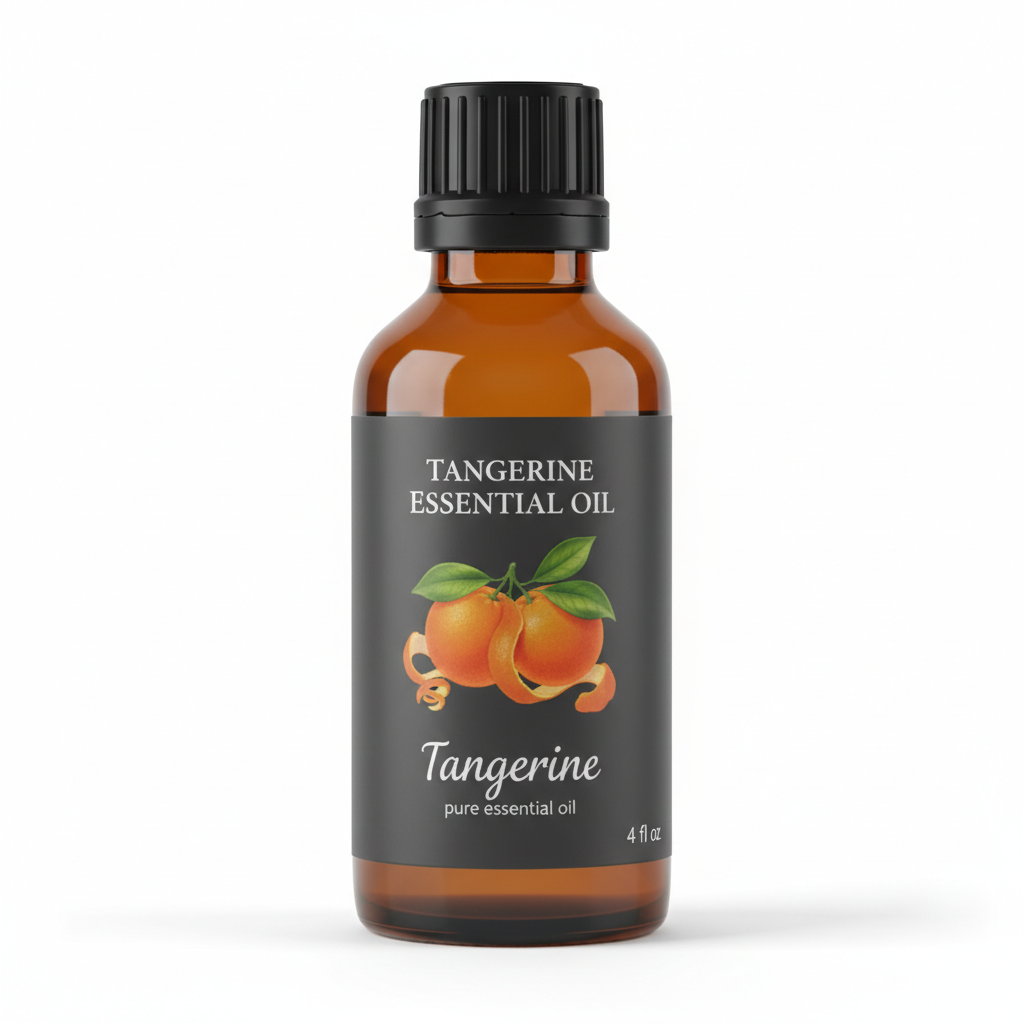
Tangerine Essential Oil
Our own Tangerine Essential Oil, in sizes from 0.5 oz to bulk.
From $12.99
Shop Now →Why limonene gets mentioned for sticky jobs
Limonene was once a leading candidate to replace harsh chlorinated solvents for cleaning electronic assemblies. A 1991 Lawrence Livermore National Laboratory report on that very question found something instructive: aluminum joints bonded with a urethane adhesive were destroyed during exposure to saturated d-limonene vapor, and the bond failure seemed to come from limonene swelling the adhesive polymer. That was one specific adhesive in a closed, saturated atmosphere, so it tells us that limonene can soften some polymers and nothing about a price tag on a mug. We did not find any study of tangerine or other peel oil on label adhesives, so we make no promise that it works.
The same property is the reason to be gentle with what is underneath. Anything made of plastic, foam, rubber, paint or finished wood could react to a solvent, and a hidden-spot check is the sensible first step.
It is a fragrance oil first
Our tangerine oil is a cosmetic aroma material, sold neat, and nothing about it is formulated, labelled or sold as a cleaner. A hardware-store remover made for the job will serve you better, and we recommend one for anything you care about. If you want to give citrus a go anyway, here is how we would approach it, based on the safety information we could verify.
Patience works better than you would think
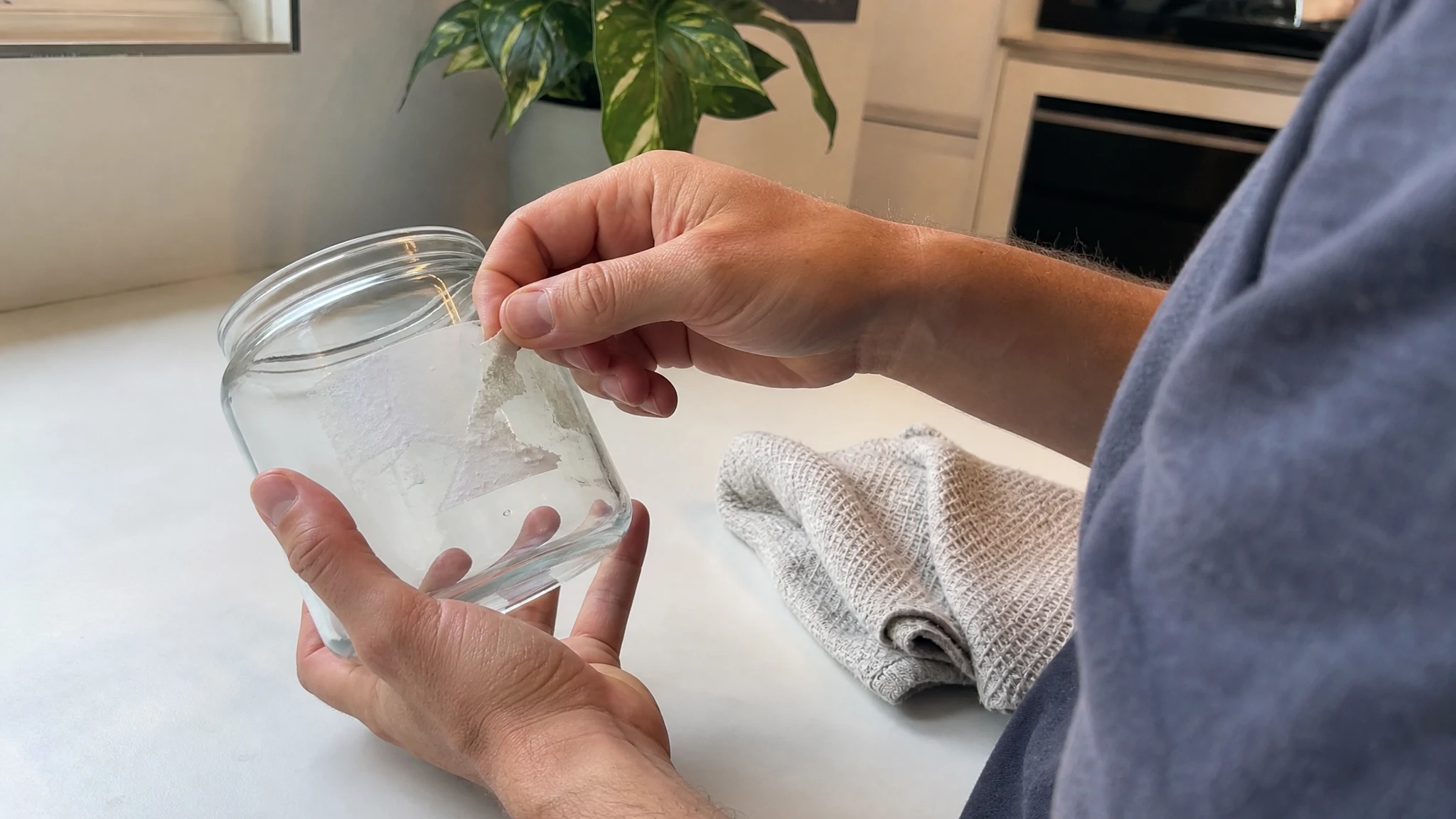
Most stubborn labels are less stubborn than they look. Soak a cloth in hot, soapy water, lay it over the sticker and leave it for ten minutes or so while you do something else. Then lift one corner with a thumbnail and peel slowly, pulling back at a low angle rather than straight up. A hair dryer on low heat will soften a label on glass or metal, and a plastic scraper or an old gift card will push off what is left. It takes a little more time than a spritz of something strong, and it keeps your cabinet doors and your jars looking the way you like them.
Flammability and fresh air
PubChem lists the flash point of limonene at about 45 C (113 F, closed cup). That is below the temperature of a sun-baked car dashboard, so the vapour can form a flammable mixture at ordinary warm temperatures. This is our reading of that figure: keep oil and anything soaked in it away from heaters, pilot lights, candles and cigarettes, and open a window while you work.
Skin contact and old bottles
Neat oil on bare fingers is more contact than a diluted skin blend would give you, so nitrile gloves are a sensible habit. There is a freshness point too. Limonene that has reacted with air forms compounds that are recognised contact allergens: in a six-country patch-test study of 2,900 dermatitis patients, 5.2% reacted to oxidised R-limonene. The Tisserand Institute notes that oxidised oils can raise the chance of skin reactions. The old bottle in the back of the cupboard is therefore the wrong candidate for scrubbing off a sticker with your hands. Our storage guide explains how to keep a bottle fresh in the first place.
A cautious test sequence
This is a procedure we have worked out from the hazards above, not a result.
- Try warm water and dish soap first. Many labels let go with patience and a little soaking.
- Ventilate, keep flames and heaters away, and keep children and pets out of the room. Pet Poison Helpline lists citrus oils, mandarin among them, as ones that can poison pets, with cats and birds at greatest risk; see our pet guide.
- Put one drop on a cotton swab (about 0.05 ml at the usual 20 drops per ml) and hold it on a hidden edge for a few minutes. Check for softening, tackiness, clouding or colour change.
- If the spot is unchanged, use one or two drops along the sticker edge rather than all over.
- Wipe away, wash the area with dish soap and warm water to lift the oily film, then rinse and dry.
Glass and bare metal are the least likely surfaces to react, but the hidden-spot step applies there too. A few drops go a long way: a 1 oz bottle holds roughly 590 drops at 20 per ml, so this small job barely dents it.
Cloths and cleanup
Treat anything soaked in oil with care. Let a single paper towel air out outdoors, and ask your local fire department how to dispose of anything larger. Our dryer ball article covers why we keep oil-soaked fabrics away from a hot dryer.
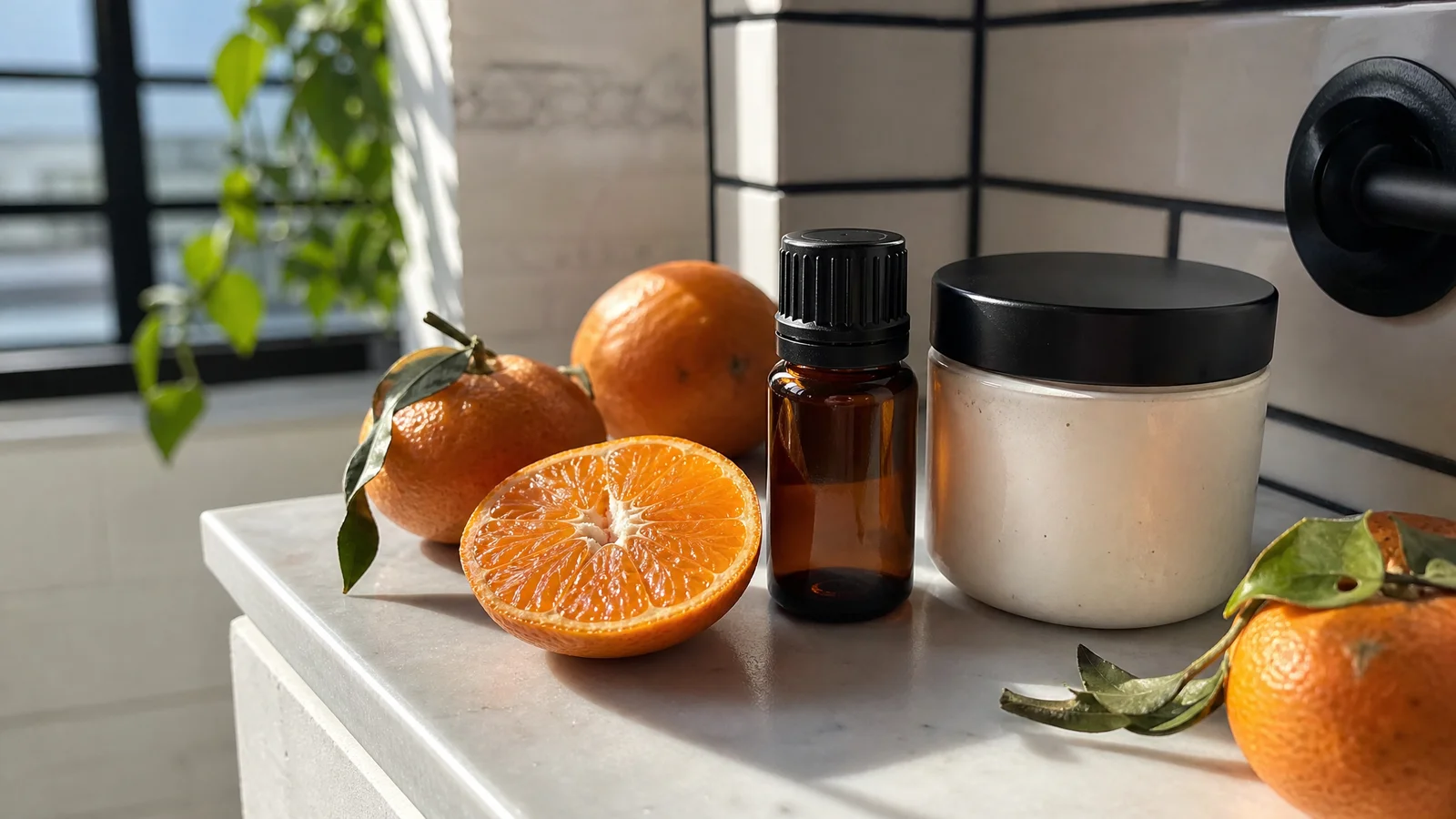
There is something to be said for letting a bottle do the job it was made for. Open our tangerine oil and the first thing you notice is that sweet, juicy, candy-bright smell, the kind that makes you think of peeling fruit at the kitchen counter. That is the pleasure we want you to get from it. Keeping it away from glue and paint means the bottle lasts longer and stays nice to open.
For a pleasant citrus cleaning idea that keeps the oil well diluted, see our kitchen refresh article. Tangerine oil shines in a diffuser, a scrub or a perfume oil; for stickers, reach for a remover made for the job and keep the bottle for what it does best.
Tangerine Essential Oil
Tangerine Essential Oil from our own shop, in sizes from 0.5 oz to bulk.
From $12.99
Shop Now →Sources & Further Reading
- LeMay JD, Mendoza B, 1991. Compatibility of Halthane 88-3 urethane adhesive with the replacement cleaning solvent D-Limonene. Lawrence Livermore National Laboratory. UNT Digital Library
- PubChem. 1-Methyl-4-Prop-1-En-2-Ylcyclohexene (limonene), CID 22311: flash point. pubchem.ncbi.nlm.nih.gov
- Bråred Christensson J et al., 2013. An international multicentre study on the allergenic activity of air-oxidized R-limonene. Contact Dermatitis 68(4):214-223. PubMed 23510342
- Tisserand Institute. Is my bottle of essential oil oxidized or no longer good to use? tisserandinstitute.org
- Pet Poison Helpline. Essential Oils. petpoisonhelpline.com