Tangerine Oil and Pets: A Careful Home Guide
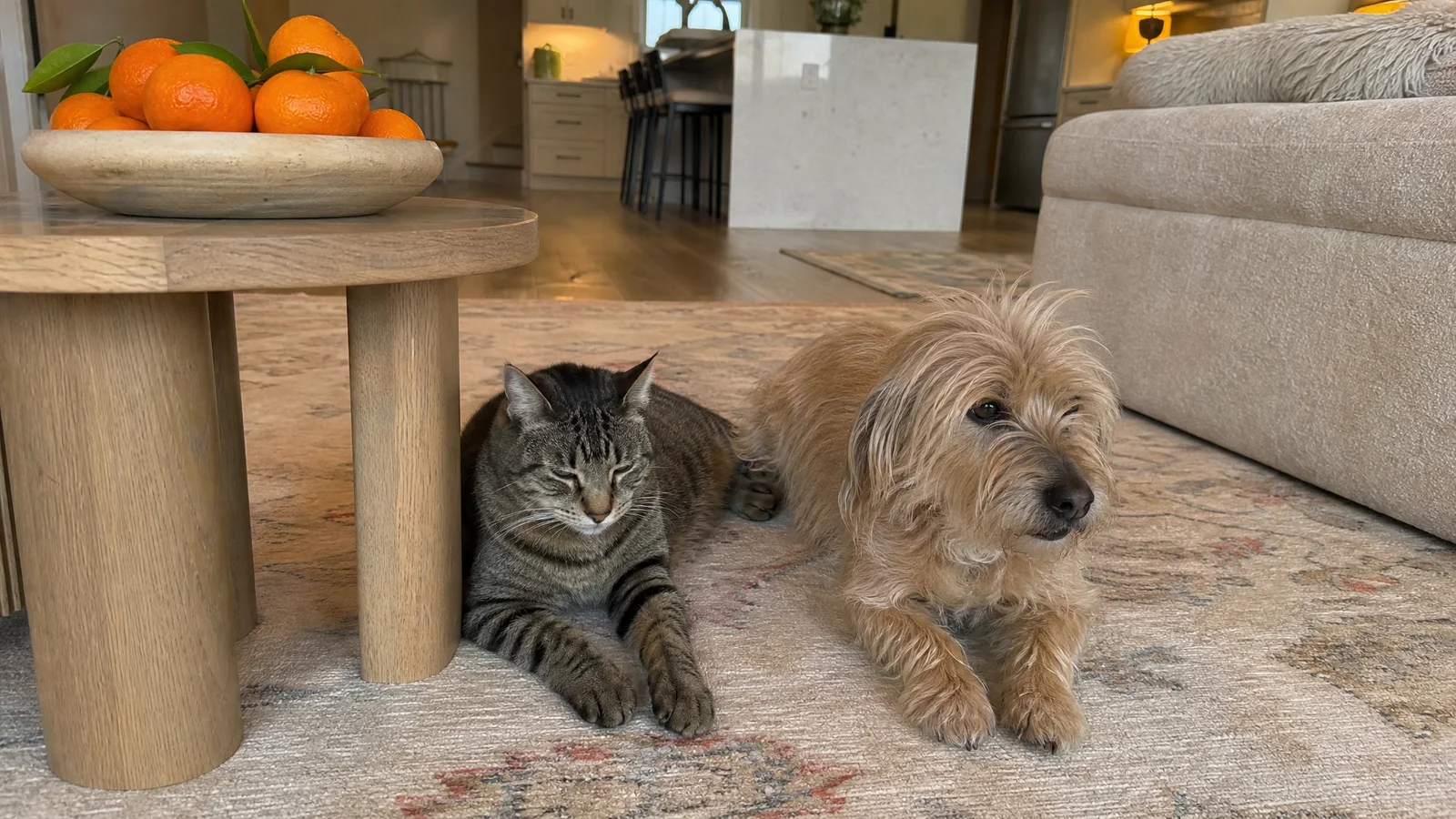
Few things are as cozy as a cat curled on a warm windowsill while something citrusy drifts through the room. Before you add tangerine oil to that scene, it helps to know what poison-control specialists say about essential oils and animals, because the honest summary is that pets are far more sensitive than we are and that nobody has published a safe amount of tangerine oil for a dog or a cat.
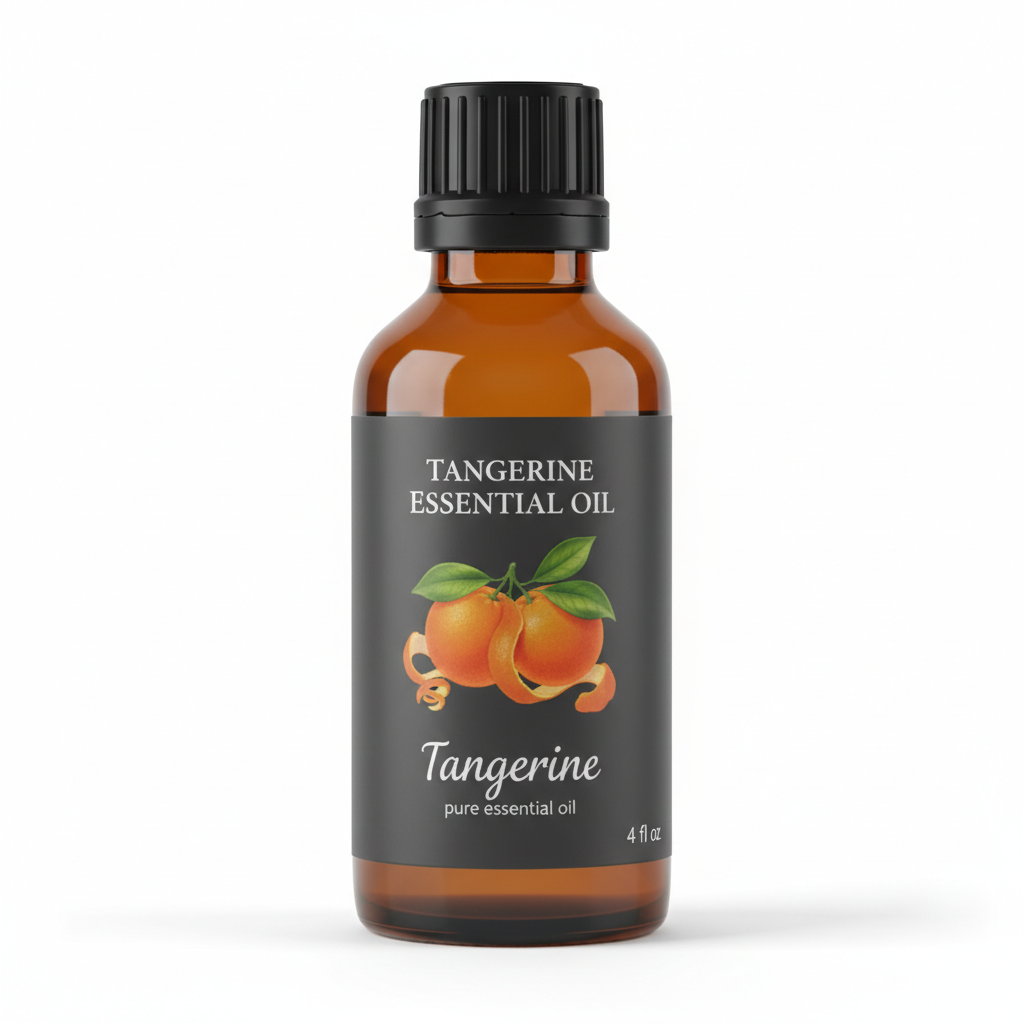
Tangerine Essential Oil
Our own Tangerine Essential Oil, in sizes from 0.5 oz to bulk.
From $12.99
Shop Now →What the pet poison specialists say
Pet Poison Helpline states that essential oil poisoning can affect all species, with cats and birds at the greatest risk. Its list of oils that can cause poisoning includes citrus oils by name: orange, lemon, lime, bergamot, mandarin and grapefruit. Tangerine is not on that list, but it is a close relative of mandarin, so the sensible assumption is the same caution. That is reasoning on our part, not a finding about tangerine itself.
The page also explains that the risk depends on the oil, the dose and the concentration, and that high-concentration exposures are far more concerning than low ones. It ranks the routes: swallowing is the highest risk, then skin, then breathing it in. Pets mix routes all the time, because oil on fur ends up in the mouth during grooming. Our oil is sold neat and undiluted, which makes it the highest concentration there is.
The European Food Safety Authority looked at an expressed mandarin peel oil as an additive in animal feed. Its panel could draw no conclusion about safety for companion animals, and described the oil as an irritant to skin, eyes and the respiratory tract and a skin sensitiser. That is a feed-additive opinion about a related oil, but it makes the same point in a regulator's voice: for dogs and cats, the evidence simply is not there.
Thinking like your pet
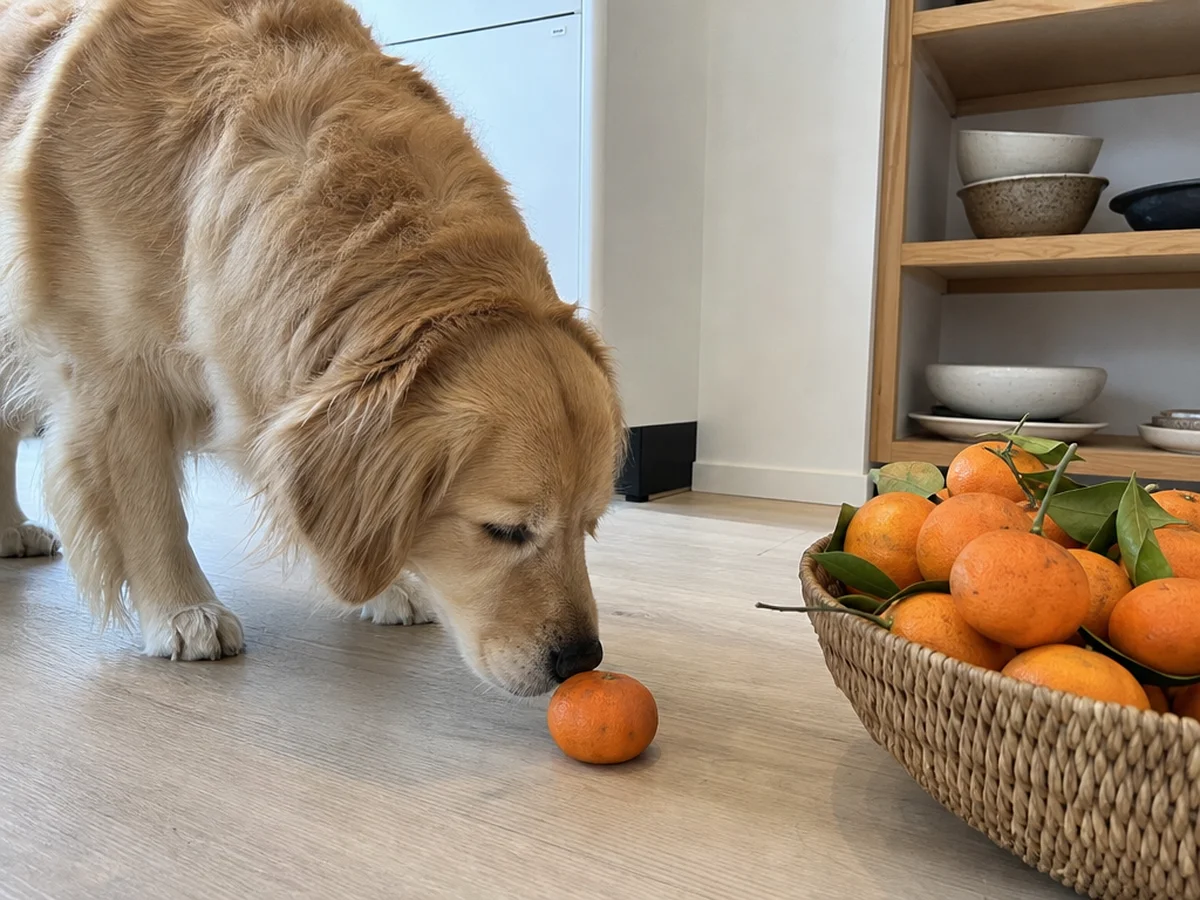
It helps to look at your home from the floor. Cats jump onto shelves and counters, dogs sniff everything at nose height, and birds sit wherever they like. A bottle that seems safely out of the way to you may be easy for them. Walk through the rooms where you keep your oils and ask where a curious animal could reach.
Where the biggest risk sits
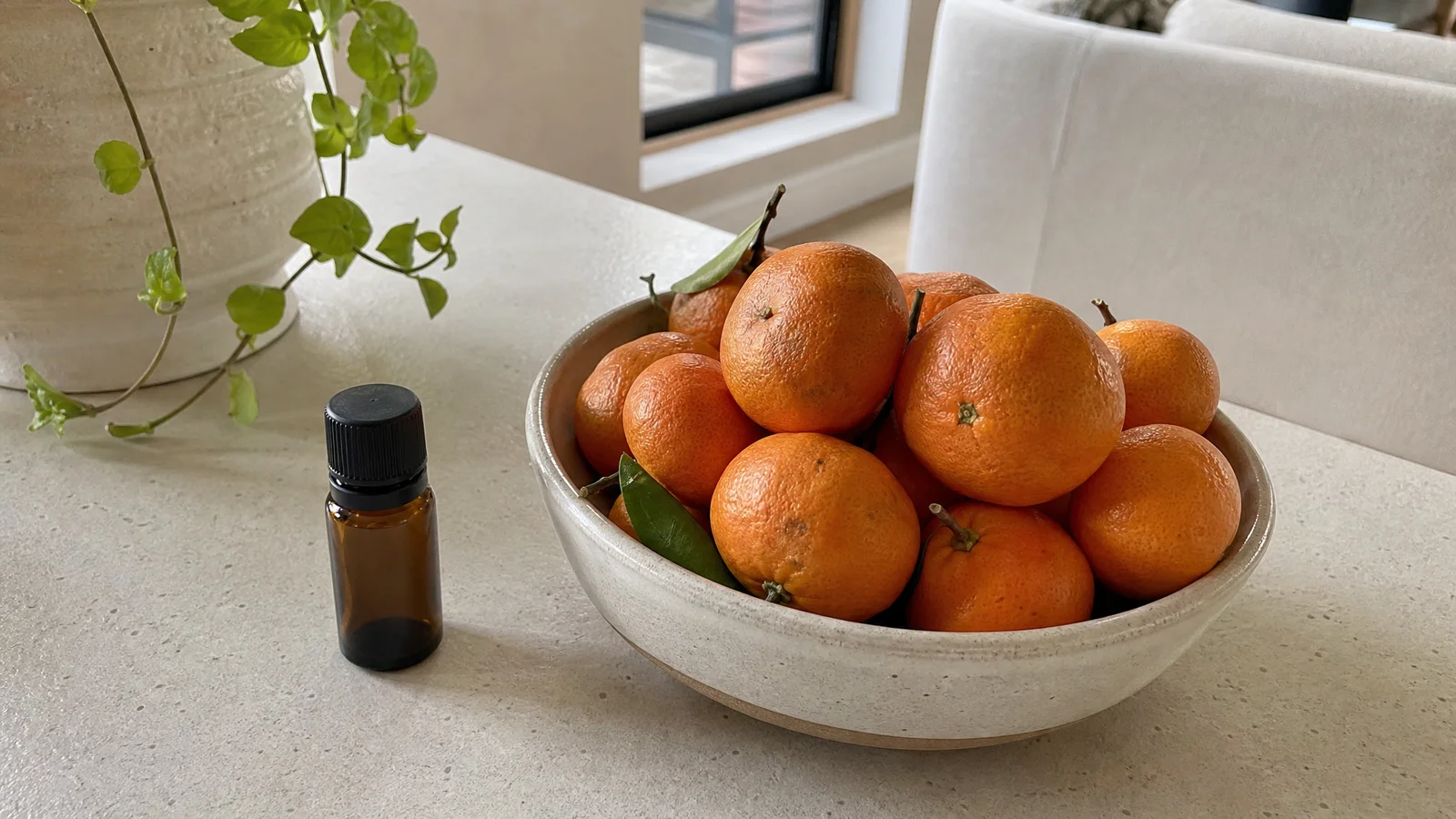
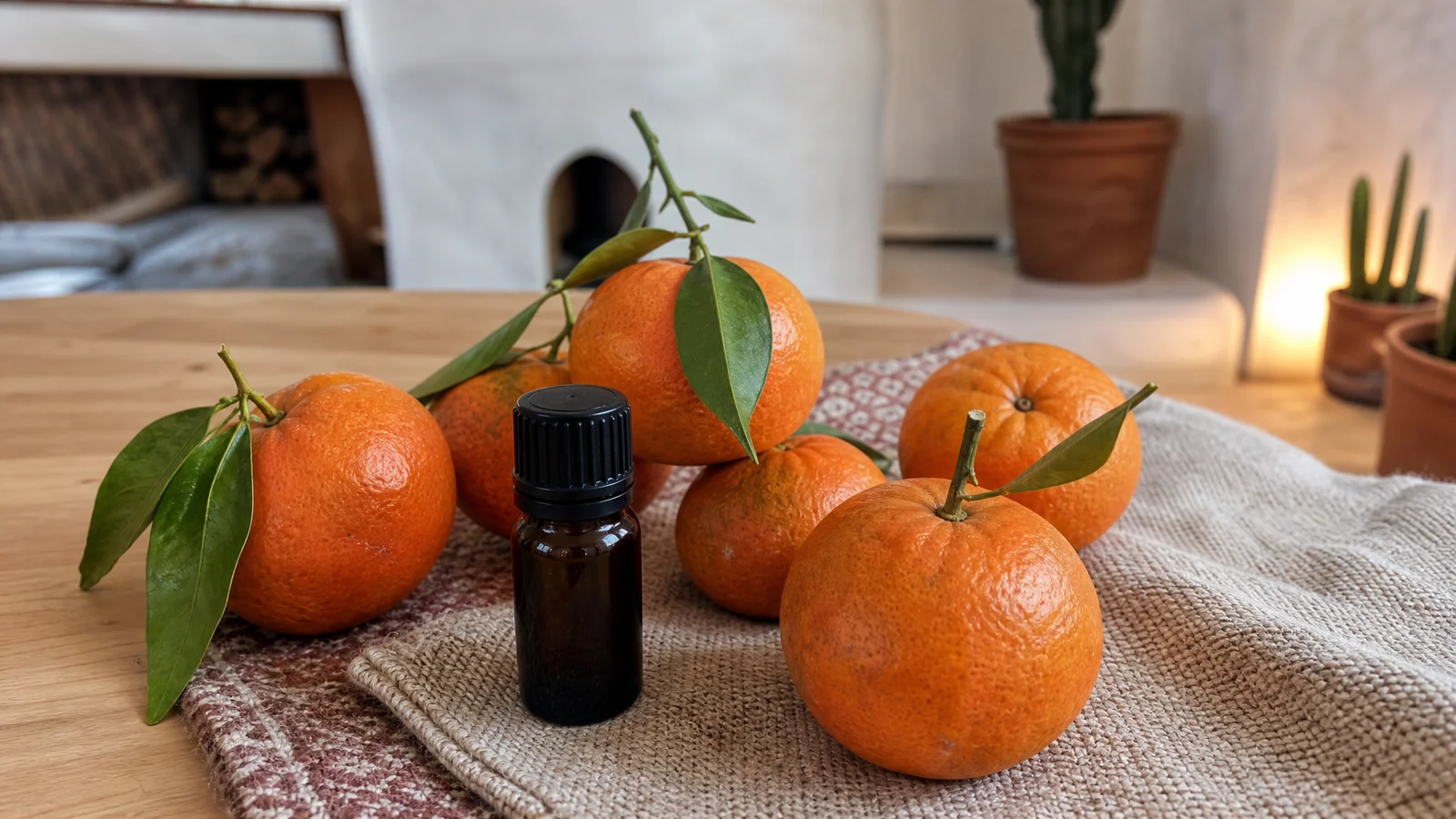
For most homes the bigger concern is not the scent in the air but a bottle knocked off a shelf, a drop on the floor, a dropper left open, or oil on a coat. That makes storage the first line of defence, and the cheapest. Keep the bottle capped, high up or in a closed cupboard, and wipe drips straight away. Our storage guide covers keeping the oil fresh at the same time. Whatever size you keep, from the bottles in our shop to the larger ones on our bulk page, the same storage rules apply, and our guide to buying tangerine oil in bulk covers what to check before buying more.
Diffusing in a home with animals
No study we found measured pet exposure from a diffuser, so there is no sourced number of drops or minutes to give you. Breathing is the lowest-risk route on Pet Poison Helpline's ranking, but the page does not call it zero. If you do diffuse, we would do it in a room the animal can leave, with the door open, for a short time, and we would stop if the animal drools, coughs or acts unlike itself. Birds are the clearest case for skipping it altogether. Our diffusing guide has the practical side.
If your pet gets into it
Call your veterinarian or Pet Poison Helpline, which lists a 24-hour line at (855) 764-7661, and do it before anything else. The clinical guidance on the page says not to induce vomiting, because of the risk of aspiration. The usual signs are drooling, vomiting, lethargy and loss of appetite, typically within 6 to 8 hours. For skin or coat exposure, clinicians may suggest bathing with liquid dish detergent, but call first, since the right steps depend on the animal and the amount. Keep the bottle handy so you can read out the name and concentration.
Small habits that help
Keep the oil in a closed cupboard, wipe drips immediately, and wash your hands after you handle it, because pets love to greet you with a nuzzle. Do your crafting in a room your pets are not in, and keep that door closed until the air has cleared. If you notice a scent clinging to your clothes, change before you cuddle an animal.
Cleaning sprays, candles and repellents
The same routes apply to a spray on a counter or a candle on a low table, since pets walk and lick everywhere. In a home with a cat or a bird, we would leave citrus oil out of cleaning products; our kitchen spray post explains why. Flea and insect products are a separate category, and a veterinarian is the right person to choose them.
If you are bringing a new pet home or a new bottle, take a moment to think through the room layout. Where will the diffuser sit? Where will the bottle live? Can the animal leave the room whenever it likes? Answering those three questions up front is the easiest bit of planning you will do all week.
Children share the same shelf
The National Capital Poison Center says essential oils should be locked up, out of sight and reach of children and pets. One closed cupboard serves both. Our children's page has more.
Pets give us a lot of joy, and the least we can do is keep their space simple and fresh. A little caution around the oil is a small price for that.
If you love citrus and share your home with animals, the gentlest route is also the simplest: keep the oil out of their space, and ask your veterinarian about your own animal before you decide. The fruit itself on the kitchen counter smells wonderful too.
Tangerine Essential Oil
Tangerine Essential Oil from our own shop, in sizes from 0.5 oz to bulk.
From $12.99
Shop Now →Sources & Further Reading
- Pet Poison Helpline. Essential Oils. petpoisonhelpline.com
- EFSA FEEDAP Panel, 2021. Safety and efficacy of a feed additive consisting of expressed mandarin oil from the fruit peels of Citrus reticulata Blanco for use in all animal species (FEFANA asbl). EFSA Journal. PMC8190682
- National Capital Poison Center. Essential oils: Poisonous when misused. poison.org