Best Carrier Oil for Tangerine Oil: Jojoba or Almond?
When you dilute tangerine oil, the tangerine is the small part. At 1 percent, 99 parts of every 100 are the carrier. So it is worth choosing one on purpose rather than grabbing whatever is on the shelf.
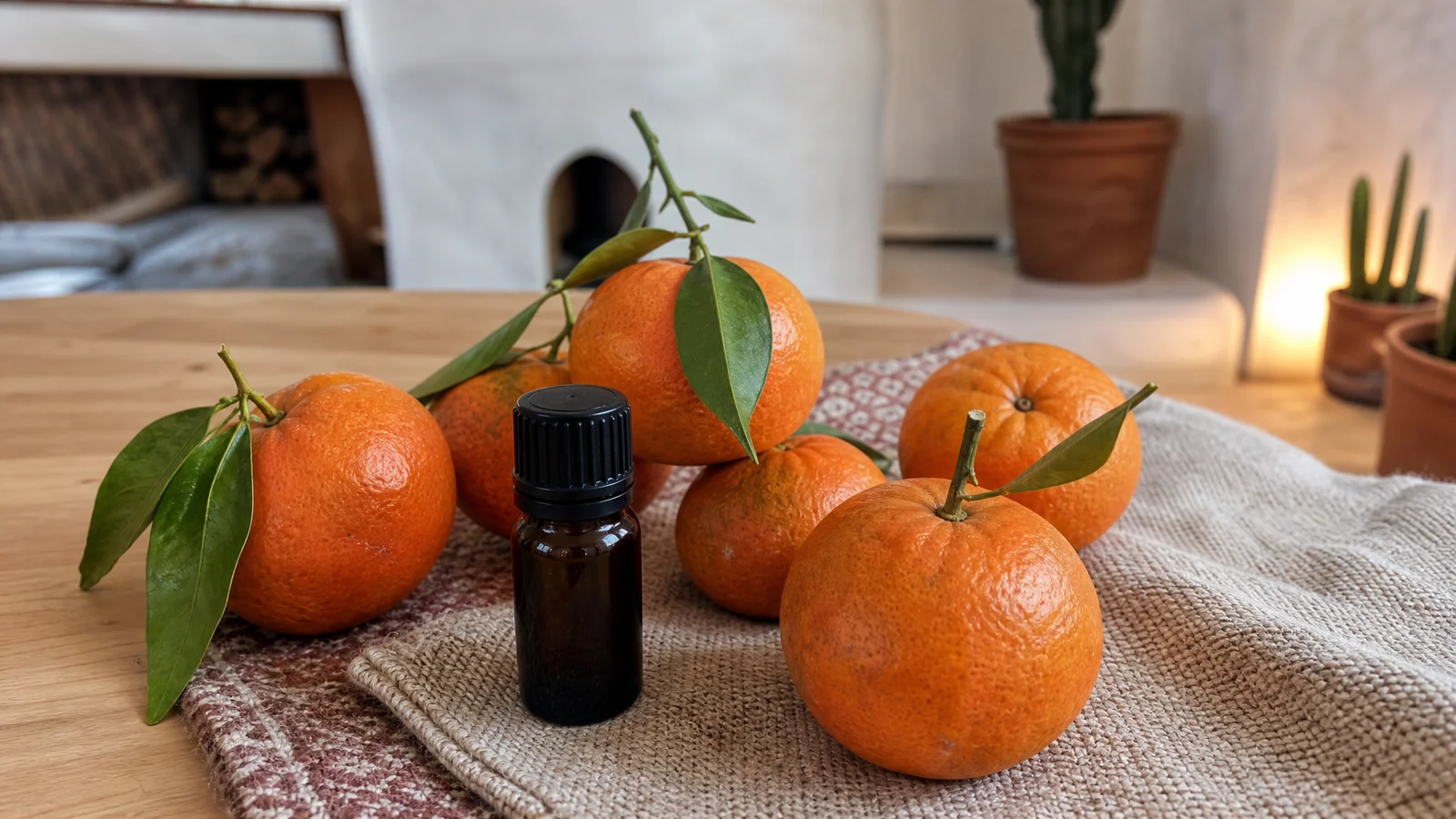
Tangerine Essential Oil
Our own Tangerine Essential Oil, in sizes from 0.5 oz to bulk.
From $12.99
Shop Now →We do not sell carrier oils; you will find them at a craft shop, pharmacy or grocery. What we can do is share how the common ones compare, and say what we recommend. Our own guidance is to dilute to 0.5% to 2% and to patch test first, and jojoba and sweet almond are the two carriers we name.
How they feel in your hands
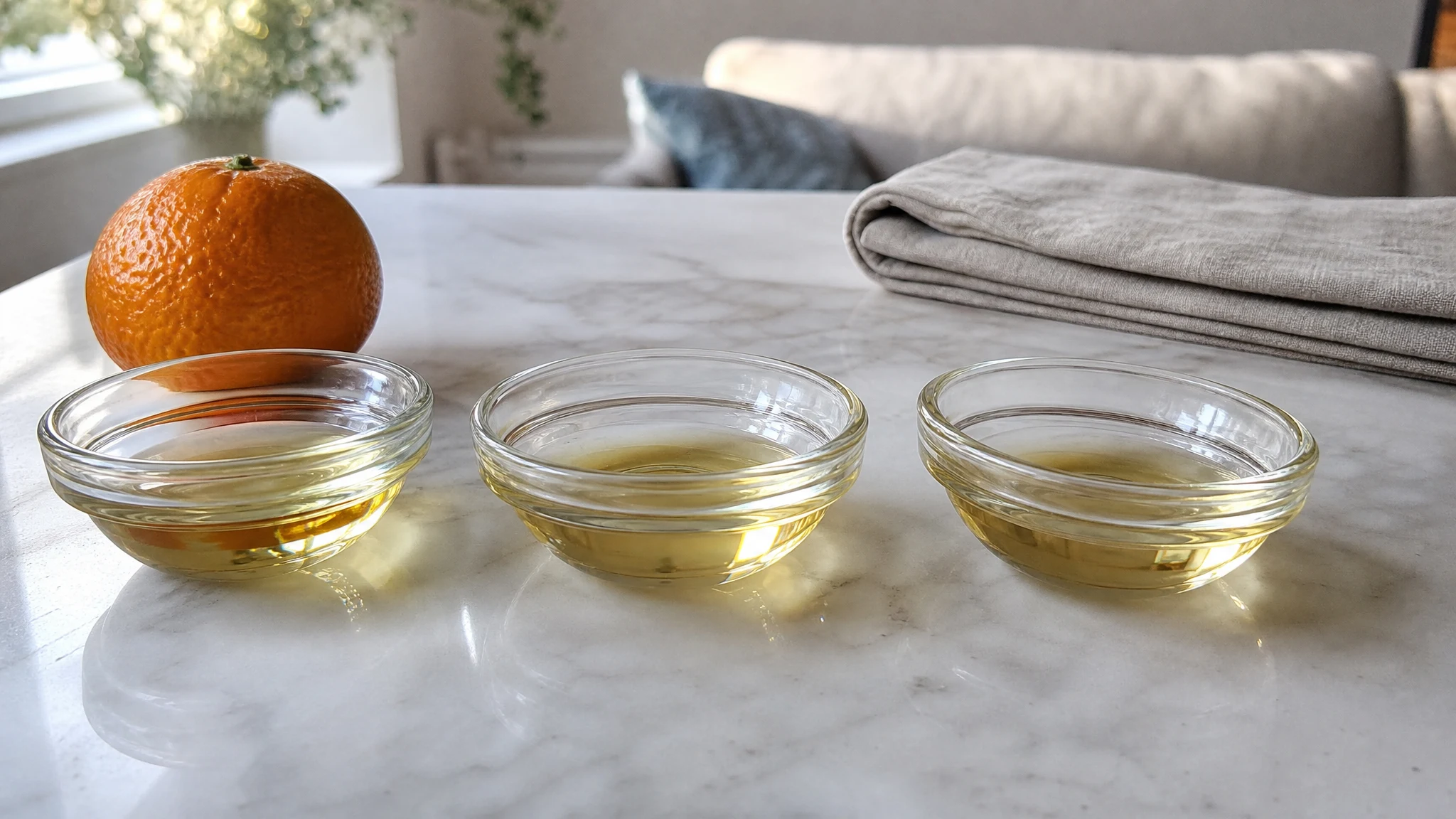
Numbers only go so far, so here is the plain sensory picture. Jojoba is golden and almost scentless, with a silky glide that sits on the skin a little longer. Sweet almond is paler and carries a faint, sweet, nutty smell, and it soaks in with a soft, familiar feel. Fractionated coconut is clear as water and feels very light. Put a few drops of each on the back of your hand, side by side, and you will know within a minute which one you would happily reach for every day.
Jojoba, the long keeper
Jojoba is not really an oil in the usual sense. A 2021 review describes it as about 98 percent liquid wax, mostly wax esters, rather than the triglycerides found in most plant oils. That structure shows up in storage. In a 2022 Japanese comparison, jojoba, olive oil and squalene were held at 60 degrees Celsius for 60 days. Jojoba's acid value did not change while the other two rose, and it showed the lowest peroxide and carbonyl values, so the authors called it the most stable of the three. That study did not include almond or coconut, and heating is not the same as sitting on a shelf, so it is a pointer rather than a ranking. Still, it is why we lean towards jojoba for anything you want to keep for a while, such as a small face blend at the low end of the dose range.
Sweet almond, the familiar body oil
Sweet almond is soft, easy to find and a familiar choice for body oil. The oils themselves vary: a study of four almond cultivars grown in Morocco found oxidative stability ranging from about 17 to 23 hours in the same accelerated test, with linoleic acid between 25 and 30 percent. More linoleic acid generally means a shorter shelf life, which is our reasoning from the chemistry. Almond comes with one practical caution. The FDA counts tree nuts, with almonds as its example, among the major food allergens, so if anyone using the blend has a tree nut allergy, choose jojoba or another carrier instead.
Fractionated coconut, the roller bottle favourite
Fractionated coconut oil stays liquid and feels light, which is why many people reach for it in roller bottles. We do not have a stability study to cite for it alongside the others, so we simply suggest checking the maker's date and storage notes and treating it like the rest: fresh, small and dated.
Whichever you pick, make your first blend a small one. A patch test on a quarter-sized spot, repeated twice a day for a week or so, is how the American Academy of Dermatology suggests trying a new product, and it is a sensible habit with any new carrier and oil combination.
Why freshness matters to the blend
Tangerine oil is mostly limonene, and oxidised limonene is a known contact allergen. The Tisserand Institute notes that most oils keep well for at least one to two years, and that refrigeration roughly doubles that. We say typically 12 to 18 months for our tangerine oil, kept tight, cool and dark. A tired carrier works against a fresh oil, so these habits help:
- Buy carriers in sizes you will use within a few months.
- Write the date you opened each bottle on it.
- Make small batches and keep them in a cool cupboard rather than a sunny windowsill.
- If a carrier smells off or sharp, replace it.
The arithmetic is simple. In an ounce of carrier, 1 percent is about 6 drops, with 3 at the low end and 12 at 2 percent. Our dilution guide goes through ratios and the patch test. For specific uses, see the face oil post and the body oil post, and the storage guide for the oil itself.
Small bottles, happy blends
If you are new to this, make a blend the size of a thimble before you commit to a roller bottle. Two teaspoons of carrier and a drop or two of tangerine is plenty to try on a small patch and see how you like the smell as it settles. Scent changes once it is on the skin and warms up, and it is much nicer to discover you want it softer when you have only mixed a spoonful.
Mixing it in the kitchen
Keep the process simple. Pour the carrier into a clean dish or bottle first, add your tangerine drops after it, and stir gently with a clean toothpick or swirl the closed bottle. Pouring the oil in first means you never have to fish a stray drop out of a bottle that is already full. Label it with the date and the percentage as you go, because a week from now you will not remember which blend was the 1 percent one.
When you shop for a carrier, read the ingredient list. You want one ingredient, the oil itself, in a bottle small enough to finish. A tall bottle that sits half-full for a year is not a bargain.
Pick the carrier that suits your skin and your calendar, and the tangerine will do its bright, citrusy best.
Tangerine Essential Oil
Tangerine Essential Oil from our own shop, in sizes from 0.5 oz to bulk.
From $12.99
Shop Now →Sources & Further Reading
- Jojoba Oil: An Updated Comprehensive Review on Chemistry, Pharmaceutical Uses, and Toxicity (Polymers, 2021)
- Oxidative Stability and Antioxidant Activity of Crude Jojoba Oil (BPB Reports, 2022)
- Characterization of Sweet Almond Oil Content of Four European Cultivars (Ferragnes, Ferraduel, Fournat, and Marcona) Recently Introduced in Morocco (Scientifica, 2021)
- Food Allergies: What You Need to Know (FDA)
- Is my bottle of essential oil oxidized or no longer good to use? (Tisserand Institute)
- How to test skin care products (American Academy of Dermatology)