Tangerine Face Oil: A Light Bedtime Blend
A face oil should feel like a quiet luxury, and a little tangerine suits that idea better than you might expect. The scent is cheerful without being heavy, and because you only need a whisper of it, the whole bottle takes a minute to make. The key is restraint. The face is where we would use the least tangerine oil of any leave-on blend.
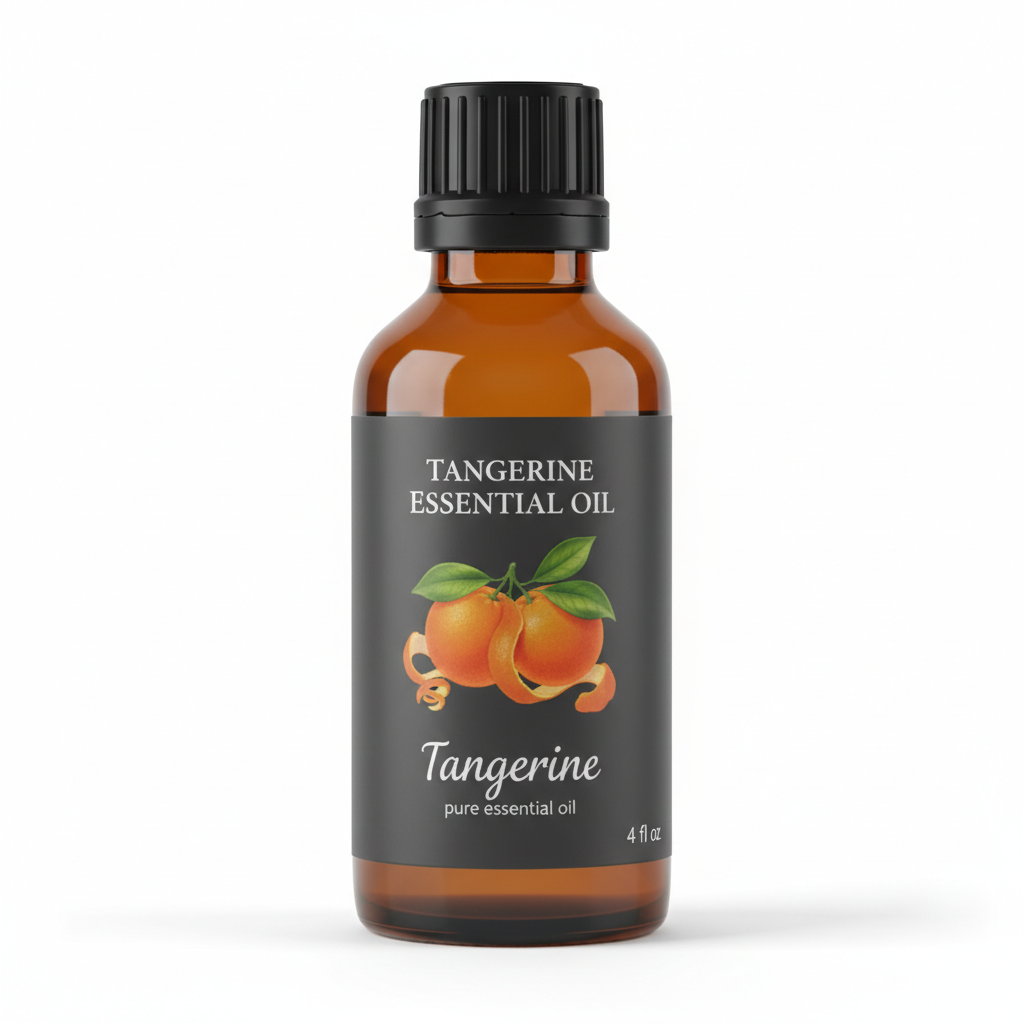
Tangerine Essential Oil
Our own Tangerine Essential Oil, in sizes from 0.5 oz to bulk.
From $12.99
Shop Now →The formulation
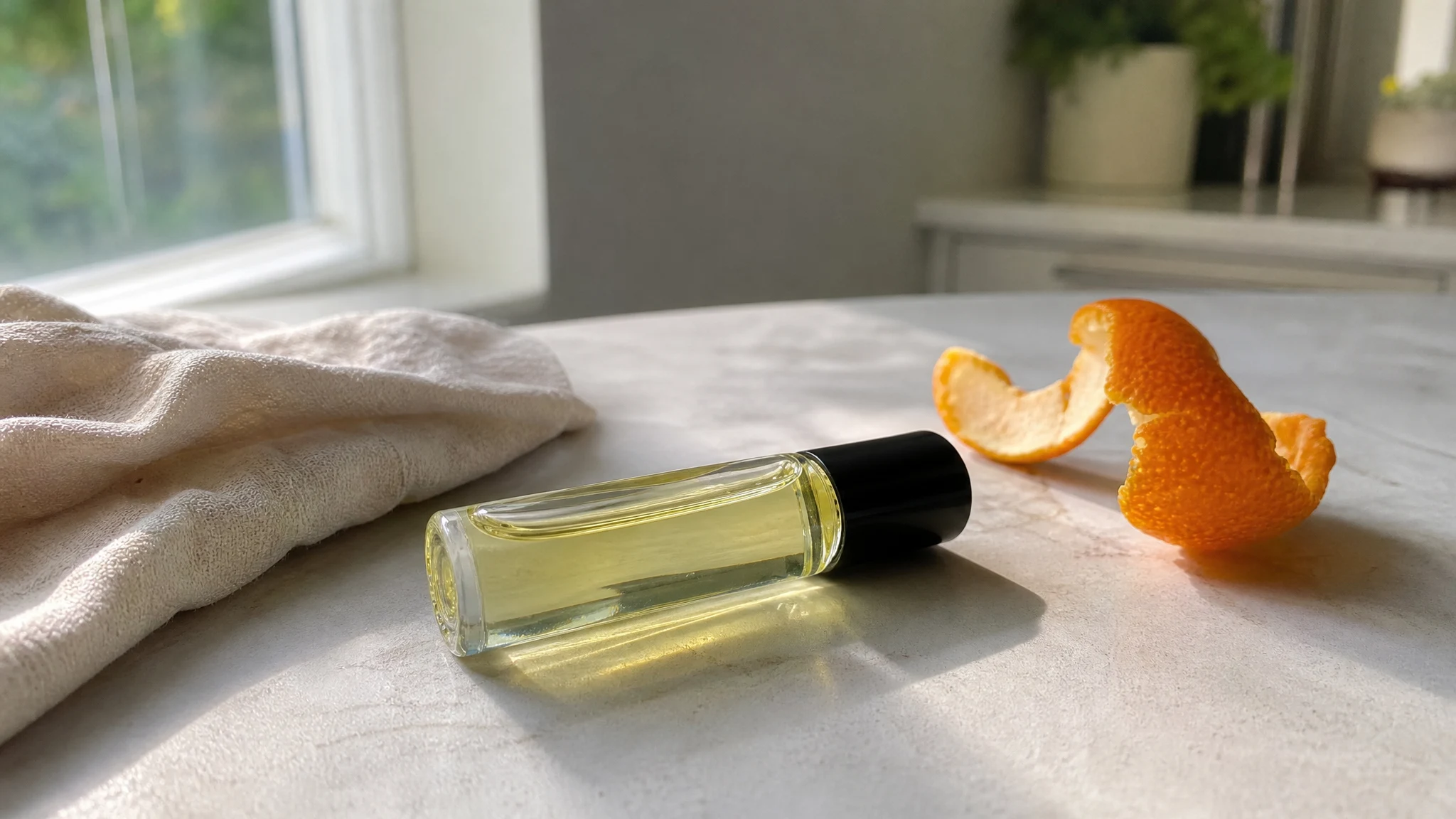
You need a light carrier, which we do not sell: jojoba and sweet almond are the two we suggest, and either is easy to find at a pharmacy or craft supplier. Here is the plan, calculated from published figures, not from batches we have made:
- 30 ml (1 oz) of carrier oil in a clean dark glass dropper bottle
- 3 drops of tangerine oil
Using a round 20 drops per millilitre, 3 drops is 0.15 ml, which is 0.5% of 30 ml. Our dilution guidance for tangerine is 0.5% to 2%, and for the face we stay at or below the bottom of that range. Droppers differ (Tisserand reports about 20 to 40 drops per millilitre across studies, see How big is a drop? - Tisserand Institute), so if your dropper makes small drops you are even lighter, and if it makes large ones, count carefully or use a syringe. Swirl gently and write the date on the bottle.
A few practical touches make the bottle nicer to live with. Choose a dark glass dropper bottle, because it keeps light off the oil and looks lovely on a bathroom shelf. Wash the bottle and dropper with warm soapy water and let them dry completely before you fill it; a drop of water in an oil bottle is a nuisance. Pour the carrier in first, add the tangerine, then cap it and roll the bottle between your palms for a few seconds instead of shaking it hard.
Why we keep the dose low
Tangerine peel oil is rich in limonene, which is lovely when fresh and changes as it meets air. In a multicentre patch-test study, air-oxidized limonene triggered reactions in some people already being tested for dermatitis, while the authors considered fresh limonene a weak allergen at most (An international multicentre study on the allergenic activity of air-oxidized R-limonene. Contact Dermatitis, 2013). The takeaway for face oil is practical: use a recently opened, well-stored bottle, keep the dose small, and skip the old one at the back of the cupboard. The Tisserand Institute notes that refrigeration will about double an oil's useful lifespan, and that citrus oils sometimes go cloudy when they oxidize (Is my bottle of essential oil oxidized or no longer good to use? - Tisserand Institute).
Facial skin is also where you are most likely to notice a reaction, and where the eyes are close. Keep the oil away from the eye area; Tisserand points out that diluted oils may be used near the eyes while undiluted oil must never be dripped into them (How to Use Essential Oils Safely - Tisserand Institute).
What you will notice
Open the finished bottle and you will smell mostly your carrier, soft and a little nutty, with a thin bright thread of tangerine running through it. That faint thread is the whole point. If you can smell the citrus strongly from arm's length, there is too much oil in the bottle, and we would pour a little more carrier in or start a fresh batch.
On the skin the oil should feel light and slip easily. Two or three drops is plenty for the whole face, and it should be absorbed enough to touch your pillow without leaving a mark. If it feels heavy, use less next time.
Patch test, then make it a night habit
Try the blend on a quarter-sized spot of the inner arm or elbow twice daily for seven to ten days before it goes on your face (How to test skin care products - American Academy of Dermatology). If your skin is irritated, broken or reactive to fragrance, or you are pregnant or nursing, skip it or ask your physician first.
Because citrus oils can make skin more sensitive to light, we advise avoiding sun exposure on freshly applied areas. The Tisserand Institute lists expressed tangerine among oils with extremely small amounts of furanocoumarins, not enough to be phototoxic, and still suggests keeping skin from UV for at least 12 hours after a phototoxic oil (Phototoxicity: essential oils, sun and safety - Tisserand Institute). The simplest answer is the nicest one: use your tangerine face oil as a bedtime step, press two or three drops between your palms, and smooth it over clean skin. The scent is a charming way to close the day.
A note on expectations
This is a fragrant, moisturizing oil, mainly thanks to the carrier, with a pleasant citrus aroma on top. We would not promise it does more than that, and neither should any recipe. If you are looking for a particular skin result, a dermatologist is the right person to ask.
Small batches keep this kind of oil lovely. Make a bottle you will finish within a few weeks, and let each new batch be a fresh little ritual.
For a similar idea on the body, see our after-shower body oil, and for the sun question in depth, our note on citrus oils and sunlight. Our safety overview brings the habits together.
Tangerine Essential Oil
Tangerine Essential Oil from our own shop, in sizes from 0.5 oz to bulk.
From $12.99
Shop Now →Sources & Further Reading
- An international multicentre study on the allergenic activity of air-oxidized R-limonene. Contact Dermatitis, 2013
- Is my bottle of essential oil oxidized or no longer good to use? - Tisserand Institute
- How to Use Essential Oils Safely - Tisserand Institute
- How to test skin care products - American Academy of Dermatology
- Phototoxicity: essential oils, sun and safety - Tisserand Institute
- How big is a drop? - Tisserand Institute