Tangerine Inhaler: A Simple Pocket Scent Guide
A personal inhaler is about as simple as aromatherapy gets: a small tube, an absorbent wick, a cap, and a few drops of oil. Open it, take a gentle sniff of bright tangerine, close it again. Because the tube is tiny and the oil sits right under your nose, the art is in using very little and keeping it fresh.
Tangerine Essential Oil
Our own Tangerine Essential Oil, in sizes from 0.5 oz to bulk.
From $12.99
Shop Now →Who might skip it
Anyone whose airways react to fragrance has a good reason to leave an inhaler out. EFSA, reviewing expressed mandarin oil, concluded that it should be considered an irritant to skin, eyes and the respiratory tract and a skin sensitiser. That was an assessment of a different oil for animal feed, but it describes the family of cold-pressed citrus peel oils sensibly. If you have asthma, are pregnant, or have a medical condition, ask your physician or pharmacist first; we sell an external cosmetic oil and make no claim that an inhaler does anything beyond smelling nice.
Keep inhalers away from small children and pets. A tube on a nightstand is a small bottle of strong oil, and Pet Poison Helpline lists citrus oils among essential oils that can cause poisoning, with cats and birds at greatest risk.
How many drops
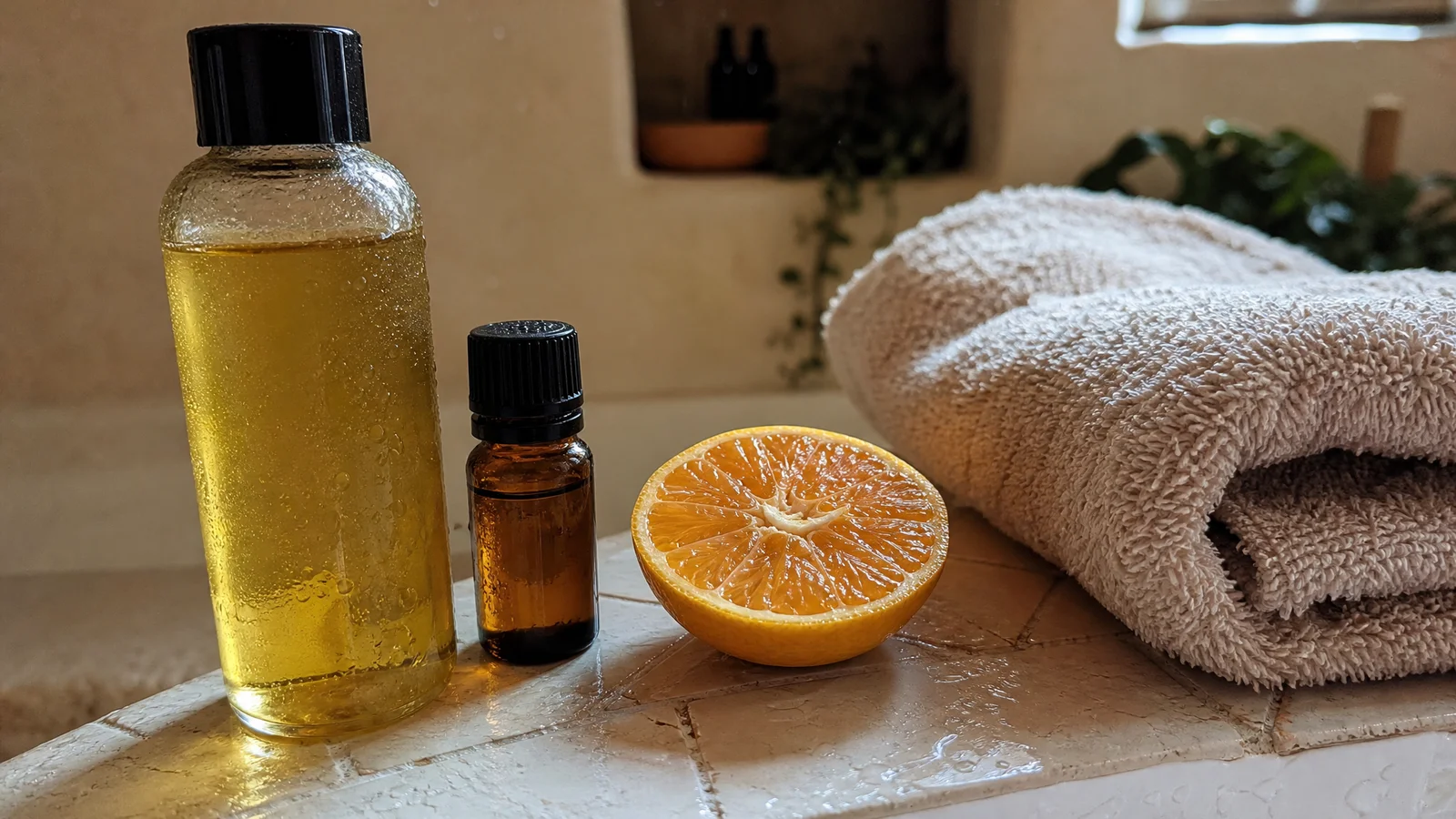
There is no standard number, and supplier instructions range from a few drops to soaking the wick. Our suggestion is to begin with one to three drops and add another only if you can't smell it. A sealed tube holds just a few millilitres of air, so more oil adds little scent and plenty to go stale.
The arithmetic is kind to your bottle. At roughly 20 drops per millilitre (the Tisserand Institute notes the count can run from about 20 to 40), a 0.5 oz bottle holds around 300 drops, so three drops per inhaler is enough for roughly a hundred fills. Freshness runs out long before the oil does.
Fresh wicks matter more than the recipe
Limonene, the main component of citrus peel oils, reacts with air, and its oxidation products are the ones linked to skin reactions: in a patch-test study of 2,900 dermatitis patients, 5.2% reacted to air-oxidised limonene. In a separate study, Karlberg and colleagues found that cold, dark storage of limonene in closed vessels prevented auto-oxidation for a year without any added antioxidant. A pocket inhaler is warm and repeatedly opened, which is nearly the opposite of that setup.
We have no data on how fast a wick in a tube oxidises, so this is our own judgement: refresh the wick and the drops every two to four weeks, never top up an old wick, and replace it as soon as the smell turns flat, harsh or sticky. The Tisserand Institute notes that citrus oils may go cloudy as they oxidise and that refrigerating the main bottle roughly doubles its useful life. Keep your bottle capped and cool, and choose a size you'll finish; we describe how in our storage guide.
Choosing your tube and wick
Look for a tube that closes with a snug click or a firm screw cap; a loose lid lets the scent drift away within days. The wick should sit comfortably inside without being squeezed, so the oil can spread along it. Metal and plastic tubes both do the job, so pick whichever feels pleasant in your hand or pocket. A small tube you will actually carry beats a beautiful one that stays in a drawer.
Making one
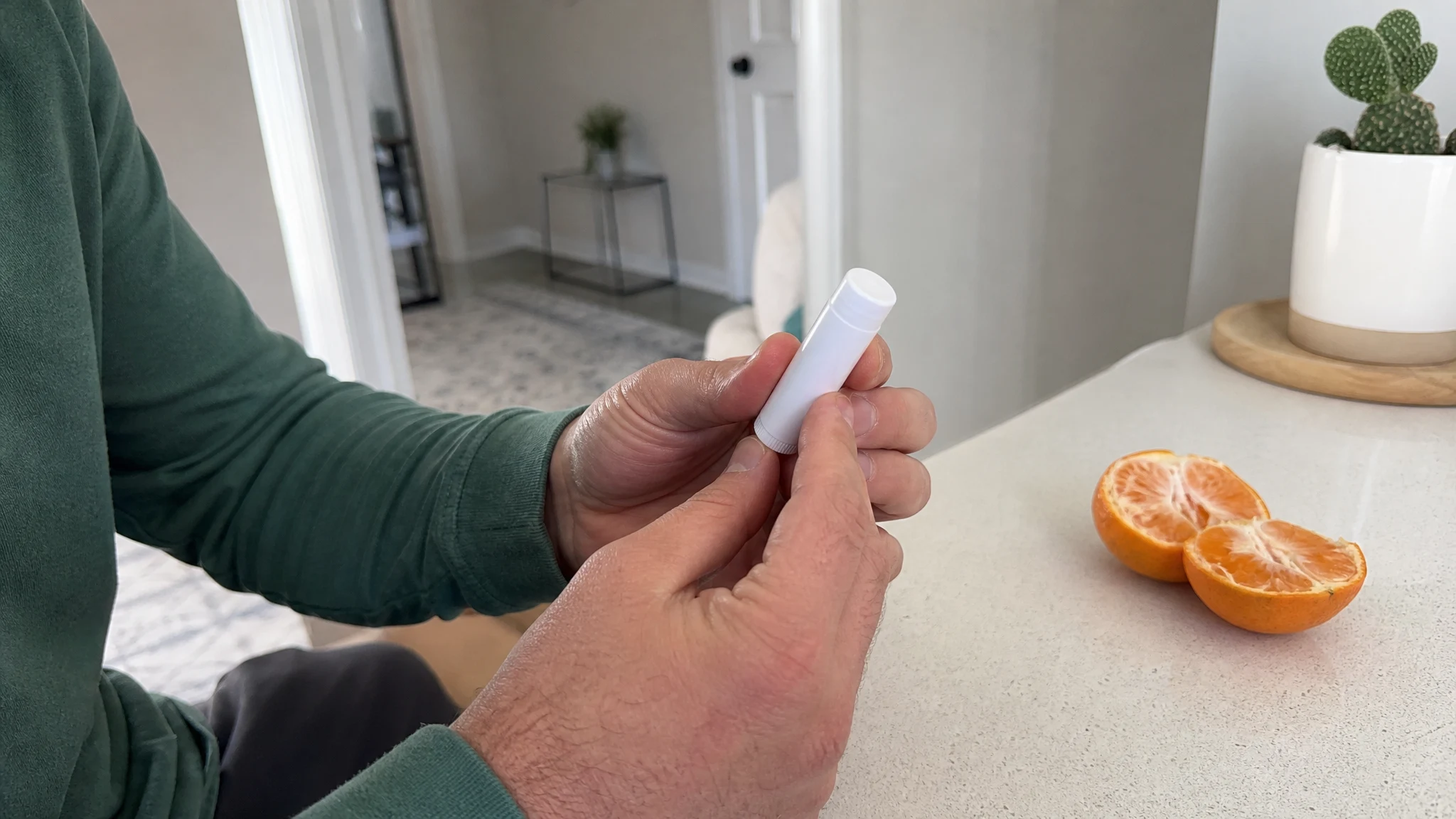
- Buy an empty inhaler tube with a tight cap and a spare absorbent wick from a craft, soap-making or aromatherapy supplier. We sell none of these.
- Wash your hands, then hold the wick with clean tweezers.
- Add one to three drops of tangerine oil, one at a time. Don't saturate it.
- Slide the wick into the tube and close it right away. Wipe any oil off your fingers.
- Label it with the date.
- To use it, hold the open tube a few centimetres from your nose and breathe in gently. Don't press the wick to your skin or inside your nostril, since the oil is neat.
Stop if you notice a headache, nausea, wheezing or a skin reaction, and speak with a pharmacist, physician or allergist if it recurs.
What you will notice
The first sniff is the bright one: juicy, sweet and candy-like, gone almost before you have named it. The second is rounder and softer. After a few days the top sparkle fades and the scent flattens a little, which is your cue to change the wick. It is lovely to notice that arc, because it shows you exactly how a top note behaves.
Carry the inhaler in a pocket or a small zip pouch and keep it out of hot cars and bright windowsills. Warmth makes citrus fade faster, and a tube left in the sun will smell flat long before it should.
What it is for
An inhaler is a portable scent, and a pleasant one. If you're curious about what trials of citrus aromas have and haven't measured, our aromatherapy guide and the nausea evidence page go through it. For a whole room rather than a pocket, there is the diffusing guide.
Keep your tube clean, your wick fresh and your drops few, and you will have a little pocket of tangerine whenever you want one.
Make one, enjoy it for a few weeks, and refresh it when the sparkle fades; that is when tangerine smells best.
Tangerine Essential Oil
Tangerine Essential Oil from our own shop, in sizes from 0.5 oz to bulk.
From $12.99
Shop Now →Sources & Further Reading
- EFSA FEEDAP Panel. Safety and efficacy of a feed additive consisting of expressed mandarin oil from the fruit peels of Citrus reticulata Blanco for use in all animal species (FEFANA asbl)
- Bråred Christensson J, et al. An international multicentre study on the allergenic activity of air-oxidized R-limonene. Contact Dermatitis, 2013.
- Karlberg AT, Magnusson K, Nilsson U. Influence of an anti-oxidant on the formation of allergenic compounds during auto-oxidation of d-limonene. Ann Occup Hyg, 1994.
- Pet Poison Helpline. Essential Oils
- Tisserand Institute. How big is a drop?
- Tisserand Institute. Is my bottle of essential oil oxidized or no longer good to use?