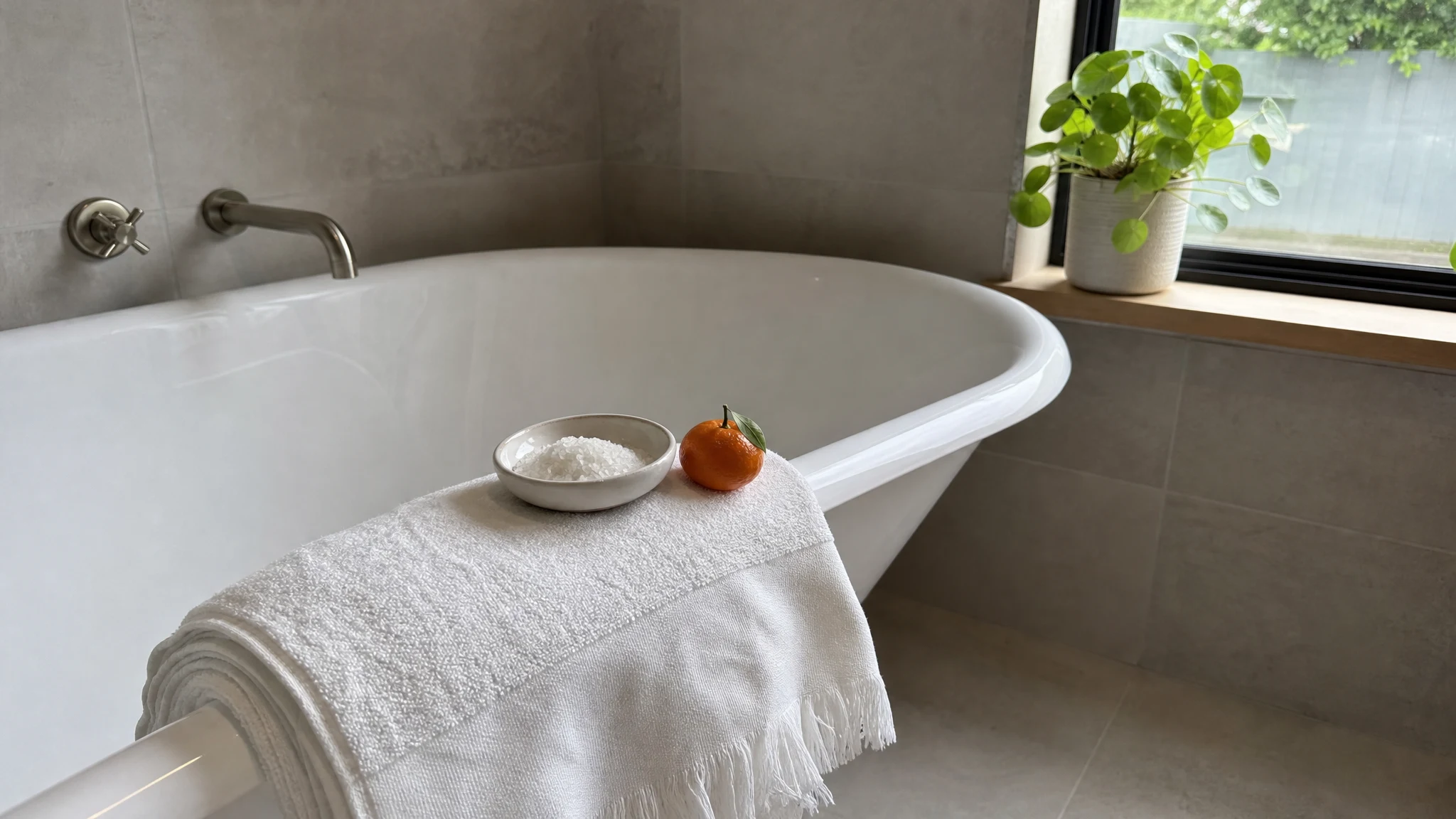
Tangerine Bath Salts and Bombs: Skip the Oil Slick
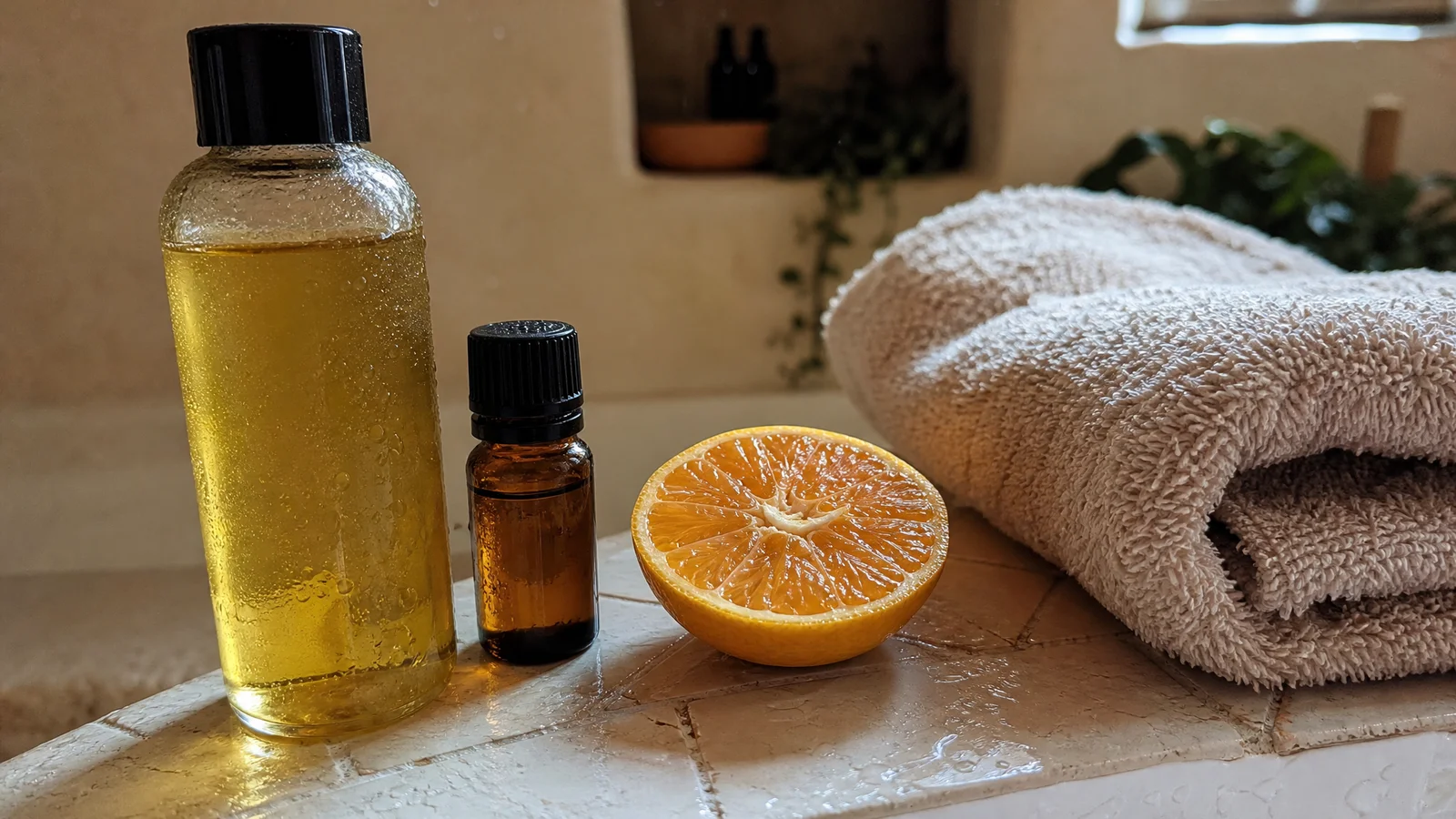
Pour a few drops of tangerine oil into a warm bath and watch what happens: the oil gathers into a golden film and floats. It smells wonderful, and it also means the skin that touches the surface meets oil that hasn't been diluted at all. That one fact shapes everything about scenting bath salts and bath bombs well.
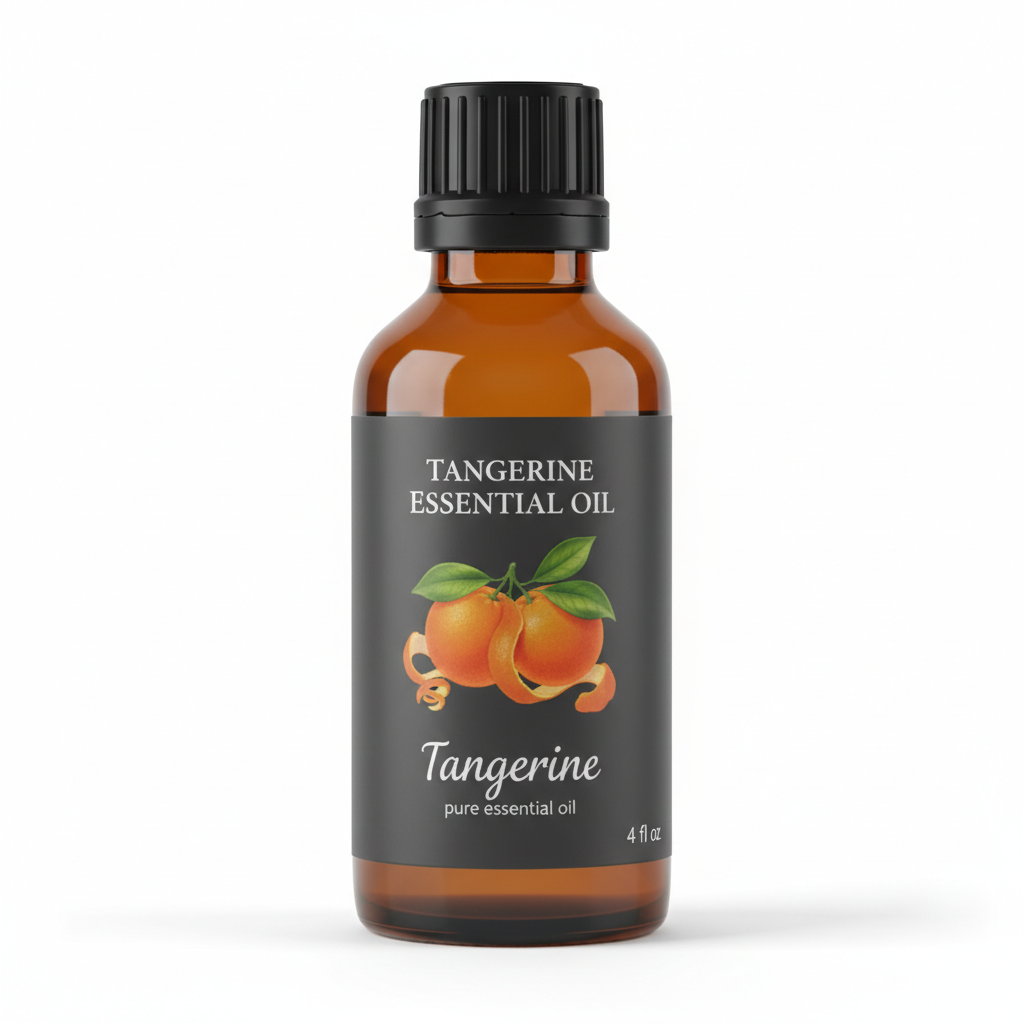
Tangerine Essential Oil
Our own Tangerine Essential Oil, in sizes from 0.5 oz to bulk.
From $12.99
Shop Now →Why the usual shortcuts fall short
The Tisserand Institute's bath-safety guidance is direct about it: essential oils are not water soluble, and pouring them in leaves a film of undiluted oil sitting on top. The same page names full-fat milk and Epsom salts as things with a false reputation for being suitable dispersants. The takeaway is practical: what you want between the oil and the water is a proper bath dispersant, which turns the film into droplets spread through the water.
A carrier oil doesn't solve it either. It floats too, and it makes the tub slippery (that part is our own reasoning). We sell the oil only, neat, so the dispersant, the salts, the citric acid and baking soda come from a craft or soap-making supplier. Ask the supplier which product is meant for bath use and what ratio of dispersant to oil it recommends, and follow that.
A low, deliberate amount
There is no widely published bath maximum for tangerine oil that we could verify, so we choose our own cautious figure: 0.25% of the finished salt or bomb by weight. That sits below the 0.5% to 2% range we give for leave-on skin use, which seems right for a long soak. It also leaves room for oxidation: limonene, the main component of citrus peel oils, reacts with air, and in a study of 2,900 dermatitis patients, 5.2% reacted to air-oxidised limonene on patch testing. Those were clinic patients at a set test concentration, not bathers, but it is a good argument for fresh oil and modest amounts.
Bath salts by weight
These are suggestions built on arithmetic. Weigh the oil if you can; drop counts vary from about 20 to 40 per millilitre. For a 500 g batch:
| Component | Amount |
|---|---|
| Tangerine oil | 1.25 g (0.25%), about 30 drops |
| Bath dispersant | per your supplier's ratio to the oil |
| Bath salts | the remainder |
Stir the oil into the dispersant first, then work that through the salts. A 60 g scoop carries about 0.15 g of oil, roughly three to four drops. Store the jar closed and out of the warmth, and plan to finish a batch within a few weeks so the citrus stays bright.
Bath bombs
A bath bomb fizzes when citric acid and baking soda meet water, so everything about the method is about keeping it dry until the tub. Take a tested base recipe from your supplier, since binders and proportions matter. At 0.25%, a 100 g bomb carries 0.25 g of tangerine oil, about six drops, again mixed into the dispersant before it goes anywhere near the dry ingredients. The oil being inside the bomb doesn't change the picture: when the bomb dissolves, its oil enters the same water, so the dispersant does the same job as in the salts.
Setting up your workspace
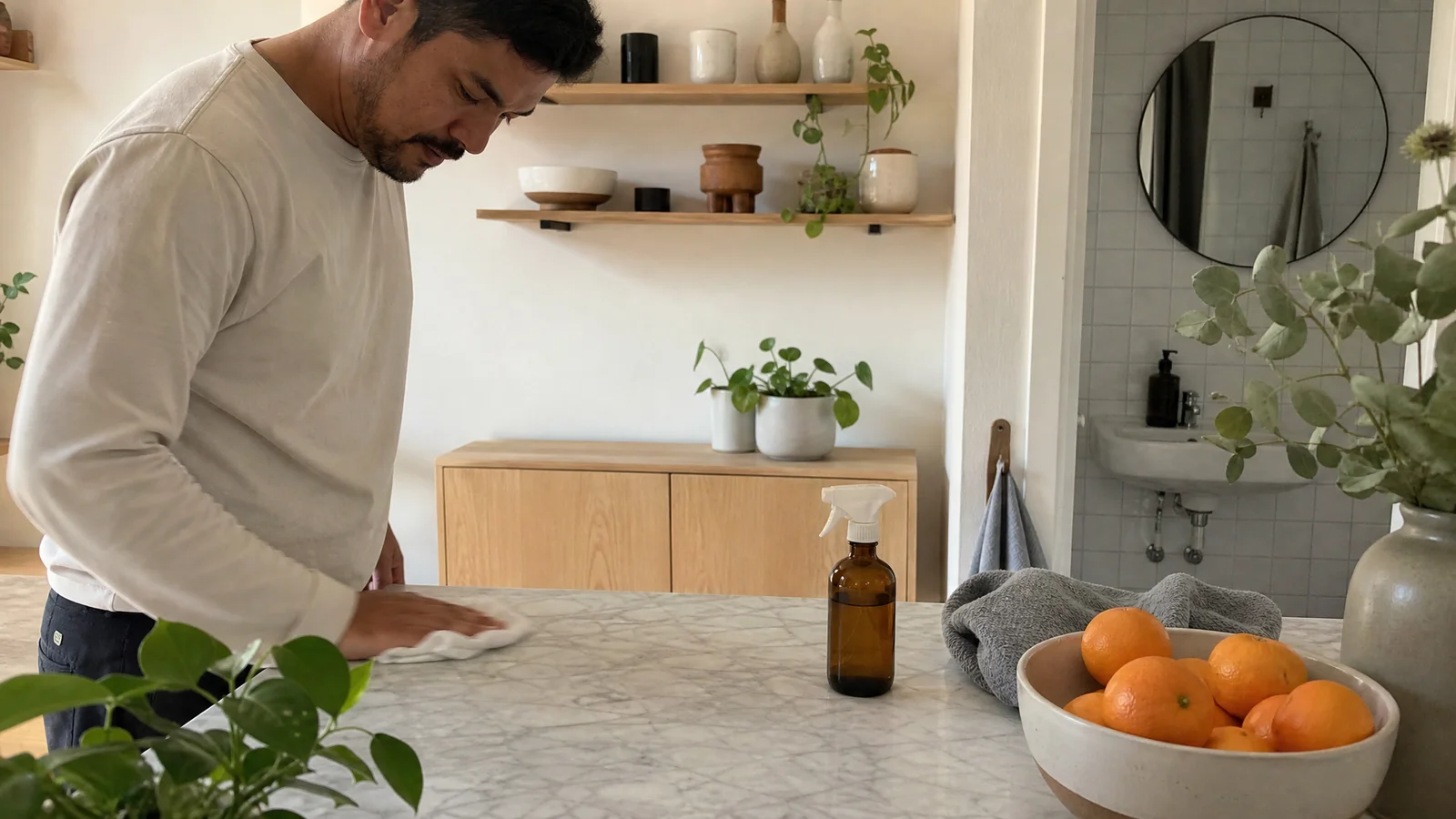
Making salts or bombs is a tidy-bench job. Spread out a clean tray or baking sheet, gather your bowls, a scale and a spoon you can dedicate to crafting, and keep everything dry. Put on gloves if you like, and keep your face back from the bowl when you stir, because strong citrus scent in a small bowl can be sharper than you expect. Work near an open window or a fan so the fragrance does not build up around you.
Jars, labels and gifts
Bath salts look lovely in a clean, dry glass jar with a tight lid, and a scoop tucked alongside makes them easy to use. Write the date and the recipe on a label so you know how fresh the scent is. If you plan to give a jar to someone, add a short note about what is in it and a reminder to patch test, and tell them to keep their own skin and any health needs in mind. A handmade gift is nicest when the person receiving it knows exactly what it is.
What you will notice in the tub
With a dispersant in the mix, the scent usually comes up in a soft, even cloud as the salts dissolve, bright at first and gentler as the water cools. There should be no golden film on the surface and no slick feel in the water. If you do see oil floating, use less next time or check the dispersant ratio with your supplier. Rinse the tub afterward with a little warm water, since oils and salts can leave a slippery film.
Before you step in
- Patch test the finished mix on your inner forearm first, and skip the bath if the skin reddens or stings.
- Poison Control advises against using essential oils on damaged skin, so skip scented baths if yours is broken or inflamed, and ask a dermatologist about eczema.
- For babies, children and pregnancy, ask your pediatrician, physician or midwife first. Our pregnancy post collects what authorities say.
- We suggest staying out of strong sun right after a bath with any citrus oil. The Tisserand Institute places expressed tangerine among citrus oils with extremely small amounts of furanocoumarins, which is reassuring, and we still prefer caution after a long soak.
For basics on dilution, our dilution guide is the place to start; carrier oils and the safety overview go further.
Put a dispersant between the oil and the water, keep the amount small, and the bath smells like a citrus grove without the oil slick.
Tangerine Essential Oil
Tangerine Essential Oil from our own shop, in sizes from 0.5 oz to bulk.
From $12.99
Shop Now →Sources & Further Reading
- Tisserand Institute. Bath safety II : Dispersing essential oils
- Bråred Christensson J, et al. An international multicentre study on the allergenic activity of air-oxidized R-limonene. Contact Dermatitis, 2013.
- Poison Control. Essential oils: Poisonous when misused
- Tisserand Institute. Phototoxicity: essential oils, sun and safety
- Tisserand Institute. How big is a drop?