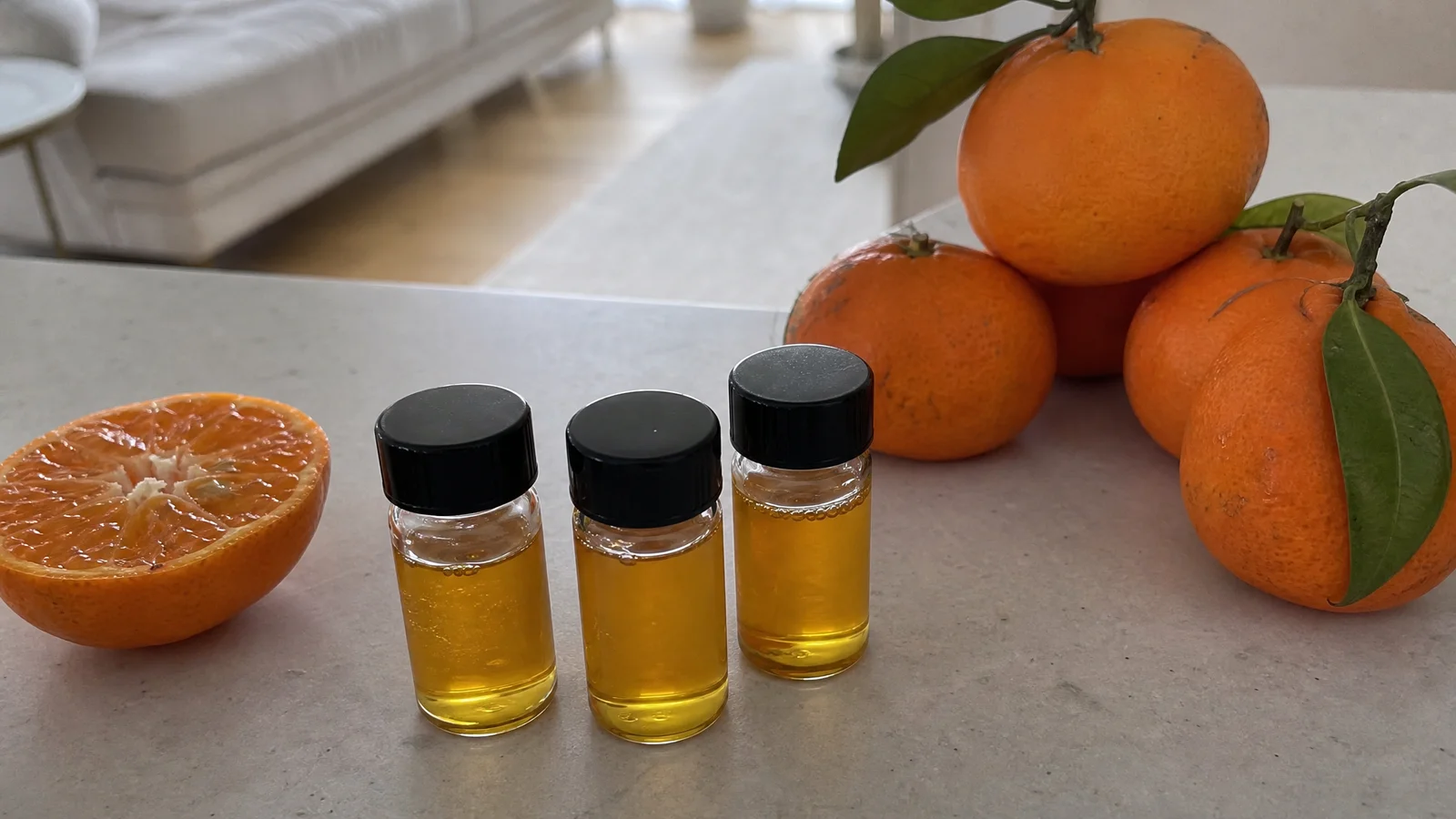
Tangerine Lip Oil: One Drop Is Plenty
A lip oil is the place where less really is more. Lips are delicate, they get licked, and a single drop of tangerine is enough to make a spoonful of carrier oil smell like citrus peel. The result is a soft, glossy oil with a hint of sunshine, and it takes about a minute to make.
Tangerine Essential Oil
Our own Tangerine Essential Oil, in sizes from 0.5 oz to bulk.
From $12.99
Shop Now →The one-drop batch
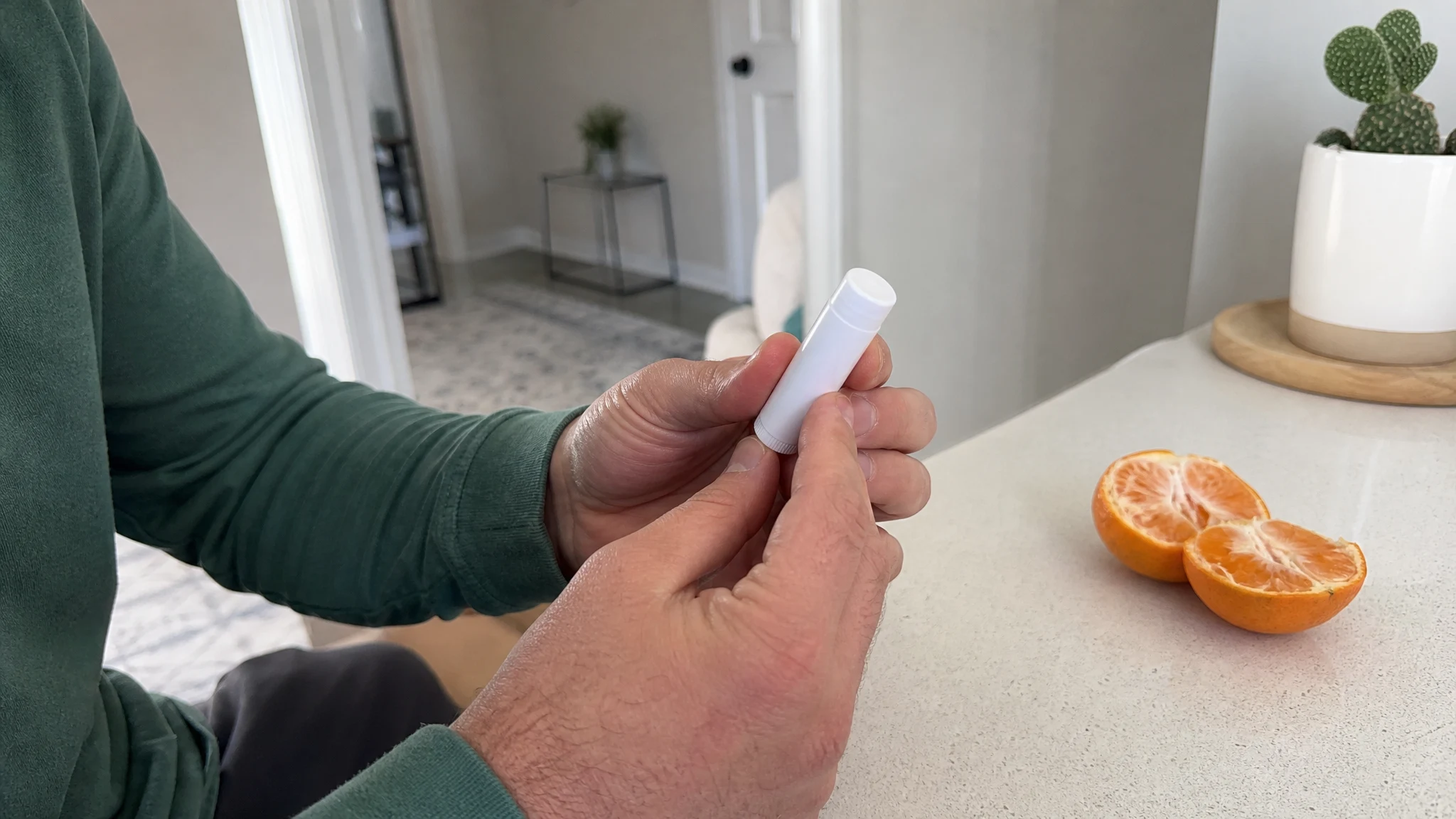
You need a carrier oil, which we do not sell, so look for jojoba or sweet almond at a pharmacy or craft supplier, plus a tiny clean container or lip tube.
- 1 tablespoon (about 15 ml) of carrier oil
- 1 drop of tangerine oil
The arithmetic, using a round 20 drops per millilitre: one drop is about 0.05 ml, and 0.05 divided by 15 is roughly 0.33%. That sits below our general dilution guidance of 0.5% to 2%, and it is deliberate. Drops vary a great deal, since Tisserand reports about 20 to 40 per millilitre across studies (How big is a drop? - Tisserand Institute), so we suggest dropping the oil on the inside of the lid first and tipping it in, so that one big drop does not tip you toward a higher dose. This is a formulation calculated from published guidance, not a batch we have made.
Setting up your little batch
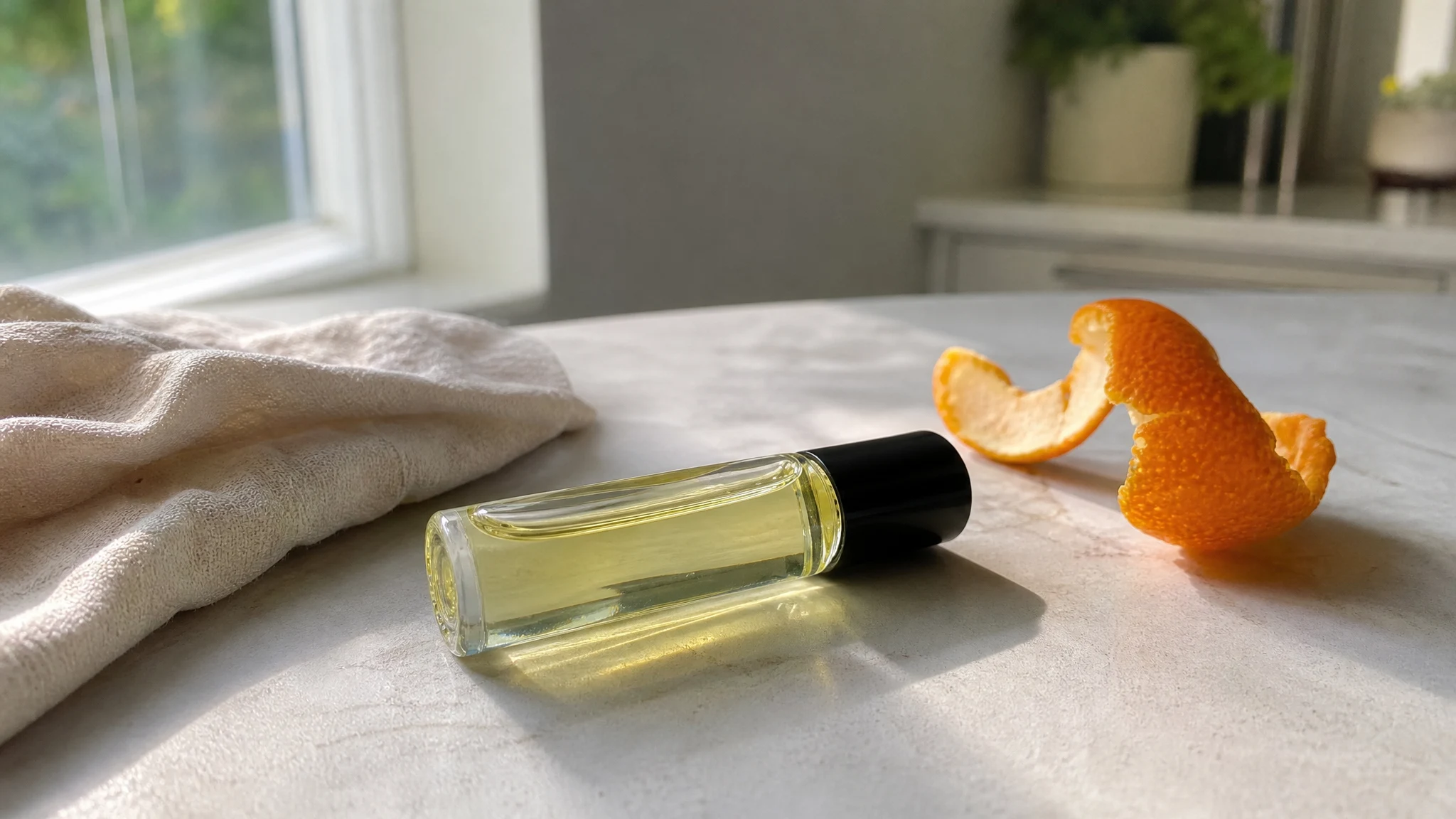
Start with a clean surface and clean hands, and set out your tiny container and a small spoon or pipette. Pour the carrier into the container first. Then hold the bottle of tangerine oil over the lid, tip a single drop onto it, and use a toothpick or the tip of the spoon to slide it into the carrier. Stir gently and look at the surface: you should see the oil disappear completely into the carrier with no beads or cloudy patches.
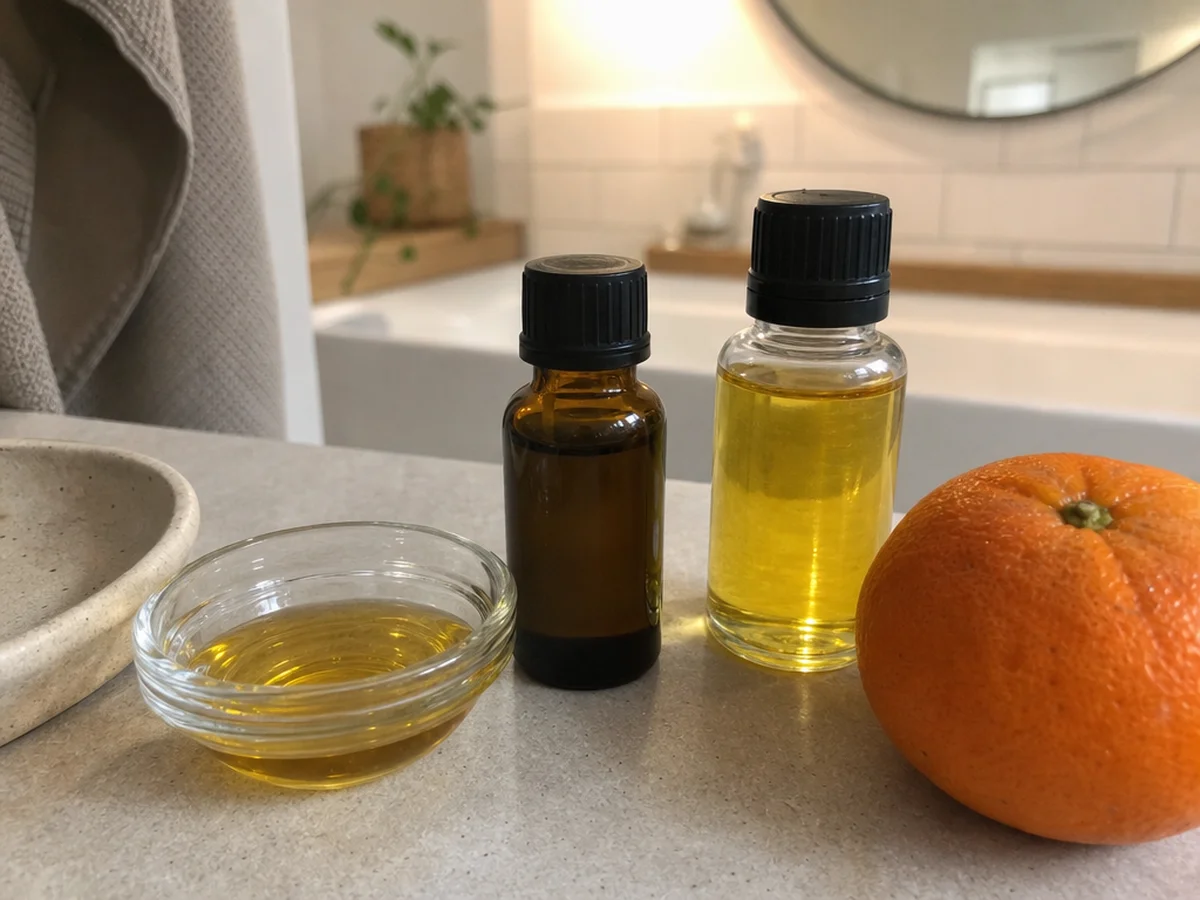
Why lips take less
Everything you put on your lips is carried a little further than skin products, because a small amount is naturally swallowed. Our guidance for tangerine oil is to keep it away from eyes, children and pets and never to take it internally, so for a lip product the sensible response is the lowest dose that still delights your nose. The fragrance industry draws a line here too. IFRA sorts products into categories, and its category 1 covers lip products. For citrus oils it applies the same limit on bergapten as most leave-on categories, 15 ppm in the finished product, and adds that materials for lip products must also be recognized as safe as flavoring ingredients (IFRA Standard: Citrus oils and other furocoumarins containing essential oils (Amendment 49, 2020)). That is the industry's way of saying lips deserve extra care, and it is why a trace of scent, not a strong one, is the right goal.
What you will notice
Open the little container and you will smell the carrier first, with tangerine floating faintly above it like the memory of a peel. That is exactly right. Lips are very close to the nose, so even a trace is easy to notice. On the lips the oil should feel glossy and light, and the scent will fade within minutes, which is the nature of a top note.
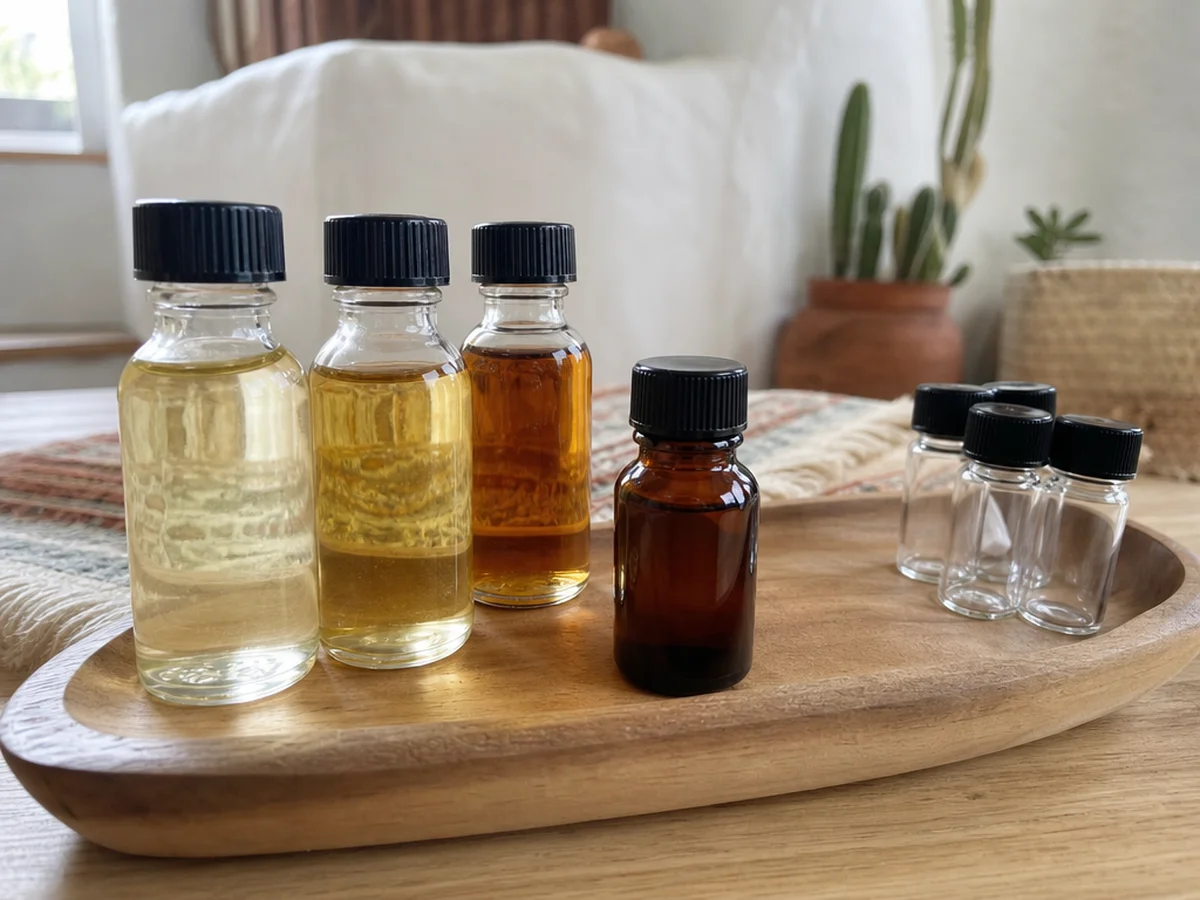
Sun, freshness and testing
The same IFRA standard lists cold-pressed tangerine at a typical 50 ppm of furocoumarins and notes that is not high enough to need special restriction when the oil is used alone (IFRA Standard: Citrus oils and other furocoumarins containing essential oils (Amendment 49, 2020)). The Tisserand Institute lists expressed tangerine among oils with extremely small amounts of furanocoumarins, though it still advises keeping skin from UV for at least 12 hours after a phototoxic oil (Phototoxicity: essential oils, sun and safety - Tisserand Institute). Because we advise avoiding sun on freshly applied areas, we think of this as a bedtime lip oil, a nice last step before sleep.
Freshness matters more here than anywhere. Limonene reacts with air, and a patch-test study found air-oxidized limonene triggered reactions in some dermatitis patients (An international multicentre study on the allergenic activity of air-oxidized R-limonene. Contact Dermatitis, 2013). Use a recently opened bottle, make only a small batch, and keep it cool; Tisserand notes that refrigeration will about double an oil's useful lifespan (Is my bottle of essential oil oxidized or no longer good to use? - Tisserand Institute). Test a dab on your inner arm for a few days before it goes near your mouth (How to test skin care products - American Academy of Dermatology), and stop if anything itches or stings. If you are pregnant, nursing or making this for a child, check with your physician first.
A small container of lip oil lasts a good while, so write the date on the lid and make a fresh one every few weeks. It keeps the scent cheerful, and it keeps you from carrying around something that smells flat. Tuck it into a coat pocket or a bedside drawer, and keep it away from a hot dashboard or a sunny windowsill.
Making it your own
A little goes a long way, so resist the urge to add a second drop. If you love a creamier scent, the partners we suggest, such as vanilla, are available from other oil sellers, and our blending post has the thinking behind it. For the face and body, take a look at our light face oil and our body oil, which use slightly different doses.
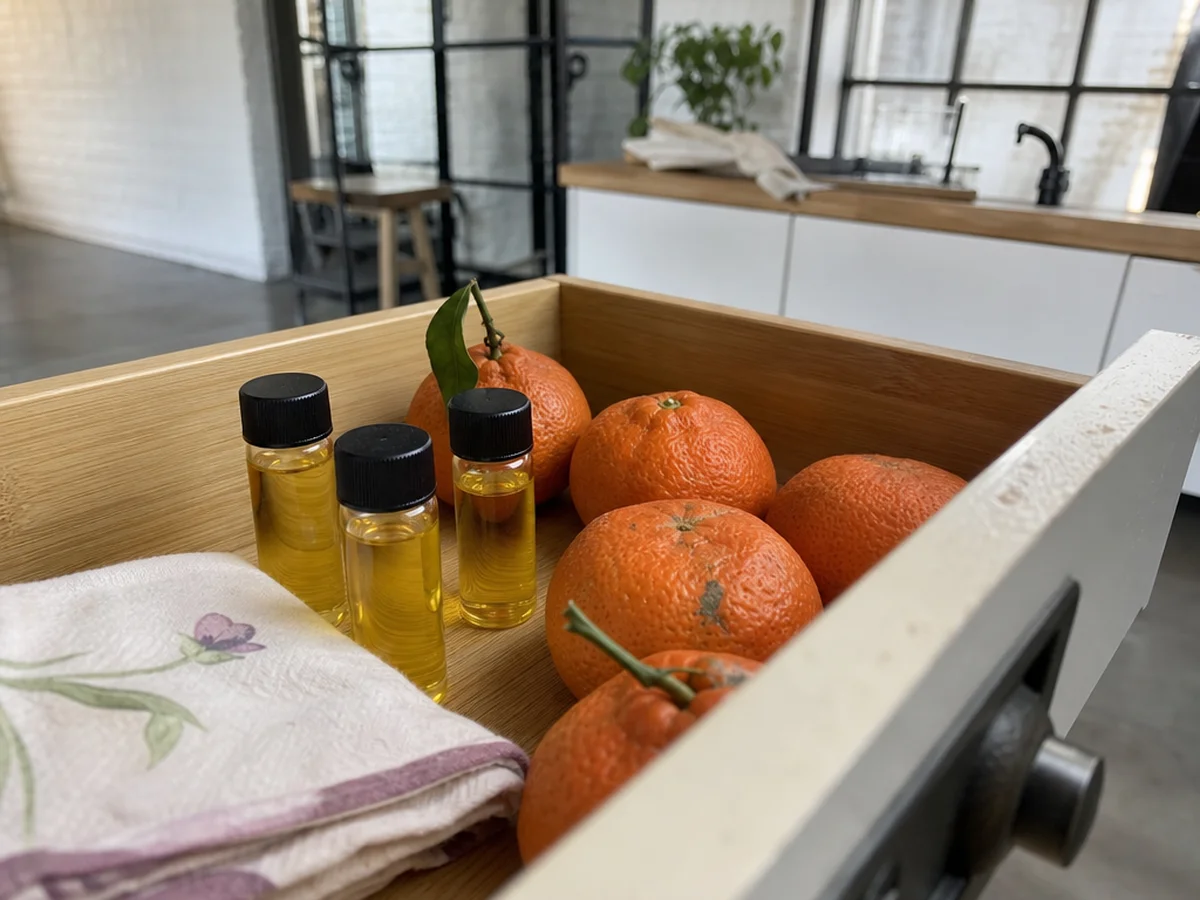
One drop, one spoonful, a bedtime habit, and a lip oil that smells like a freshly peeled tangerine.
Tangerine Essential Oil
Tangerine Essential Oil from our own shop, in sizes from 0.5 oz to bulk.
From $12.99
Shop Now →Sources & Further Reading
- How big is a drop? - Tisserand Institute
- IFRA Standard: Citrus oils and other furocoumarins containing essential oils (Amendment 49, 2020)
- Phototoxicity: essential oils, sun and safety - Tisserand Institute
- An international multicentre study on the allergenic activity of air-oxidized R-limonene. Contact Dermatitis, 2013
- Is my bottle of essential oil oxidized or no longer good to use? - Tisserand Institute
- How to test skin care products - American Academy of Dermatology