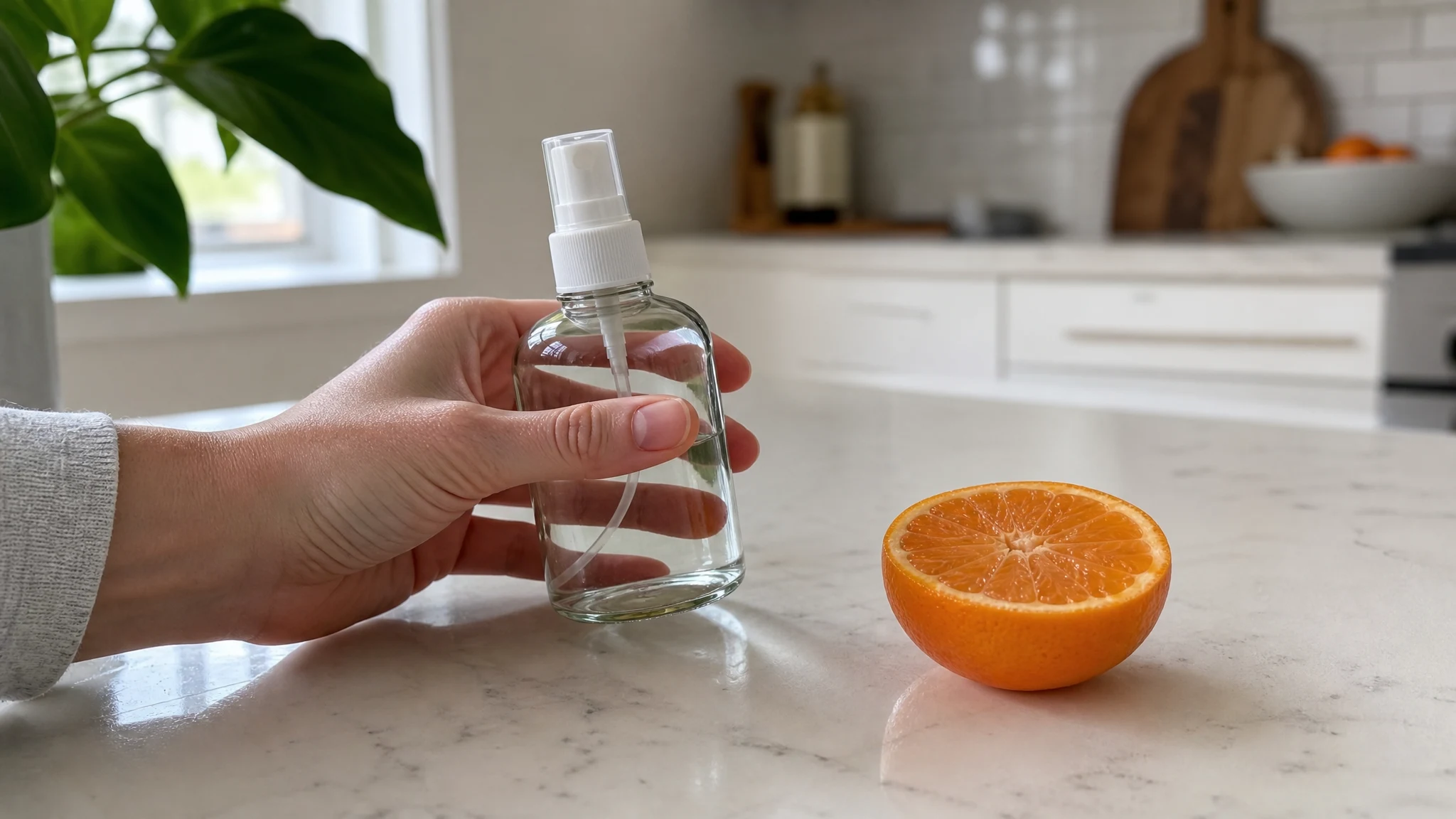
Tangerine Room Spray: Why Oil and Water Won't Mix
Ten drops of tangerine oil in a bottle of water look promising for about as long as it takes to stop shaking. Then the oil drifts back to the top, and your pump draws mostly water at first and a concentrated slick later. A good tangerine room spray is mostly a question of getting oil and water to stay together.
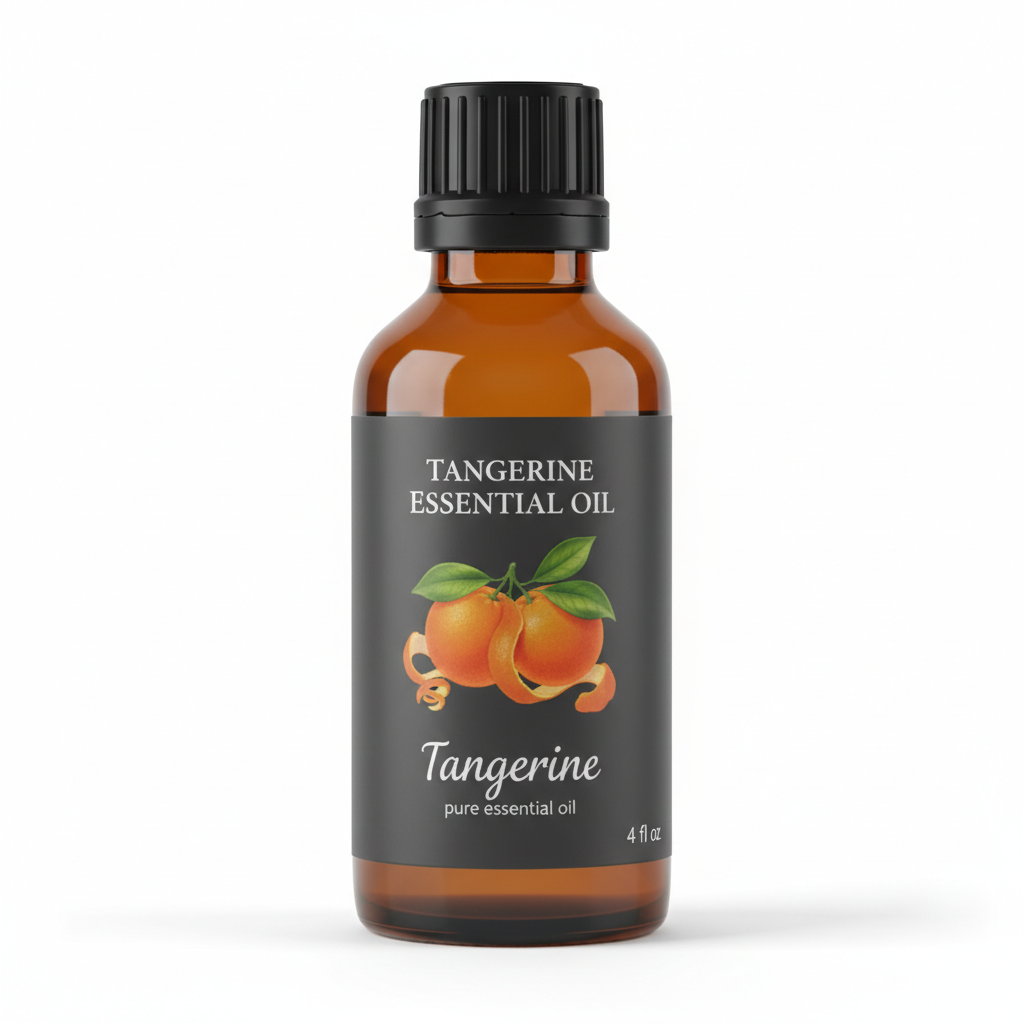
Tangerine Essential Oil
Our own Tangerine Essential Oil, in sizes from 0.5 oz to bulk.
From $12.99
Shop Now →Oil and water, honestly
The Tisserand Institute states the starting fact plainly: essential oils are not water soluble. In its bath-safety guidance it describes what happens when oil is simply poured in: a film of undiluted essential oil sitting on top. In a spray bottle the same thing happens, only the dip tube sits at the bottom, so the oil shows up late and in droplets.
The fix is a solubilizer, a surfactant that holds tiny oil droplets inside the water. Polysorbate 20 is a common one. Suppliers publish their own ratios of solubilizer to essential oil, and those vary by product, so buy by ingredient name and follow the ratio on your supplier's page rather than ours. We sell the oil only; the solubilizer, spray bottle and distilled water come from a craft or soap-making supplier.
How much tangerine
A room spray isn't a skin product, but a fine mist lands on hands, fabric and furniture, so we keep it light. Our suggestion is 0.5% or less, which is the bottom of our 0.5% to 2% skin guidance. At about 20 drops per millilitre (the Tisserand Institute notes drop counts really run from about 20 to 40, so weighing is better if you have a scale):
| Bottle | Tangerine share | Approx. drops |
|---|---|---|
| 100 ml | 0.25% | 5 |
| 100 ml | 0.5% | 10 |
| 250 ml | 0.5% | 25 |
For the method, put the solubilizer in a small cup first, add the tangerine oil and stir until the mixture looks uniform. Then add distilled water slowly while stirring and pour into a clean spray bottle. If it looks cloudy with beads of oil, the oil wasn't fully taken up, and the answer is a bit more solubilizer within your supplier's guidance. Date the bottle.
A water-based spray can grow microbes, and we have no preservative to recommend, so make a small bottle and finish it within days. That timing is our practical suggestion, not a tested shelf life. Toss any bottle that turns cloudy or smells off.
A few tips for the spritz itself
Use a fine-mist spray bottle, since coarse sprayers produce big droplets that fall quickly and leave damp patches instead of a light scent. Give the bottle a gentle swirl before each use. Spray once, step back and wait a minute before you judge it. Tangerine is a bright, quick scent, and you will notice that a single spritz in a well-aired room says more than five in a closed one.
Where to aim it
Limonene, the main component of citrus peel oils, is a good solvent, which is why orange and lemon oils turn up in furniture polishes. Poison Control notes exactly that. So by reasoning from limonene's nature, we mist upward into the air at arm's length, not onto painted wood, finished furniture, plastics or leather, and we test a hidden corner of any fabric first. Neat oil is flammable too (PubChem lists limonene's closed-cup flash point at 45 C, or 113 F), so keep the bottle away from candles and heaters; a 0.5% water-based mist is a very different thing from the neat oil.
Cats, birds and small children
Pet Poison Helpline says cats and birds are at greatest risk from essential oils and lists citrus oils, including mandarin, among those that can cause poisoning. If either lives with you, skip the spray in their rooms and ask your veterinarian; our pet post goes into more detail. With babies and young children in the house, ask your pediatrician, and keep the bottles out of reach. EFSA, reviewing a mandarin peel oil, concluded it should be considered an irritant to skin, eyes and the respiratory tract, which is why we like a light hand and good ventilation.
Why we love a small batch
A 100 ml bottle is the right size for learning. It uses only a few drops of oil, wastes nothing if you decide the scent is not for you, and gets used up while the tangerine is still bright. Write the date and your solubilizer ratio on the label, so the next bottle can be a little better.
Choosing where it lives
Keep the finished bottle somewhere cool, out of the sun and away from the stove, just as you would the oil itself. A spray left on a warm windowsill will not stay bright for long. Pick a spot you pass often, like a shelf by the door, so you remember to use the bottle up while it still smells lively.
What it is for
This is a scent product. It freshens the air with a bright citrus note, and it doesn't clean or sanitise anything. For kitchen use, see our cleaning spray post, and for another water-and-oil puzzle, the bath salts post covers dispersing oil in a tub. If you'd rather get more scent from a given amount of oil, a diffuser is often the easier route.
Start with a 100 ml bottle, mix it carefully, and enjoy a couple of bright spritzes on a gloomy afternoon.
Tangerine Essential Oil
Tangerine Essential Oil from our own shop, in sizes from 0.5 oz to bulk.
From $12.99
Shop Now →Sources & Further Reading
- Tisserand Institute. Bath safety II : Dispersing essential oils
- Tisserand Institute. How big is a drop?
- Poison Control. Essential oils: Poisonous when misused
- PubChem. Limonene (CID 22311), flash point section
- Pet Poison Helpline. Essential Oils
- EFSA FEEDAP Panel. Safety and efficacy of a feed additive consisting of expressed mandarin oil from the fruit peels of Citrus reticulata Blanco for use in all animal species (FEFANA asbl)