Tangerine Perfume Oil: Pairing a Top Note With a Base
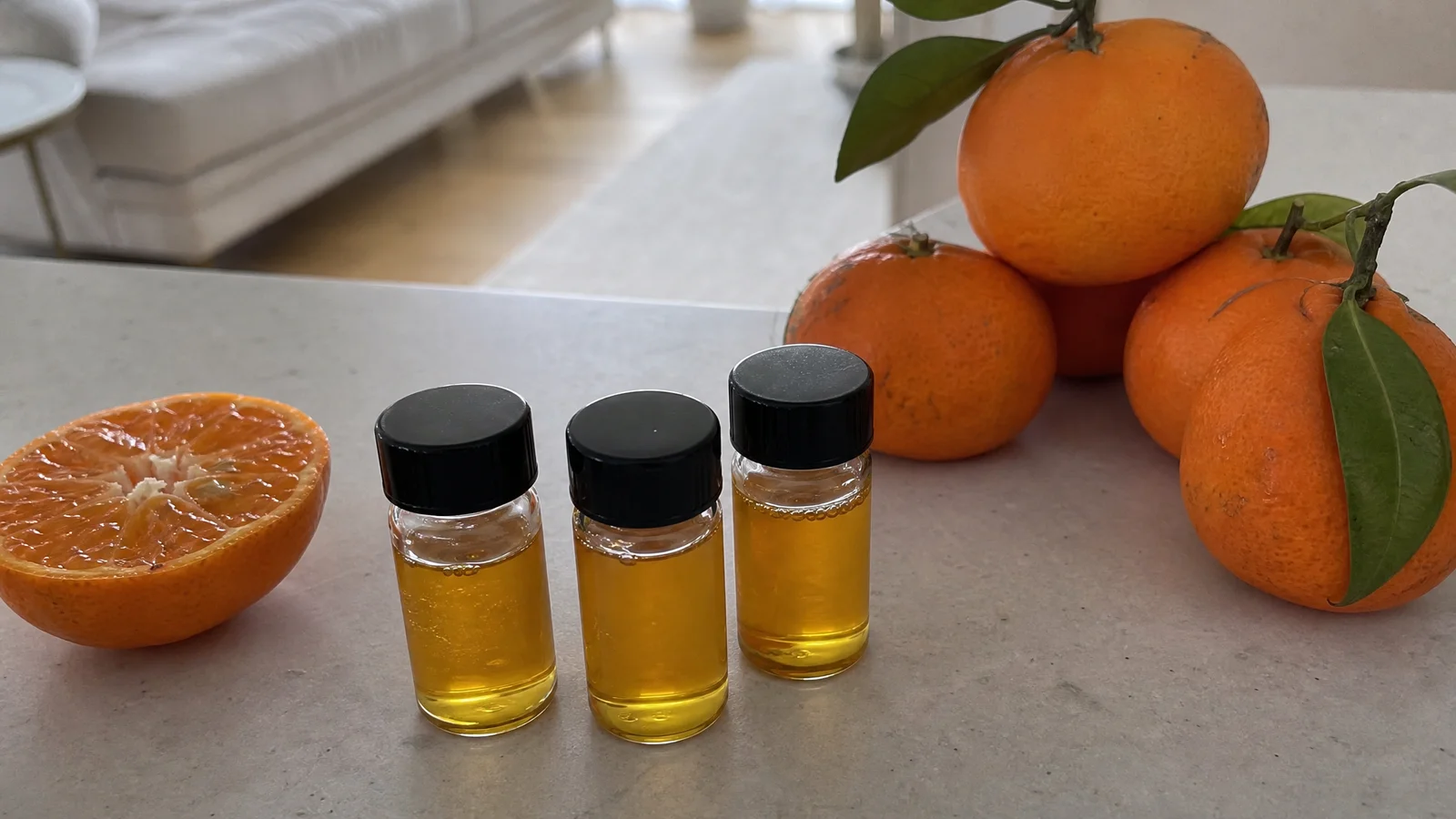
Open a bottle of tangerine oil and the first thing you get is a burst: juicy, sweet, candy-bright. Give it a little while on your skin and much of that burst has moved on. That is simply what a top note does, and it is the whole design challenge of a tangerine perfume oil.
Tangerine Essential Oil
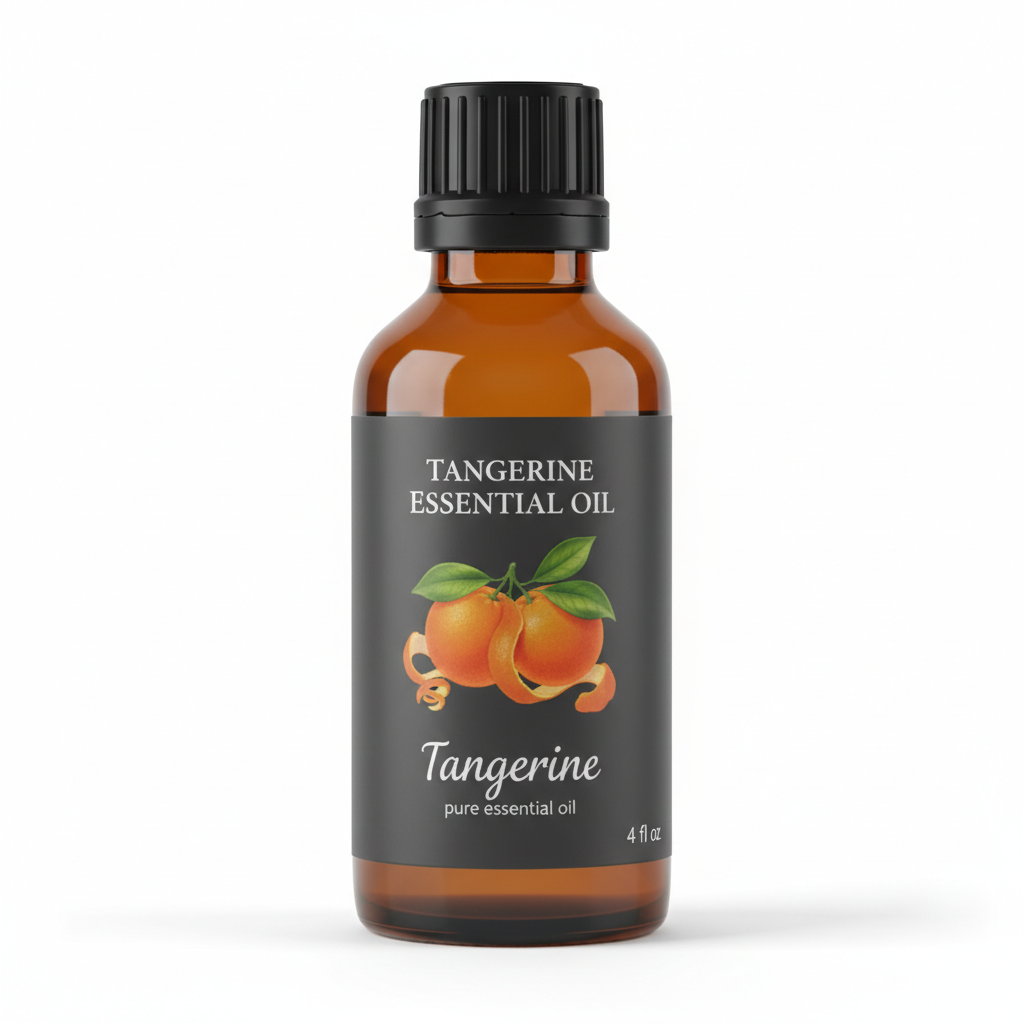
Our own Tangerine Essential Oil, in sizes from 0.5 oz to bulk.
From $12.99
Shop Now →Why the sparkle leaves first
Citrus peel oils are built mostly on limonene, a light, quick-to-evaporate molecule. The European Food Safety Authority's specification for expressed mandarin oil, a close relative, puts d-limonene at 65 to 80% of the oil. The Certificate of Analysis we publish for one batch of our tangerine oil lists density, refractive index and optical rotation, so we can't give you our own limonene figure; if you want GC-MS data, ask us in writing through the contact page before you order.
What follows from that is simple chemistry-class reasoning rather than a measured result: the lightest, brightest part of the scent is also the part that leaves skin first. Perfumers call oils like this top notes, and our own listing for tangerine says the same. If you wear straight tangerine, expect a lovely, brief hello.
Give it something to stand on
The classic answer is a base note, a heavier material that stays on the skin after the citrus fades, so the last thing you smell is warm rather than gone. Tangerine pairs beautifully with vanilla, neroli, ylang ylang and sweet orange, and a woody or amber material makes a good anchor too. We sell only tangerine, so those partners come from a perfumery or aromatherapy supplier. Ask for the botanical name and the supplier's safety data sheet and usage guidance, and keep the partner at or below whatever that paperwork allows for skin.
A base note will not stop the tangerine from evaporating. It just means something pleasant is still there afterwards, which is how most people experience a citrus perfume that "lasts".
Smell before you commit
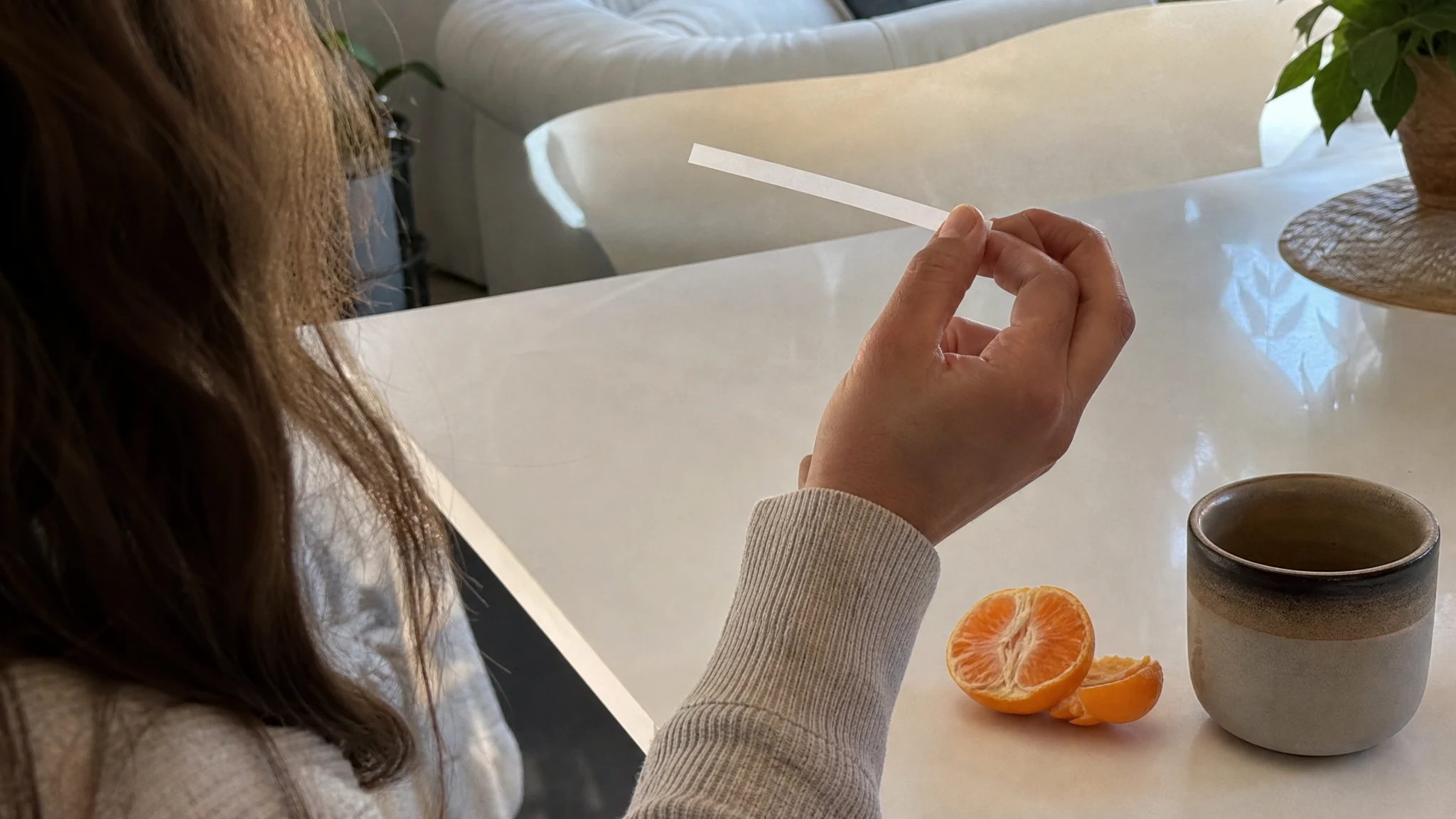
Before you mix anything, do a quick smell test with a paper strip or a plain tissue. Put one small drop of the partner you are considering on one strip and a small drop of tangerine on another, then wave them gently under your nose together. You will notice the bright citrus open first, with the heavier material waiting behind it. If the two fight, change the partner, not the amount. Smell again after ten minutes and after an hour; the base note is the one that tells you whether the blend was worth making.
A small roll-on to try
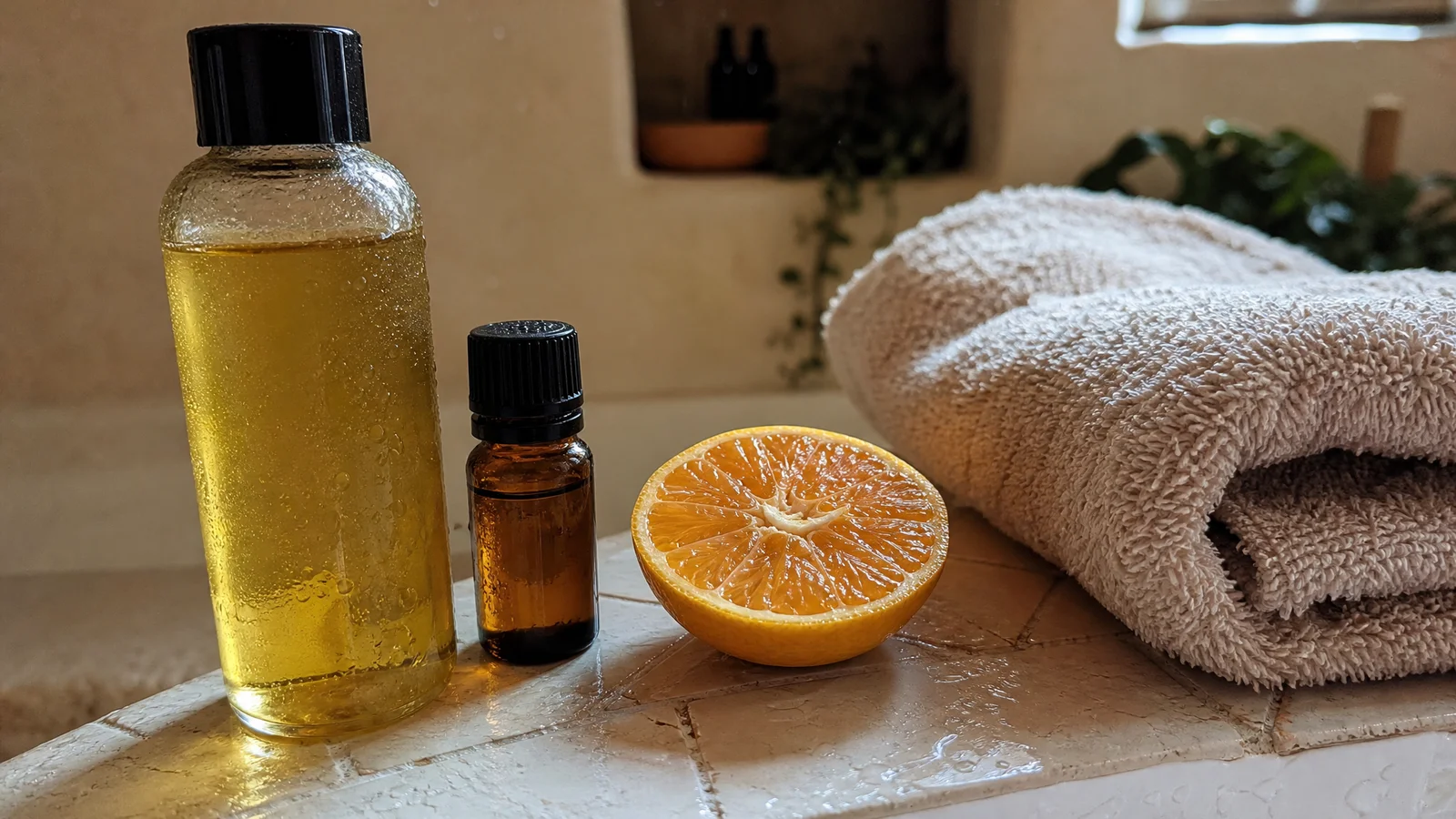
Here is a 10 ml roller bottle, laid out as a suggestion built on arithmetic. We recommend keeping tangerine to 1% or less in anything you leave on your skin, which sits inside our usual 0.5% to 2% dilution guidance and stays at the lower end for a product you wear all day.
| Ingredient | Amount | Share |
|---|---|---|
| Tangerine oil | 2 drops | about 1% |
| Base-note material (vanilla, wood or amber) | 2 drops, or less if its paperwork says so | about 1% |
| Carrier oil such as jojoba or sweet almond | fill to 10 ml | the rest |
Two drops is roughly 0.1 ml at the usual 20 drops to the millilitre, so about 1% of 10 ml. The Tisserand Institute points out that drops per millilitre range from about 20 to 40 depending on the bottle and the oil, so two drops could really land anywhere between 0.5% and 1%. That is a comfortable range, and it is a good reason to start with fewer drops and add one only if you can't smell it. Pour the carrier in first, add the drops, cap, and roll the bottle gently to mix.
The result is a quiet, personal scent. If you want a loud citrus, a diffuser or room spray is the better format. We cover the difference between essential oil and fragrance oil in this comparison, and for more pairing ideas see our tangerine blends post.
Here is a small ritual we recommend: put a little of your blend on your wrist, walk away and forget about it. Come back after lunch and smell again. Whatever you notice then is the perfume you actually made, and it is the best guide to your next adjustment.
Keeping it fresh and wearing it sensibly
Limonene reacts with air, and its oxidation products are the part that can bother skin. In a multi-country patch-test study of 2,900 dermatitis patients, 5.2% reacted to air-oxidised limonene, while limonene in its fresh form is a very weak allergen at most. Those were clinic patients being tested at a set concentration, not perfume wearers, but it explains our habits: label the roller with the date, keep it somewhere cool, and finish it within a few months. That three-month window is our suggestion, not a measured shelf life. If the scent turns sharp or flat, make a new one. The Tisserand Institute notes that citrus oils can also go cloudy as they oxidise, and that cool storage extends life.
Patch test first on your inner forearm, keep the roller away from your eyes, and keep it where children and pets can't reach it. We suggest keeping freshly scented skin out of strong sun, and the Tisserand Institute places expressed tangerine among citrus oils with extremely small amounts of furanocoumarins, so it is a gentler case than bergamot. For the dilution basics, our dilution guide walks through the numbers, and the roller blends post has more formats.
A good tangerine perfume is a small, cheerful thing: bright on the way out the door, warm by lunchtime.
Tangerine Essential Oil
Tangerine Essential Oil from our own shop, in sizes from 0.5 oz to bulk.
From $12.99
Shop Now →Sources & Further Reading
- EFSA FEEDAP Panel. Safety and efficacy of a feed additive consisting of expressed mandarin oil from the fruit peels of Citrus reticulata Blanco for use in all animal species (FEFANA asbl)
- Tisserand Institute. How big is a drop?
- Tisserand Institute. Is my bottle of essential oil oxidized or no longer good to use?
- Tisserand Institute. Phototoxicity: essential oils, sun and safety
- Bråred Christensson J, et al. An international multicentre study on the allergenic activity of air-oxidized R-limonene. Contact Dermatitis, 2013.