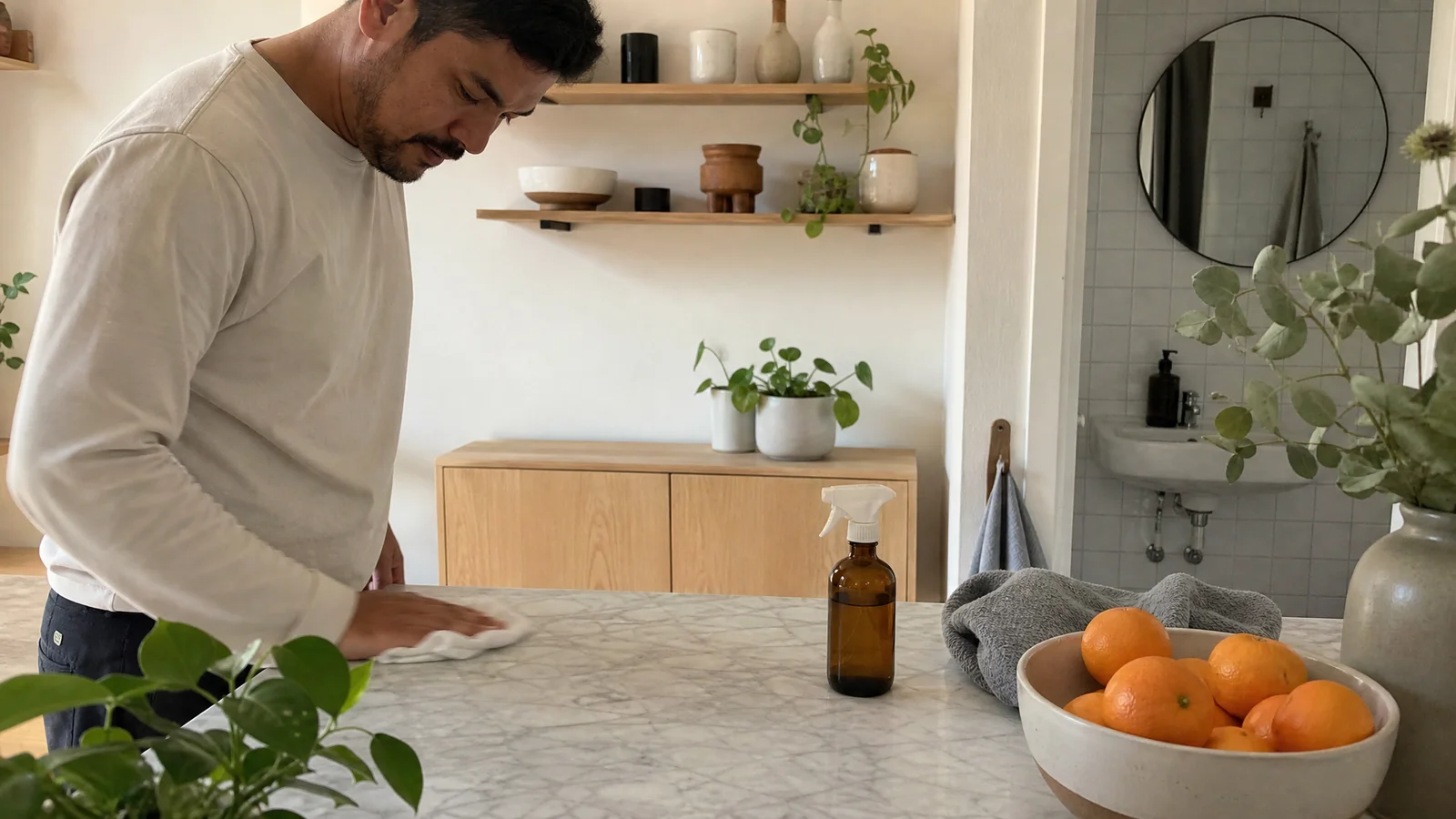
Tangerine Kitchen Spray: Scent Without the Hype
Spritz a counter with a tangerine-scented spray and the kitchen feels cleaner in a way that is hard to argue with. The scent is doing a lovely job of making the room feel fresh. What the scent is not doing is cleaning, and it certainly isn't disinfecting, so it helps to know which part of the spray does what.
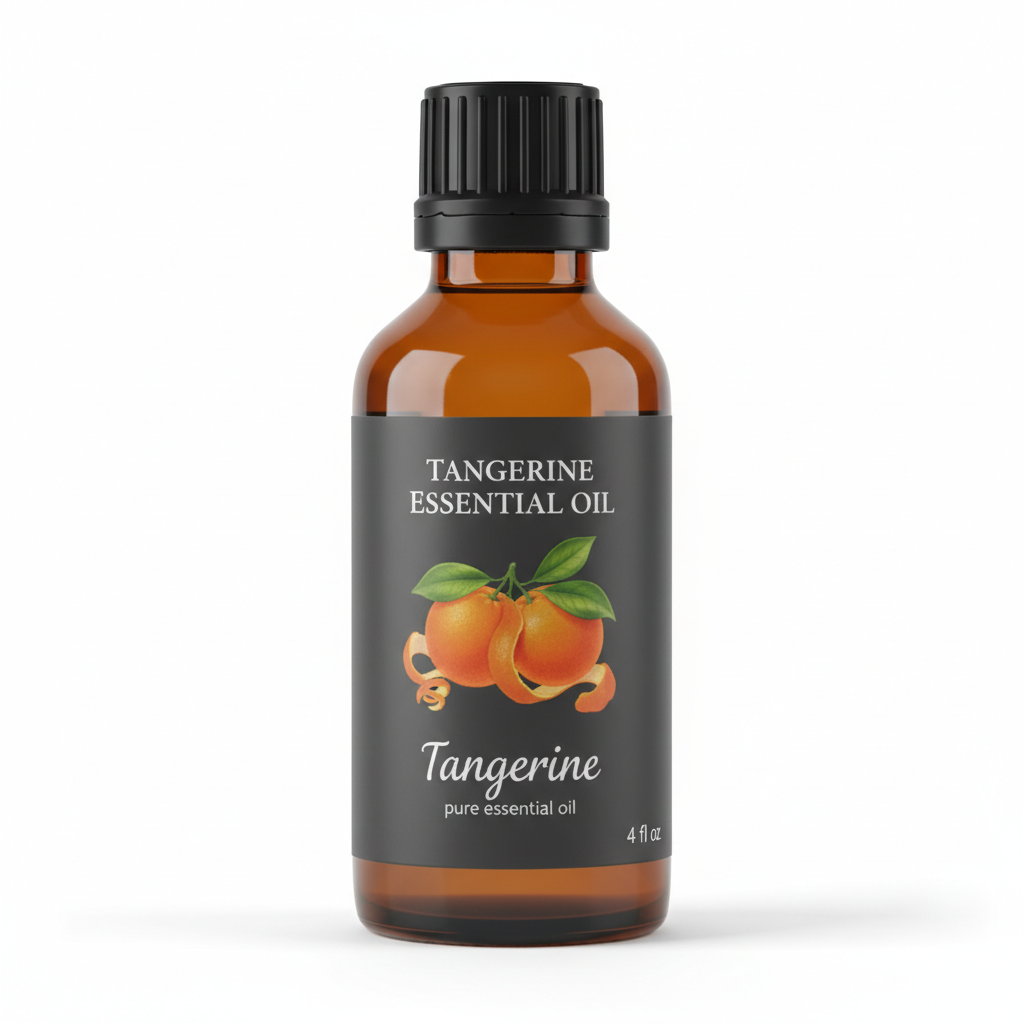
Tangerine Essential Oil
Our own Tangerine Essential Oil, in sizes from 0.5 oz to bulk.
From $12.99
Shop Now →Soap cleans, tangerine perfumes
Grease and food residue come off with a surfactant (soap or detergent), water and a cloth. Tangerine oil is the fragrance on top. Its main component, limonene, is why citrus oils show up in commercial products; Poison Control notes that orange and lemon oils are common ingredients in furniture polishes and other wood-care products. But a few drops in a water-based spray give you scent and, at best, a trace of solvent action. We sell no sprays, soaps or cleaners, only the oil, so choose a mild unscented soap from the supermarket for the base.
Cleaning versus disinfecting
The US EPA describes a disinfectant as a substance, or mixture of substances, that destroys or irreversibly inactivates bacteria, fungi and viruses on hard surfaces, and it registers these products for the specific organisms on the label. The surface has to stay visibly wet for the whole contact time printed in the directions. A home-made spray of soap, water and tangerine oil has none of that behind it, so we don't describe it as anything but a scented cleaner. When you need a disinfectant, such as after raw poultry, use soap and hot water first and then a registered product exactly as its label directs.
Why a citrus scent feels like clean
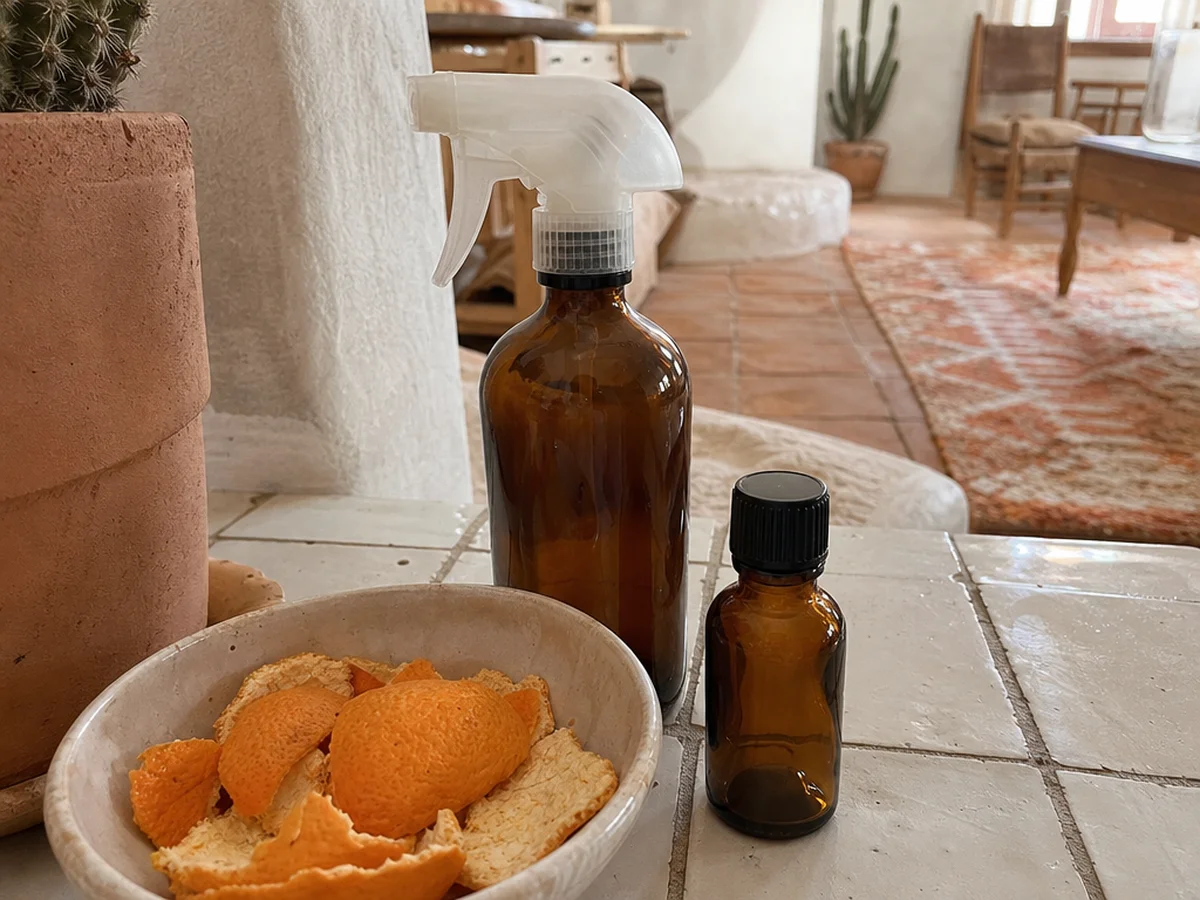
There is a reason the smell of citrus and the idea of a clean kitchen are so tightly linked. Many of us grew up with lemon and orange scents on the cleaning aisle, so the moment tangerine hits the air, the brain files the room under "tidy". That is a pleasant association, and it is a perfectly good reason to scent a spray. It simply is not the same as the spray doing extra work.
Making the oil stay put
Oil floats on water, so the first sprays from a bottle of soap, water and oil can be bare and the later ones oily. Two fixes work: shake the bottle before each use, or use a solubilizer from a soap-making supplier; our room spray post explains how they work. Then keep the amount small.
Our skin guidance for tangerine oil is 0.5% to 2% in a carrier. A cleaning spray touches your hands, so we suggest the bottom of that range or less. The arithmetic for a 250 ml bottle, at roughly 20 drops per millilitre (weighing is better; the Tisserand Institute notes the count can run from 20 to 40):
- 0.25% is about 0.6 ml, roughly 12 drops.
- 0.5% is about 1.25 ml, roughly 25 drops.
Water-based mixes can grow microbes, so we'd make a bottle you'll finish within days and discard it if it clouds or smells off. That is our practical suggestion, not a tested shelf life.
A tidy way to make and keep it
Use a clean spray bottle that you reserve for this one job, and write the date on a piece of tape. Fill it with water and a small amount of mild soap first, then add the oil and give it a gentle swirl. Spray a little into a cloth rather than straight onto the counter if you want to keep the mist out of the air, and wipe in long, even strokes.
Smell the cloth afterwards. You should get a soft, sweet peel scent that fades within the hour. That quiet lift is what you made it for, and if you want it stronger, resist the urge to add more oil and wipe the surface again instead.
Hands, freshness and sun
EFSA's panel, reviewing a mandarin peel oil, concluded it should be considered an irritant to skin, eyes and the respiratory tract and a skin sensitiser. The sensitising part grows as an oil ages: limonene reacts with air, and in a patch-test study of 2,900 dermatitis patients, 5.2% reacted to air-oxidised limonene. Those were clinic patients, not people cleaning counters, but it is a good reason to use a fresh, tightly capped bottle and to skip the oil if your hands are often irritated. We suggest rinsing hands and avoiding strong sun on skin you've just wiped with a citrus spray; the Tisserand Institute places expressed tangerine among oils with extremely small amounts of furanocoumarins, so the margin is comfortable.
Cats and birds deserve a special mention. Pet Poison Helpline says they are at greatest risk from essential oils and lists citrus oils among those that can cause poisoning. If either lives in your home, we'd leave the oil out of the cleaner. Our pet post goes through the details. Test any spray on a hidden spot before using it on stone, sealed wood or plastics, and keep it off surfaces where food sits.
One more small habit we like: keep a bottle of plain soapy water next to the scented one. On the days when you want to wipe something sticky, or you are cooking something strongly flavoured, the plain bottle gets the job done and the tangerine can wait for the finish.
A simple way to choose
- You want the kitchen to smell like citrus: a small, fresh bottle with soap, a solubilizer or good shake, and a light touch of oil.
- You want germs dealt with: a registered disinfectant, used as labelled.
- You have a sticky label to lift: see our sticker remover post.
- You have pets, small children or sensitive skin: use unscented soap, and enjoy the tangerine in a diffuser instead. Our safety overview lists who should take extra care.
Pleasant smells make chores more pleasant, and that is a perfectly good reason to reach for tangerine.
Tangerine Essential Oil
Tangerine Essential Oil from our own shop, in sizes from 0.5 oz to bulk.
From $12.99
Shop Now →Sources & Further Reading
- US EPA. Selected EPA-Registered Disinfectants
- Poison Control. Essential oils: Poisonous when misused
- EFSA FEEDAP Panel. Safety and efficacy of a feed additive consisting of expressed mandarin oil from the fruit peels of Citrus reticulata Blanco for use in all animal species (FEFANA asbl)
- Bråred Christensson J, et al. An international multicentre study on the allergenic activity of air-oxidized R-limonene. Contact Dermatitis, 2013.
- Pet Poison Helpline. Essential Oils
- Tisserand Institute. Phototoxicity: essential oils, sun and safety
- Tisserand Institute. How big is a drop?