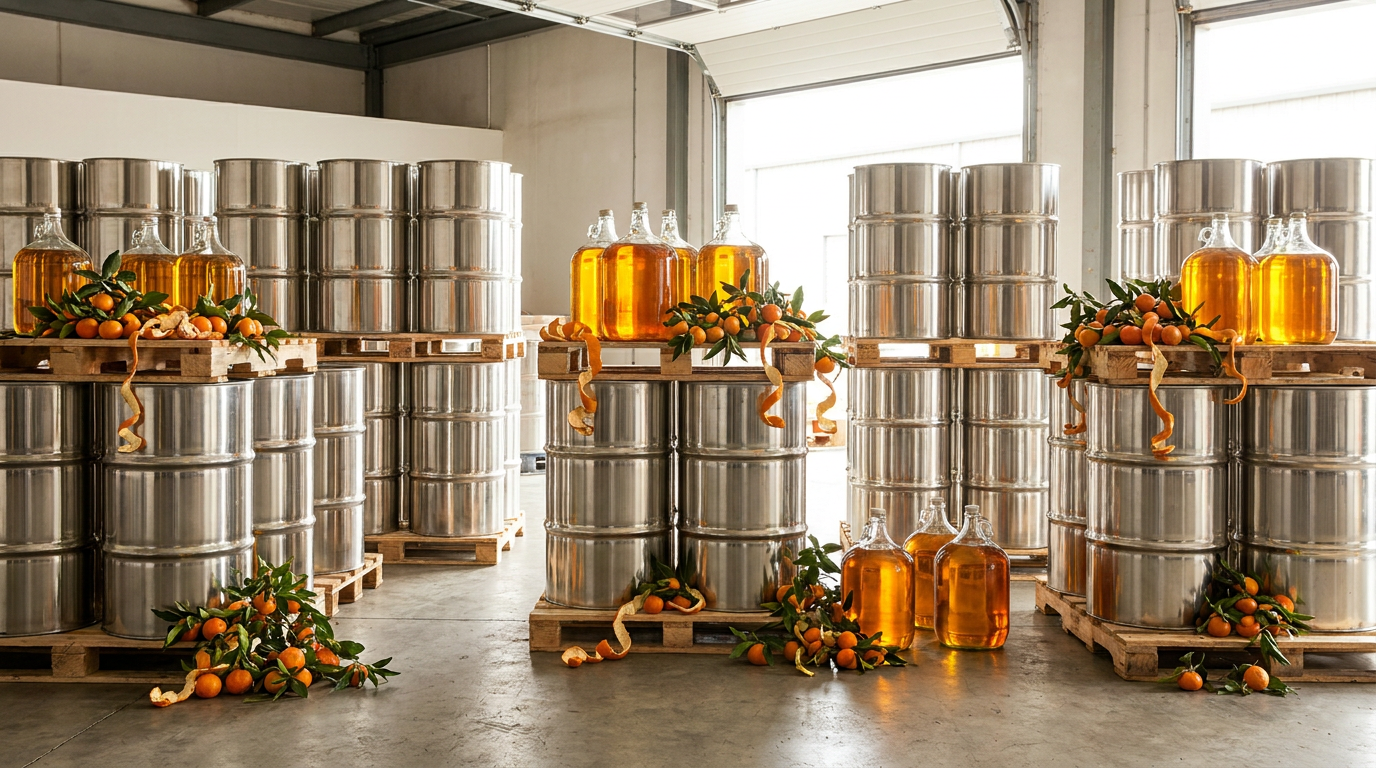
Tangerine essential oil is cold-pressed from the fresh peel of Citrus tangerina, a mandarin relative named for the port of Tangier. This guide walks wholesale buyers through how the oil is graded, who actually orders it at volume, and what documentation a serious supplier should hand over before a purchase order goes out.
Request the published COA and current bulk pricing before you commit to a size.
Citrus tangerina peel is pressed cold at harvest, a method that keeps the aroma vivid and juicy rather than cooked or muted. The process and the botanical lineage behind it are covered in full in how the oil is pressed from bright orange peels, and the fruit's own backstory, including how an American-bred mandarin ended up named for a Moroccan port, is told in a short history of the tangerine.
The result sits in the top note register: bright, fast to read, and gone quickly, which is why formulators reach for it to lead a blend rather than anchor one. A full breakdown of what the oil is, botanically and aromatically, lives in the complete cold-pressed citrus guide, and buyers who want the chemistry behind that brightness, principally limonene and its companion terpenes, can read the chemistry piece on what gives citrus oils their character.
| Sold as | What it actually is | How to recognize it |
|---|---|---|
| Tangerine essential oil | Cold-pressed Citrus tangerina peel oil, the genuine product | Label states Citrus tangerina, a batch tied to a published COA, and an aroma that reads candy-bright rather than floral. |
| Tangerine fragrance oil | A synthetic aroma compound blended to smell like tangerine, not a plant-derived essential oil | No botanical name on the label and no GC/MS-backed COA available; the distinction is laid out in this comparison of oil versus fragrance oil. |
| Relabeled mandarin or orange oil | A cheaper citrus oil rebottled under the tangerine name | Aroma leans more floral (true mandarin) or sharper and less candy-sweet (orange) than genuine tangerine; the differences are mapped in the tangerine versus mandarin comparison and the tangerine versus orange comparison. |
| Big-label bottled tangerine oil | Retail brands repackaging bulk-sourced oil at a markup, sometimes cut or blended without disclosure | Ingredient lists that show 'fragrance' alongside 'essential oil,' or pricing that barely improves at larger sizes; a side-by-side of what major labels actually sell is in this brand comparison. |
Buyers sourcing at volume should also weigh how quickly pressed citrus fades: an oil that already smells flat or waxy in the sample vial was likely pressed long before it reached the warehouse.
The sourcing trap here is not usually outright fraud, it is staleness sold at full price. Because pressed citrus loses its sparkle over time, a technically genuine tangerine oil can still arrive dull if it sat in a distributor's inventory too long; asking for a recent press date and a matching GC/MS report, as explained in reading a citrus GC/MS report before you pay, is the real safeguard.
Wholesale demand for tangerine oil clusters around brands that need a bright, uncomplicated citrus top note rather than a complex, multi-note profile. Diffuser blend makers, candle and soap crafters, and home fragrance brands are the steadiest volume buyers, drawn to the same candy-sweet character covered across the complete guide to using tangerine around the home.
Cosmetic formulators, skin, hair, lip, and body-care lines alike, are the other major segment, along with a smaller but steady group of food and beverage producers working with food-grade citrus flavoring. Buyers new to sourcing at this scale, rather than by the bottle, will find the basics of ordering covered in bulk citrus buying without the guesswork.
Before placing a purchase order, a wholesale buyer should confirm the following from any supplier.
Request the certificate of analysis before committing to a size, not after. Our own batch COA is published at /docs/tangerineessentialoil-coa.pdf so buyers can check specifications against the bottle before they order.
Tangerine oil is available across ten sizes, from a 0.5 oz sample bottle through a 400 lbs drum, so a buyer can size a first order to match a real production run rather than guessing.
Smaller formulators piloting a new product typically start in the 5 lbs to 25 lbs range, while established production lines and co-packers move into the 100 lbs and 400 lbs tiers once a formula is locked. Full pricing by size sits on the bulk order page.
Order the 0.5 oz or 1 oz size to run bench tests, check aroma against a prior batch, and confirm the oil performs in the intended formula.
Pull the published COA and ask for any additional specification sheets needed before a purchase order is drafted.
Move to a 5 lbs, 25 lbs, 100 lbs, or 400 lbs order once the formula and volume are confirmed, choosing packaging that matches how quickly the batch will be used.
Because pressed citrus fades with time, set reorder intervals around production pace rather than stockpiling more than a few months of supply at once.
The sections below cover the wholesale buyer categories that make up most of the demand for this oil.
Bulk tangerine oil for diffuser blend brands and home fragrance lines building bright, citrus-forward scent profiles.
Read the sourcing guide →Bulk tangerine oil for skincare brands formulating brightening, citrus-forward glow products.
Read the sourcing guide →Bulk tangerine oil for hair care brands building citrus-bright shampoo, conditioner, and styling formulas.
Read the sourcing guide →Bulk tangerine oil for lip balm and gloss brands building glossy, citrus-sweet finishes.
Read the sourcing guide →Bulk tangerine oil for body oil and moisturizer brands building bright, citrus-forward finishing products.
Read the sourcing guide →Bulk tangerine oil for soap makers, candle brands, and scrub crafters building citrus-forward scent lines.
Read the sourcing guide →Bulk food-grade tangerine oil for beverage and baking brands building citrus flavor lines.
Read the sourcing guide →Reach out for sizing guidance, the batch COA, and a straightforward path to a purchase order.