Reading a Tangerine Oil Label: What to Check
Shopping for tangerine oil, it is natural to look for the Latin name first and trust whatever it says. It is a sensible habit, but the name carries less weight than the advice suggests, and the rest of the label does a surprising amount of the work. Here is how we would read any bottle, ours included.
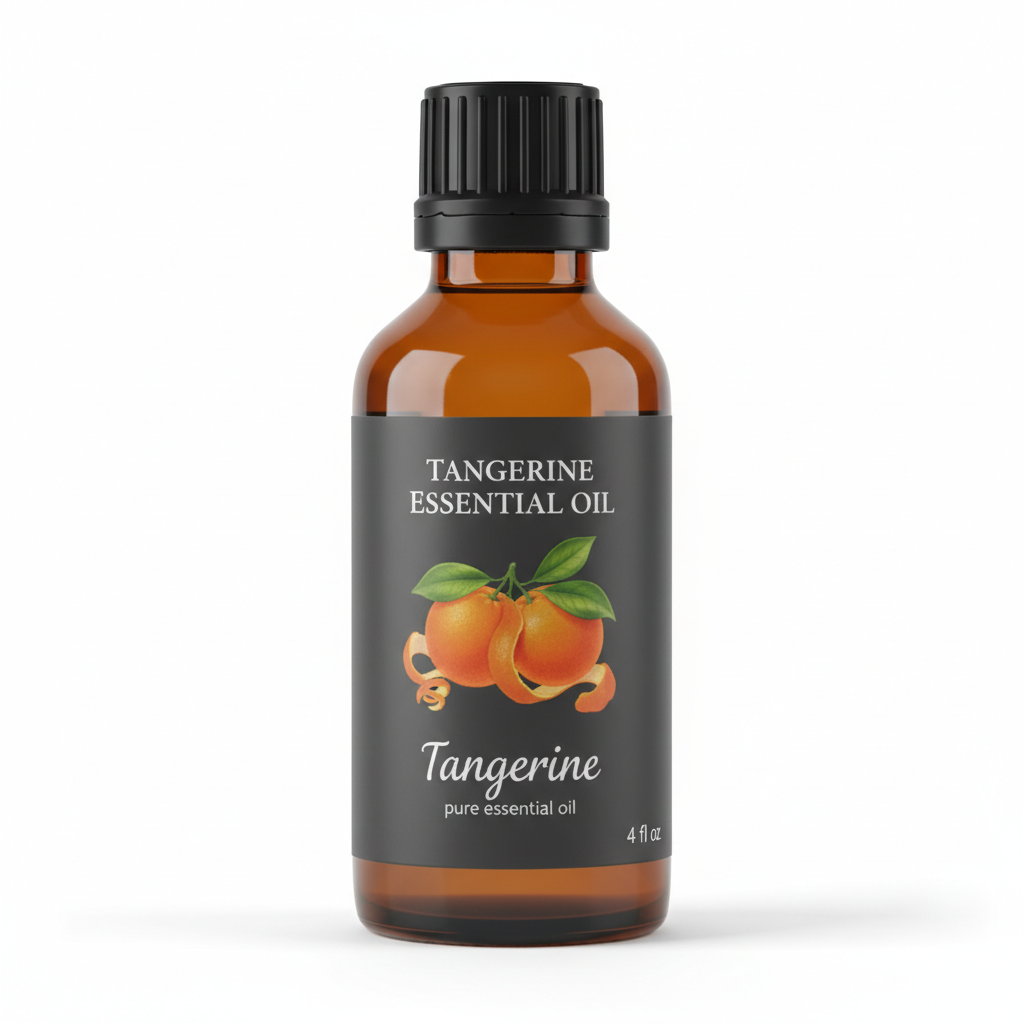
Tangerine Essential Oil
Our own Tangerine Essential Oil, in sizes from 0.5 oz to bulk.
From $12.99
Shop Now →The botanical name is a clue, not a verdict
A 2022 survey of 374 cold-pressed citrus oils listed mandarin as Citrus reticulata Blanco, clementine as C. clementina and tangerine as C. tangerina. A 2025 review of citrus genetics explains the split: one classification groups several varieties into a single species, another gives each variety its own. So two honest sellers can print different Latin names on very similar fruit. The certificate we publish for one batch of our oil names Citrus reticulata. If the species matters for your use, ask the seller which convention they follow, and ask us through the contact page if you would like it in writing.
"Cold pressed" tells you the method
Pressed and distilled citrus oils are different materials. The Tisserand Institute notes that distilled citrus oils contain virtually no furanocoumarins, the compounds behind sun sensitivity, while expressed ones keep some. For tangerine, Tisserand lists the expressed oil among those with extremely small amounts, bergapten about 0.005 percent. A label that says cold pressed is therefore telling you what kind of oil you have, and our own advice for it is the usual citrus one: dilute, patch test, and keep freshly treated skin out of strong sun.
Origin and date: ask for the specifics
Origin matters because the same fruit name can hide a range. In the 2022 survey, tangerine oil from Brazil carried roughly 94 parts per million of furanocoumarins and an Italian sample about 2. Neither is better or worse; they simply show that a country name on a bottle describes a starting point. If origin or pressing date matters to you, ask for it in writing and keep the reply with your order. That is how we would handle it for ours too.
Batch documents carry the real detail
A certificate is only as informative as what it prints, and for which batch. Ours lists, for one batch, a relative density of 0.846, a refractive index of 1.474 and an optical rotation of +94 degrees, each within the range printed beside it. Those are physical measurements. A gas chromatography report goes further and shows the actual composition, and if you need one, ask us in writing through the contact page before you order.
Why does that matter? A 2021 study bought commercial mandarin oils online and compared them with the ISO chromatographic limits. Only one of eleven met every limit, and some looked more like sweet orange than mandarin. That says nothing about any particular seller, but it is a good reason to prefer a bottle with a report you can read. Our report-reading guide explains what to look for.
Smell it, then read it
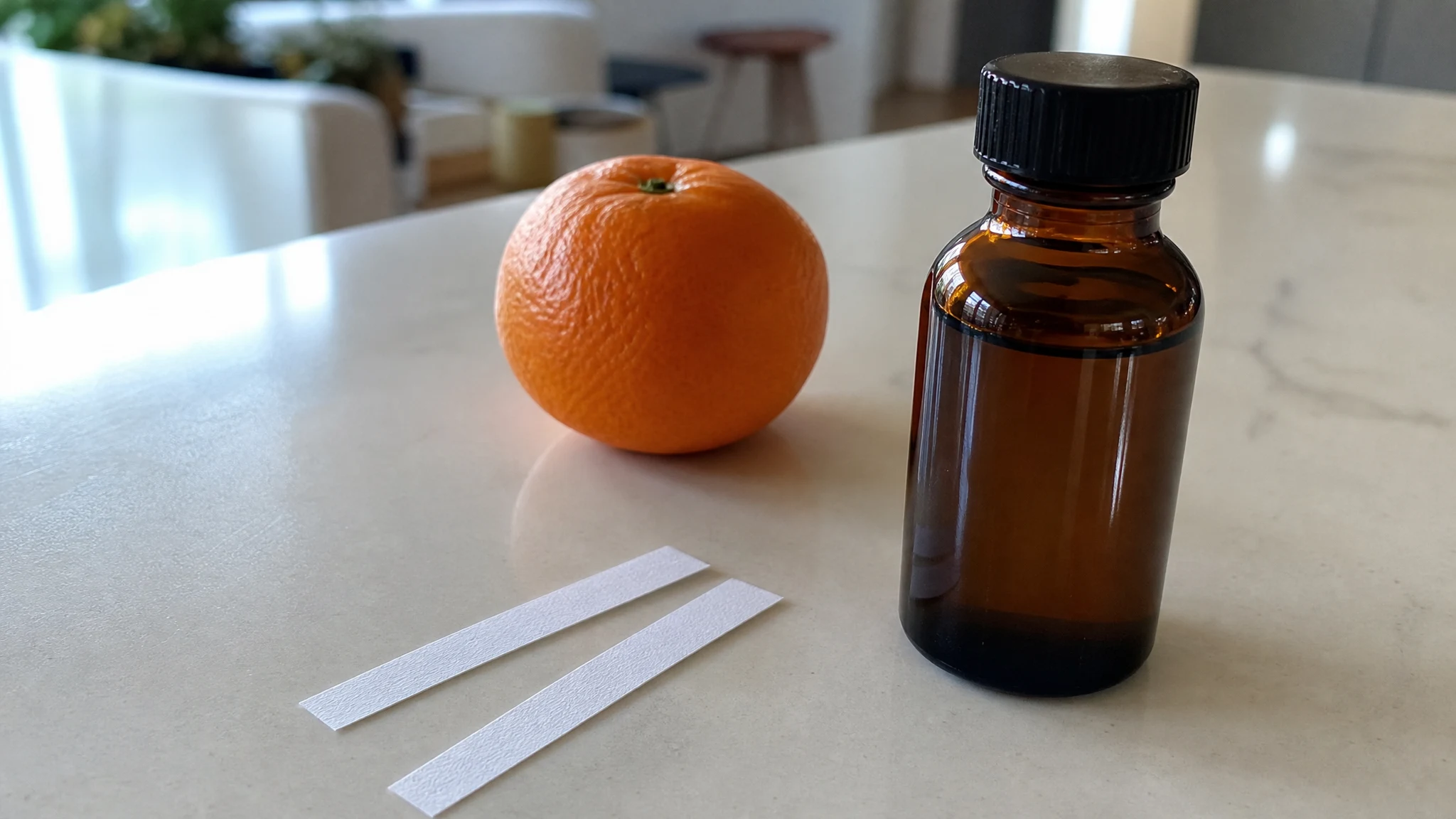
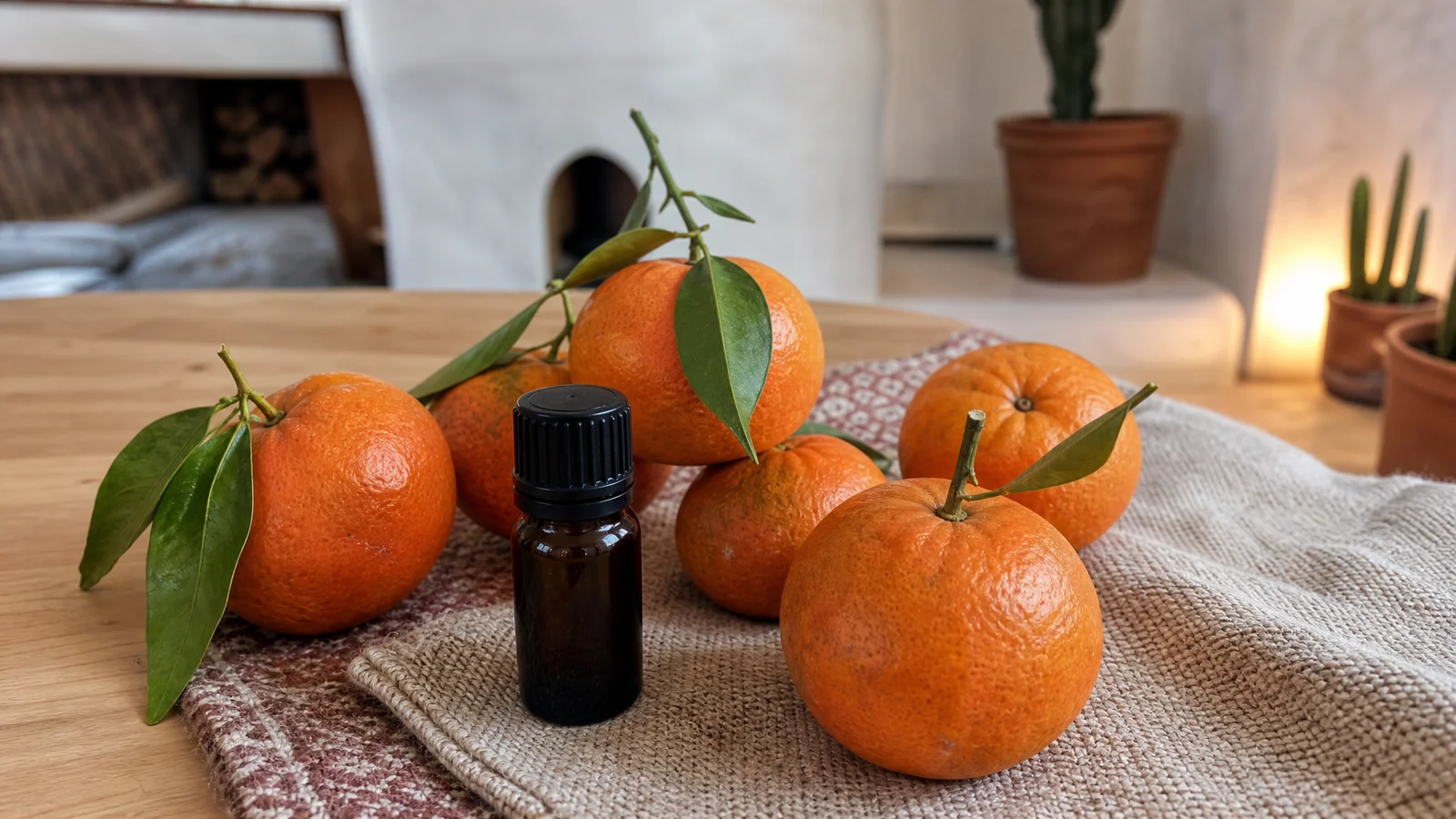
A label can only tell you so much, so give the bottle a quick sniff test as well. Open it and hold it at a comfortable distance. Tangerine should smell sweet, juicy and bright, like a peel just pulled apart. If it smells flat, sharp or oddly harsh, that is worth a question to the seller, and a reason to check the date and how it has been stored.
Look at the bottle too. A dark glass bottle with a tight cap is a good sign, because light and air are what citrus oils like least. A clean, clear, easy-to-read label with a name, a size and instructions tells you the seller took a little care.
Remember that a label is written by a person with a purpose. Read it the way you would read the back of a jar of jam: look for the plain facts, such as the name, the size, the instructions and the contact details, and be a little wary of anything that sounds too grand. Plain, specific wording usually beats big promises.
The shortlist of questions
- Which batch does the document describe, and is it the one in my bottle?
- What is the extraction method and the part of the plant?
- Can I have origin and pressing date in writing?
- What is the recommended dilution and storage? (Ours: 0.5% to 2% and cool, dark, tightly capped.)
Our aroma is the part no document can give you: vivid, juicy and sweet, candy-bright, a top note that is best fresh. If you want to see how tangerine compares with its close cousins, our mandarin comparison and overview are good next reads.
None of this needs a chemistry degree. It needs a habit of reading the small print the way you would read an ingredient list on food: what it is, where it came from, and what the seller will put in writing. A seller who is happy to answer is usually one worth buying from, and we are glad to answer for ours.
A good label is a conversation starter more than a final answer. Keep your questions short and your replies on file, and you will always know what is in your bottle.
Read the label, ask the question, and trust the seller who answers it plainly.
Tangerine Essential Oil
Tangerine Essential Oil from our own shop, in sizes from 0.5 oz to bulk.
From $12.99
Shop Now →Sources & Further Reading
- Authentication of Citrus spp. Cold-Pressed Essential Oils by Their Oxygenated Heterocyclic Components (Molecules, 2022)
- Genomics unlocks the potential of genetic resources for citrus breeding (Breeding Science, 2025)
- Phototoxicity: essential oils, sun and safety (Tisserand Institute)
- Type and magnitude of non-compliance and adulteration in neroli, mandarin and bergamot essential oils purchased on-line: potential consumer vulnerability (Scientific Reports, 2021)