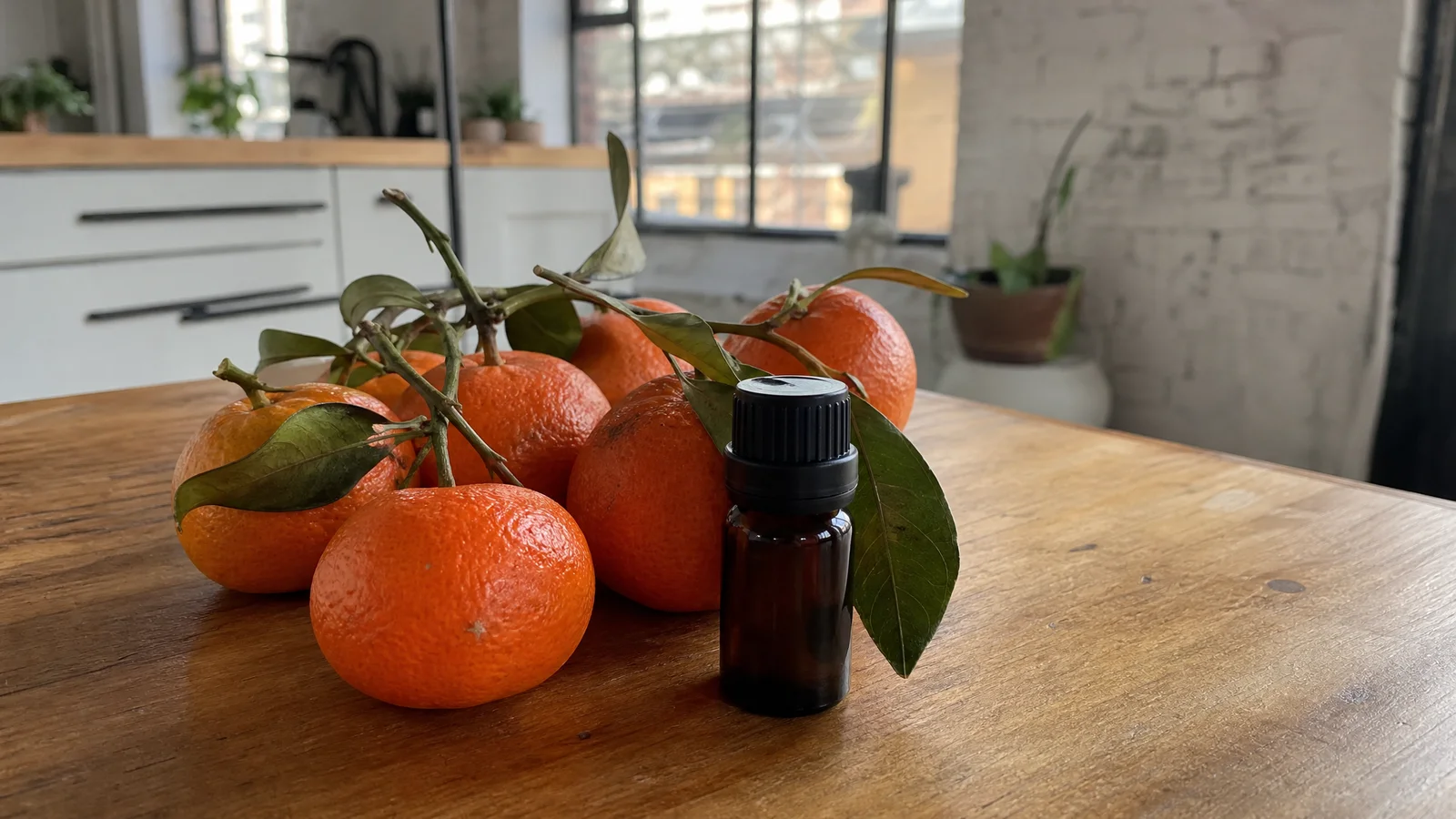
What Is Tangerine Oil? How the Peel Becomes the Bottle
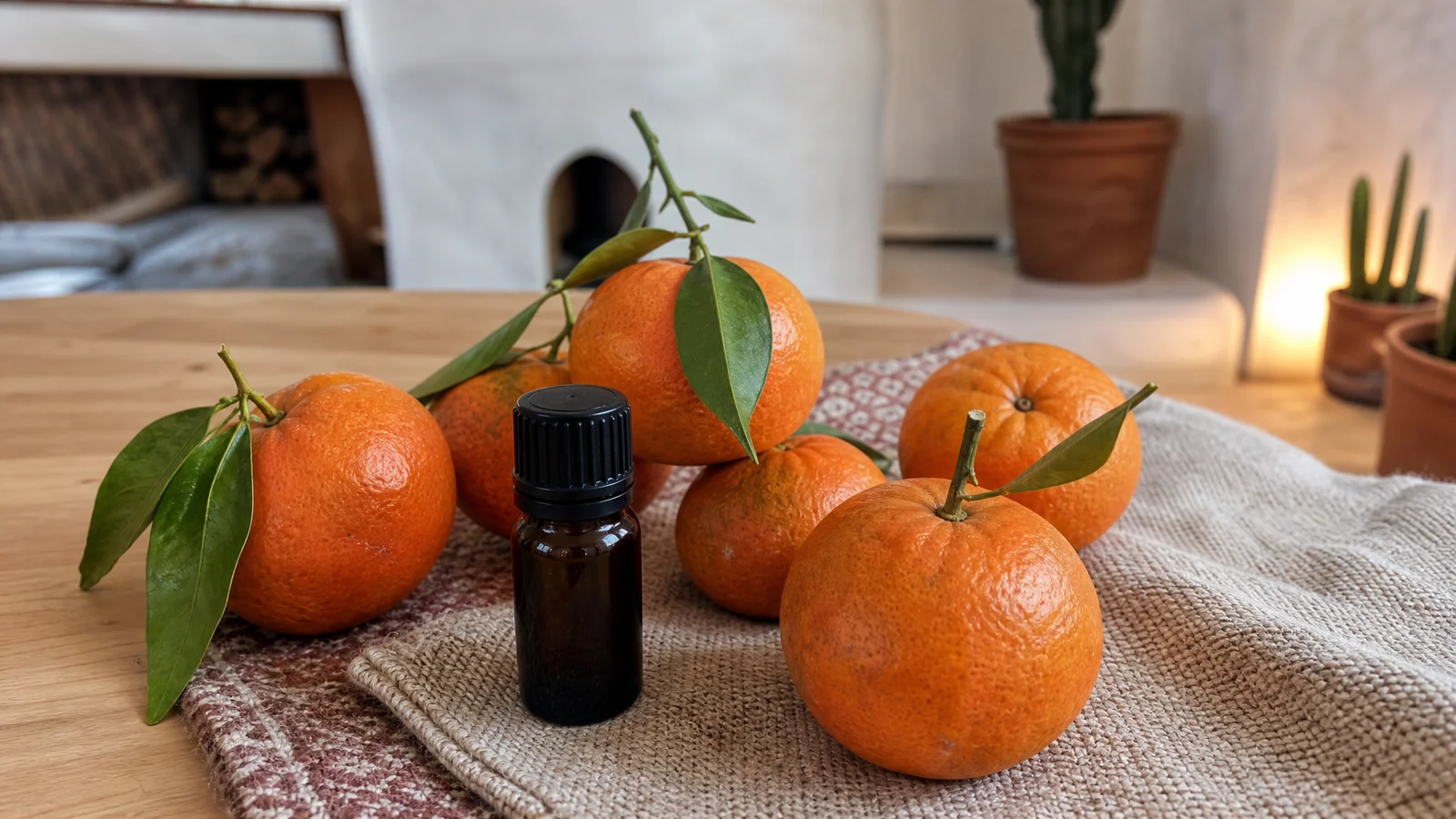
Bend a fresh tangerine peel near a lamp and you can see it: a fine, glittering mist of oil that jumps into the air and smells like the whole fruit at once. That mist is tangerine essential oil, and it is sitting in tiny pockets just under the surface of the peel, waiting to be released.
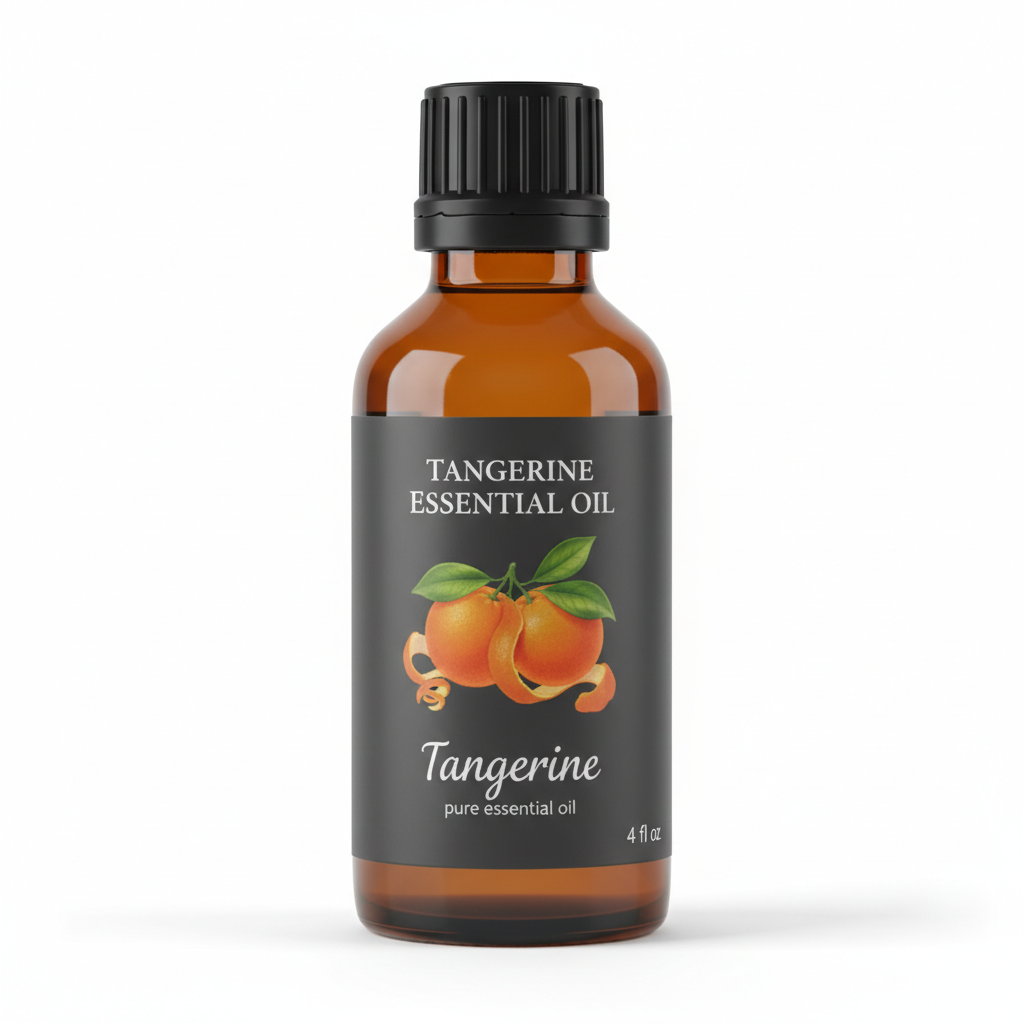
Tangerine Essential Oil
Our own Tangerine Essential Oil, in sizes from 0.5 oz to bulk.
From $12.99
Shop Now →Pressed, not steamed
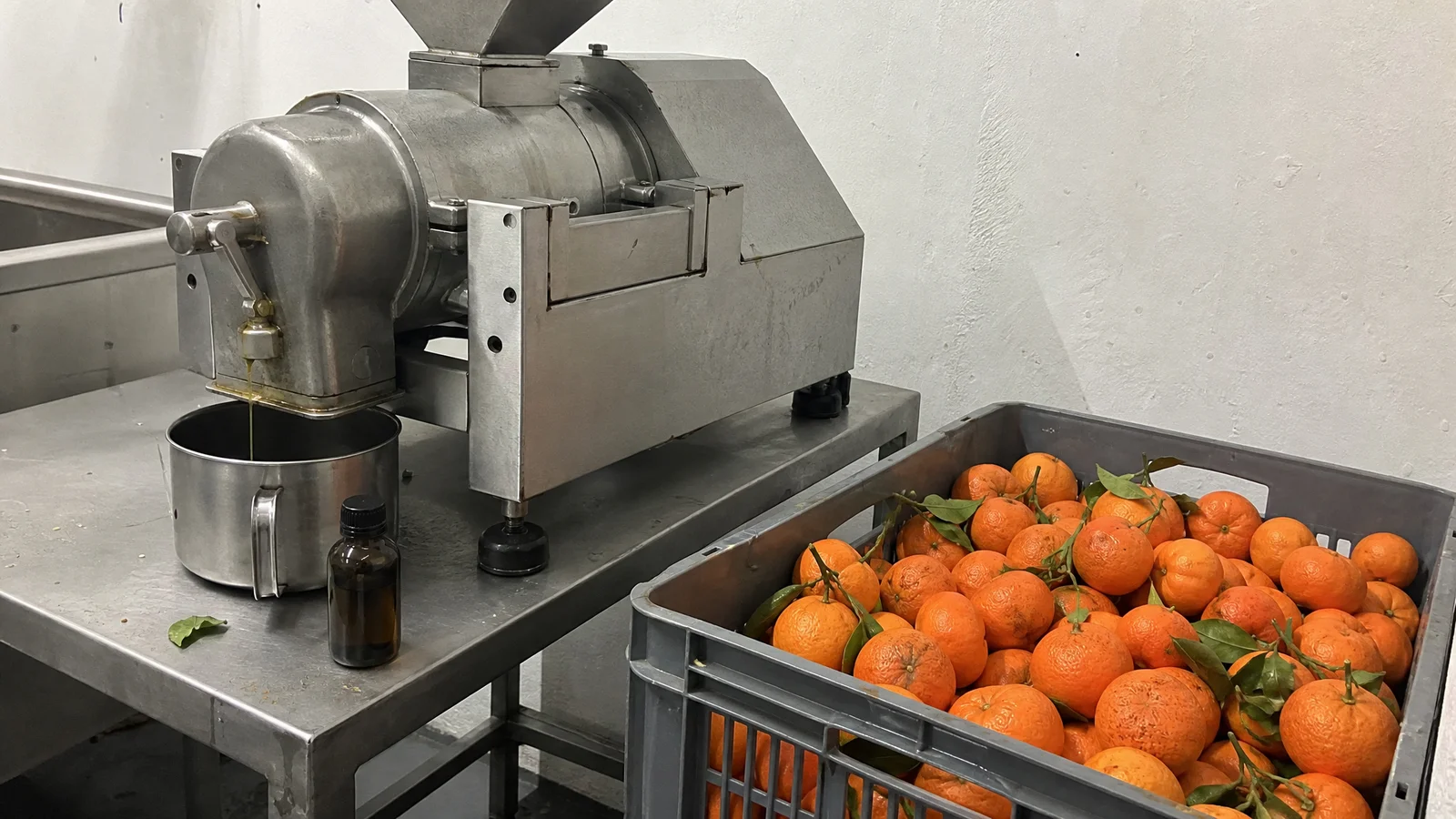
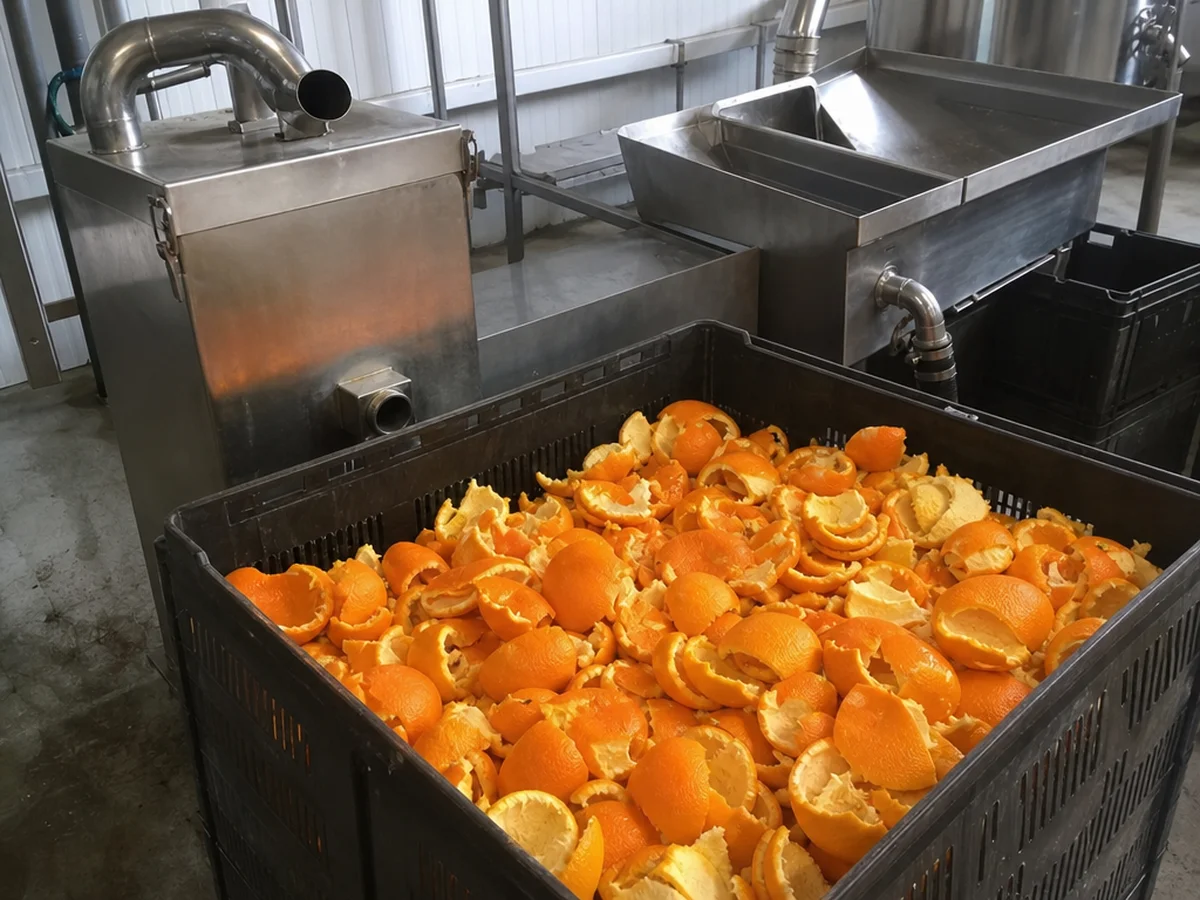
Most essential oils are steam-distilled. Citrus peel oils usually are not, because the oil sits so close to the surface that it can simply be pressed out. The European Food Safety Authority describes expressed mandarin oil this way: the peel surface is scarified, water is sprayed over the fruit to carry the oil away, and the oil and water are filtered and centrifuged apart. There is no heating step. The certificate of analysis we publish for one batch of our oil lists the part used as peel and the extraction method as cold pressed, which is the same family of method.
That matters for aroma, because nothing is cooked. It also matters for how you treat the bottle, which we come back to below.
A name with a few cousins
"Tangerine" is a friendly trade name rather than a tidy botanical box. The EFSA opinion treats tangerines and satsumas as belonging to the same species as the mandarin, Citrus reticulata Blanco, and that is the name on the certificate we publish. Other catalogues, including a large 2022 laboratory survey of cold-pressed citrus oils, list tangerine, clementine and mandarin on separate lines. A 2025 review of citrus genetics explains why: one classification system lumps similar fruit into 16 species, another splits them into 162. Same trees, different filing cabinets.
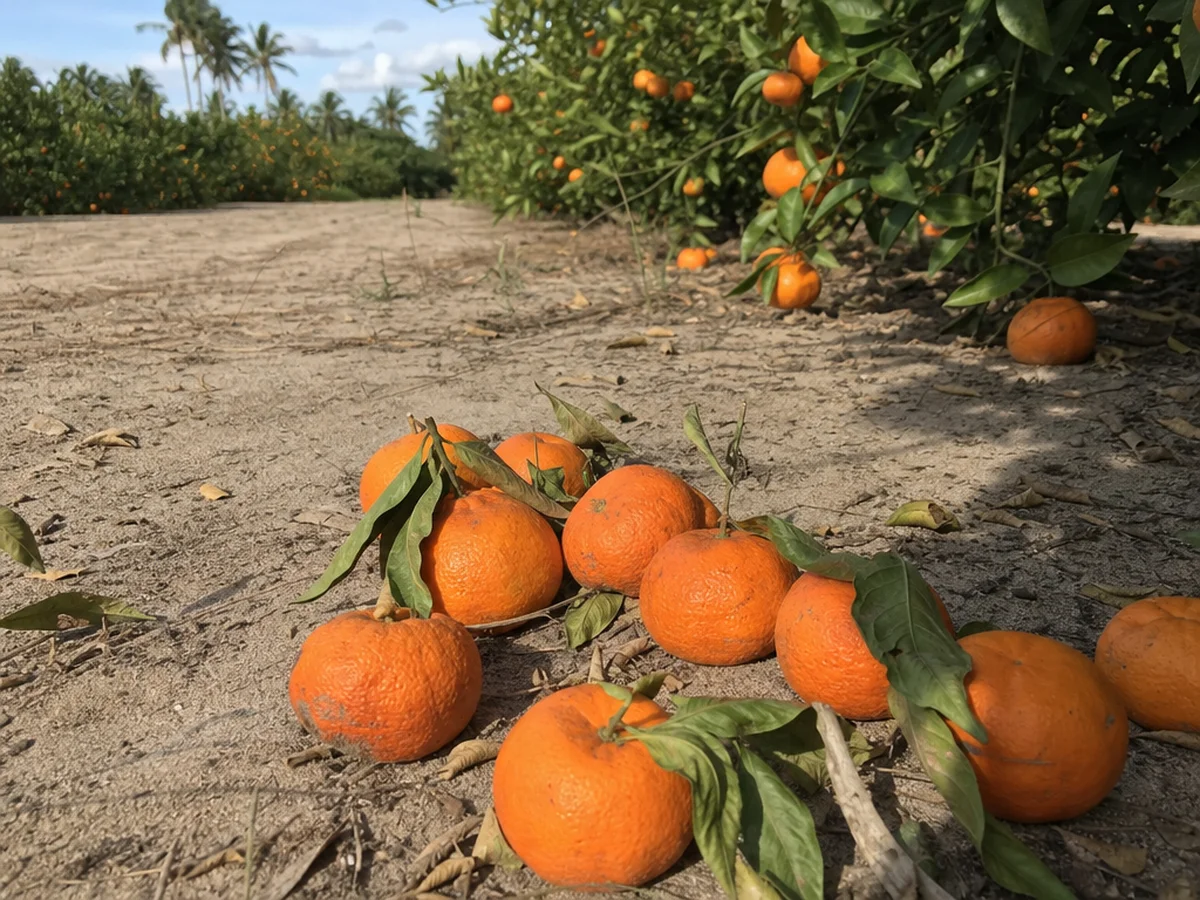
For a buyer, the useful takeaway is simple. Do not decide on the Latin name alone. Look at the whole label, and if something matters to you, ask. Our mandarin comparison goes further into how the two oils line up.
What it smells like and how it behaves
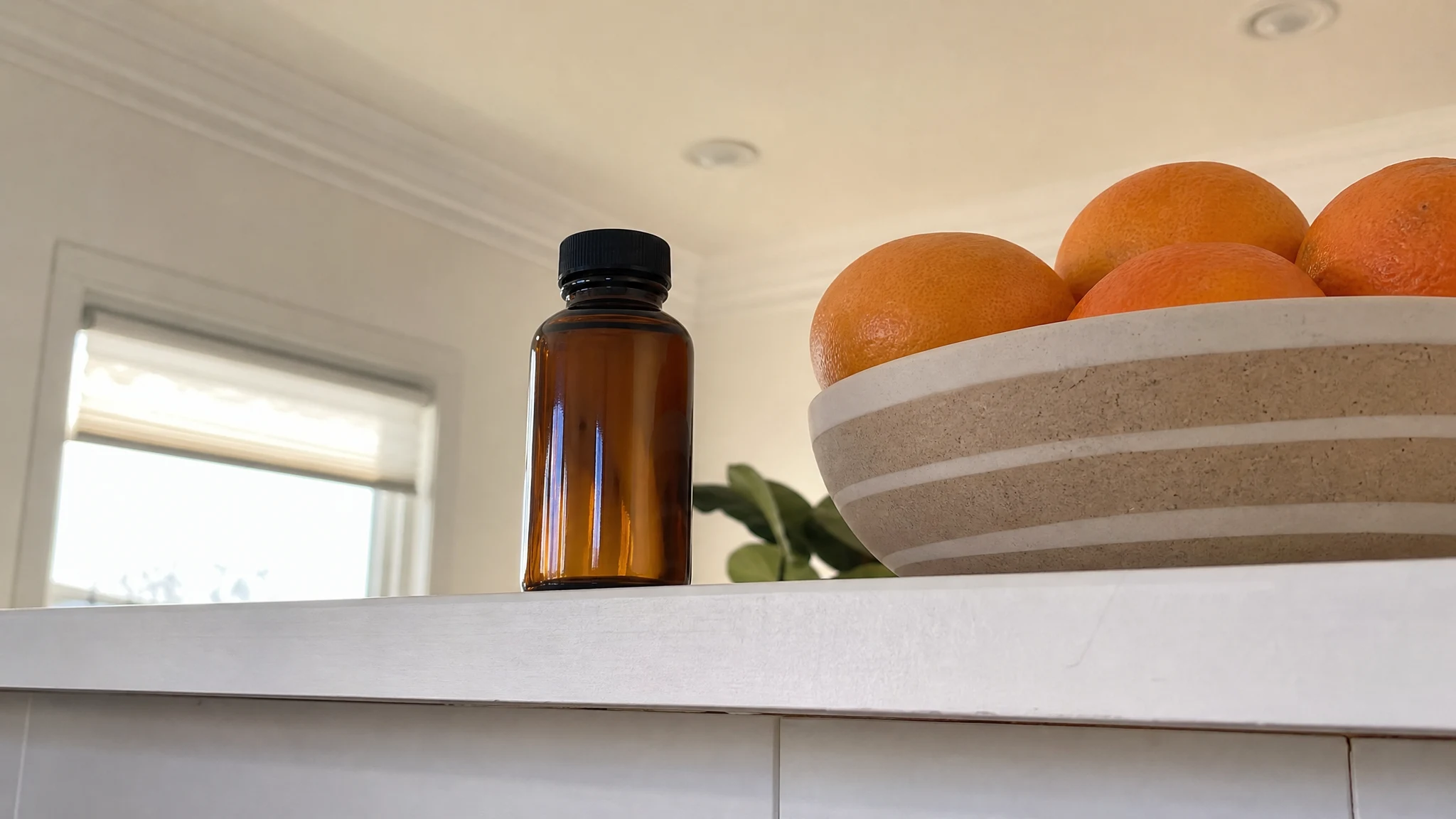
We describe our tangerine as vivid, juicy and sweet, candy-bright, with more sparkle and less floral hush than mandarin. In perfumers' terms it is a top note, the first thing you smell and the first to fade, faster than heavier oils. That is part of its charm and also the reason we say to buy an amount you will use in a sensible window. We suggest a tight cap, a cool shelf away from sunlight and warmth, and typically 12 to 18 months of vibrancy. Tisserand's guidance on oxidation points the same way: most oils keep well for at least one to two years, and cool storage extends that. Our storage post has the details.
What is in the bottle, chemically, is mostly limonene. In EFSA's mandarin specification limonene runs from 65 to 80 percent with gamma-terpinene next at 13 to 22 percent, and sweet orange sits higher still. If you want the composition of a particular bottle of ours, the certificate we publish lists density, refractive index and optical rotation for one batch; for a gas chromatography report, ask us in writing through the contact page before you order. Our sweet orange comparison shows how the two citrus oils differ.
Try this at home with a peel
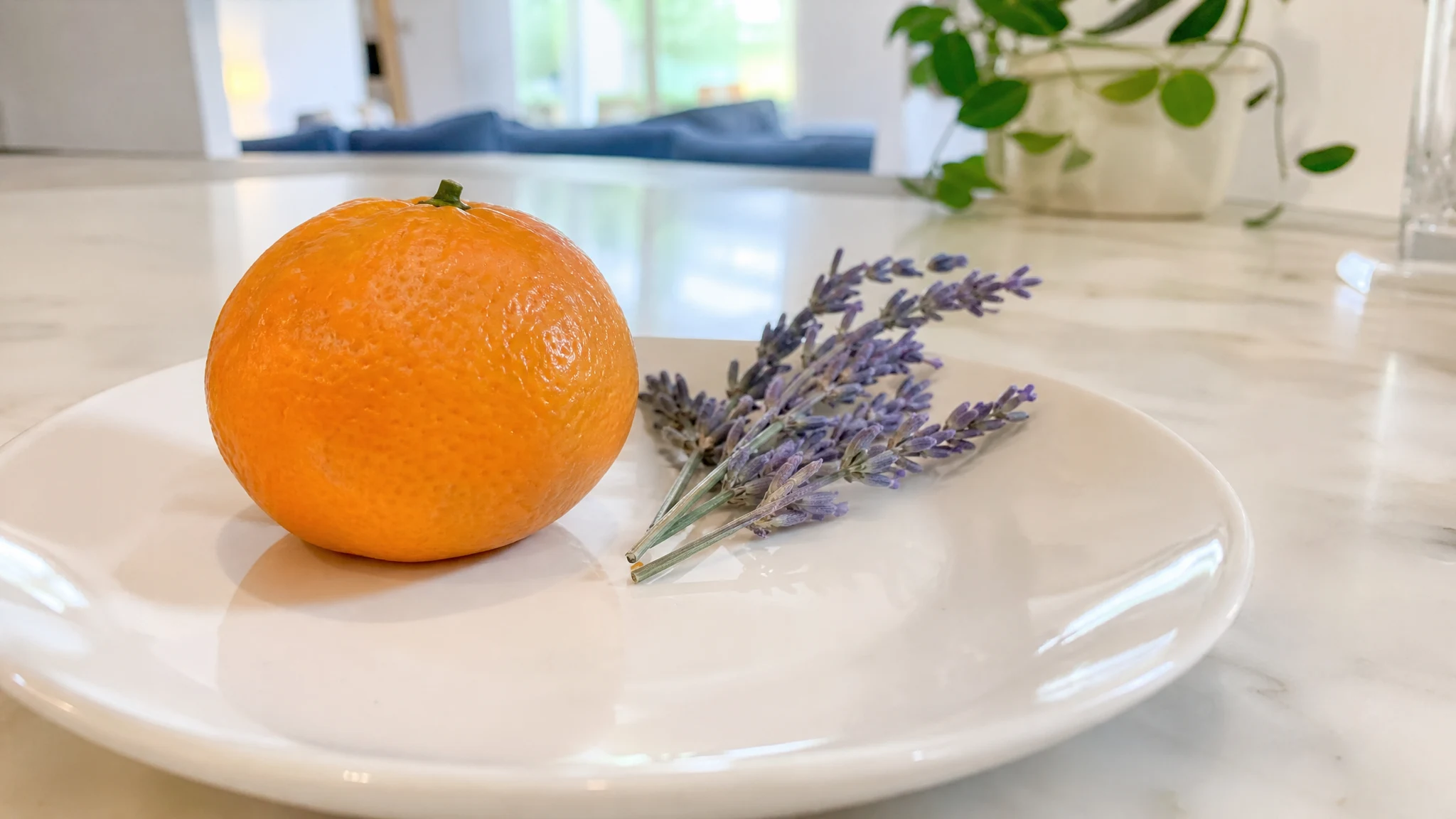
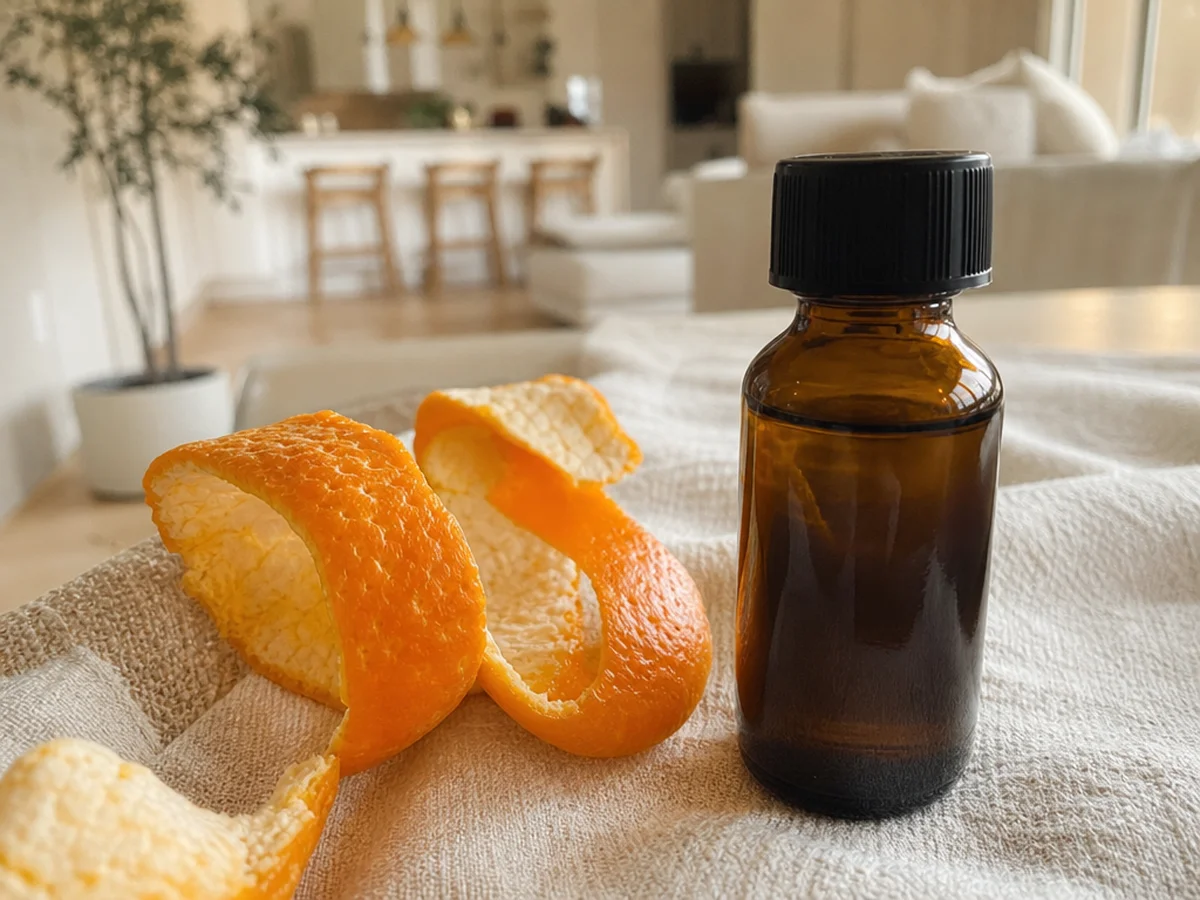
The best introduction to the oil costs a piece of fruit. Hold a tangerine peel with the orange side facing out, bend it sharply near a lamp, and watch for the mist. Smell your fingers afterwards. That sweet, bright cloud is the kind of thing the bottle holds, in neat, concentrated form, which is also why we ask you to treat the oil with care.
If you have just opened your first bottle
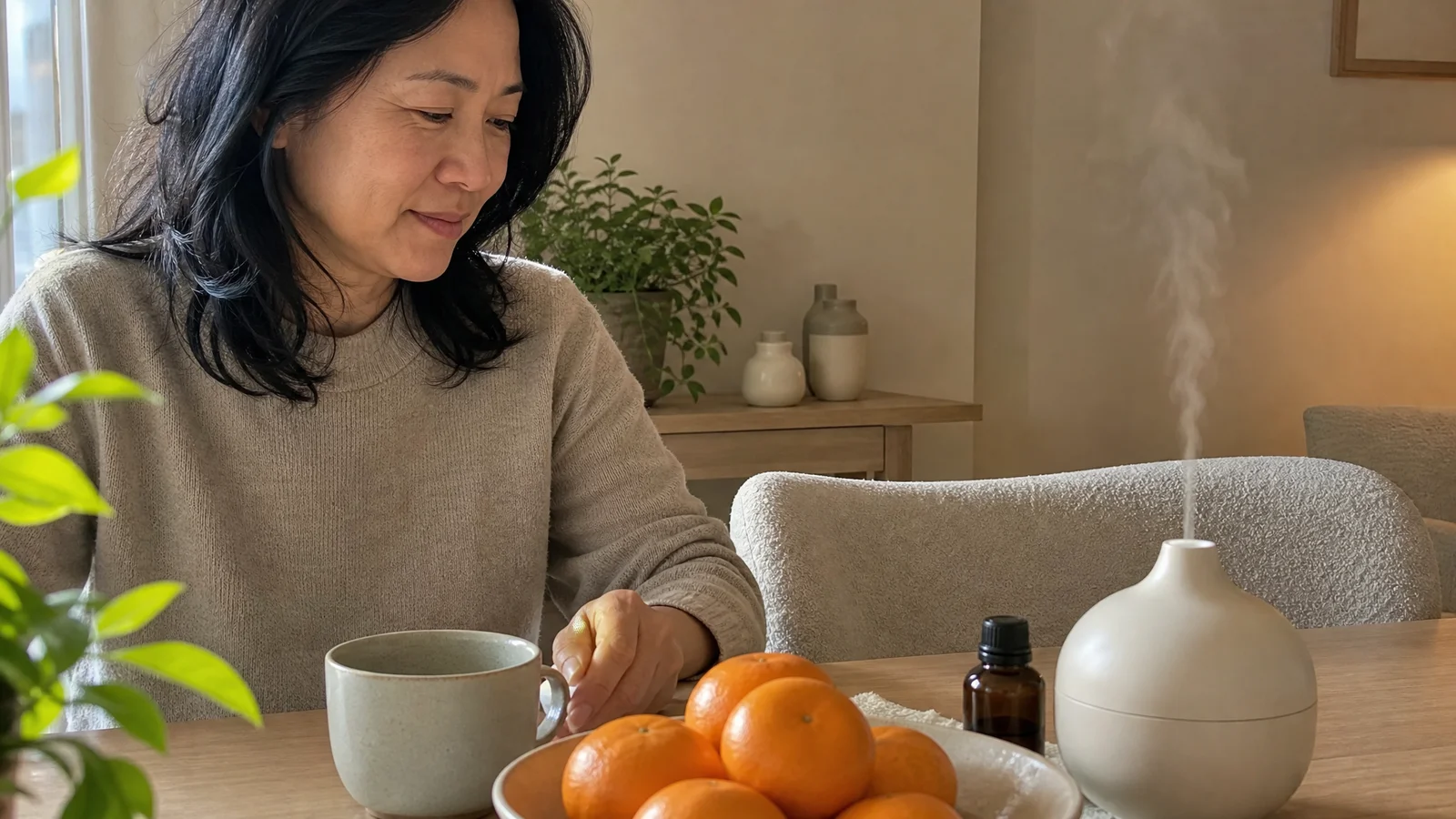
Open it, take one slow sniff, and decide what you want to make. Many people are surprised how little it takes; one or two drops in a diffuser is plenty to start with. Write the date on the label, put the cap back on tightly and keep the bottle somewhere cool and dark. Those three small habits are most of what the oil asks of you.
Why the name is friendly, not fussy
We would not worry too much about the cousins and the Latin names when you are standing in front of a bottle. What matters in your kitchen or craft room is whether the oil smells bright, whether it is fresh, and whether you know how to handle it. The rest is background reading for the curious, and we hope this page makes it a pleasant read.
Using it well
We sell tangerine oil neat, so it is a concentrate. Our guidance is to dilute it to 0.5% to 2% in a carrier oil before it touches skin, patch test first, and keep it away from eyes, children and pets. It is not for swallowing. On sun, expressed tangerine sits among the citrus oils the Tisserand Institute describes as having extremely small amounts of furanocoumarins, with bergapten around 0.005%. Because cold-pressed citrus oils can heighten skin's sensitivity to sunlight, we still suggest keeping freshly treated areas out of strong sun.
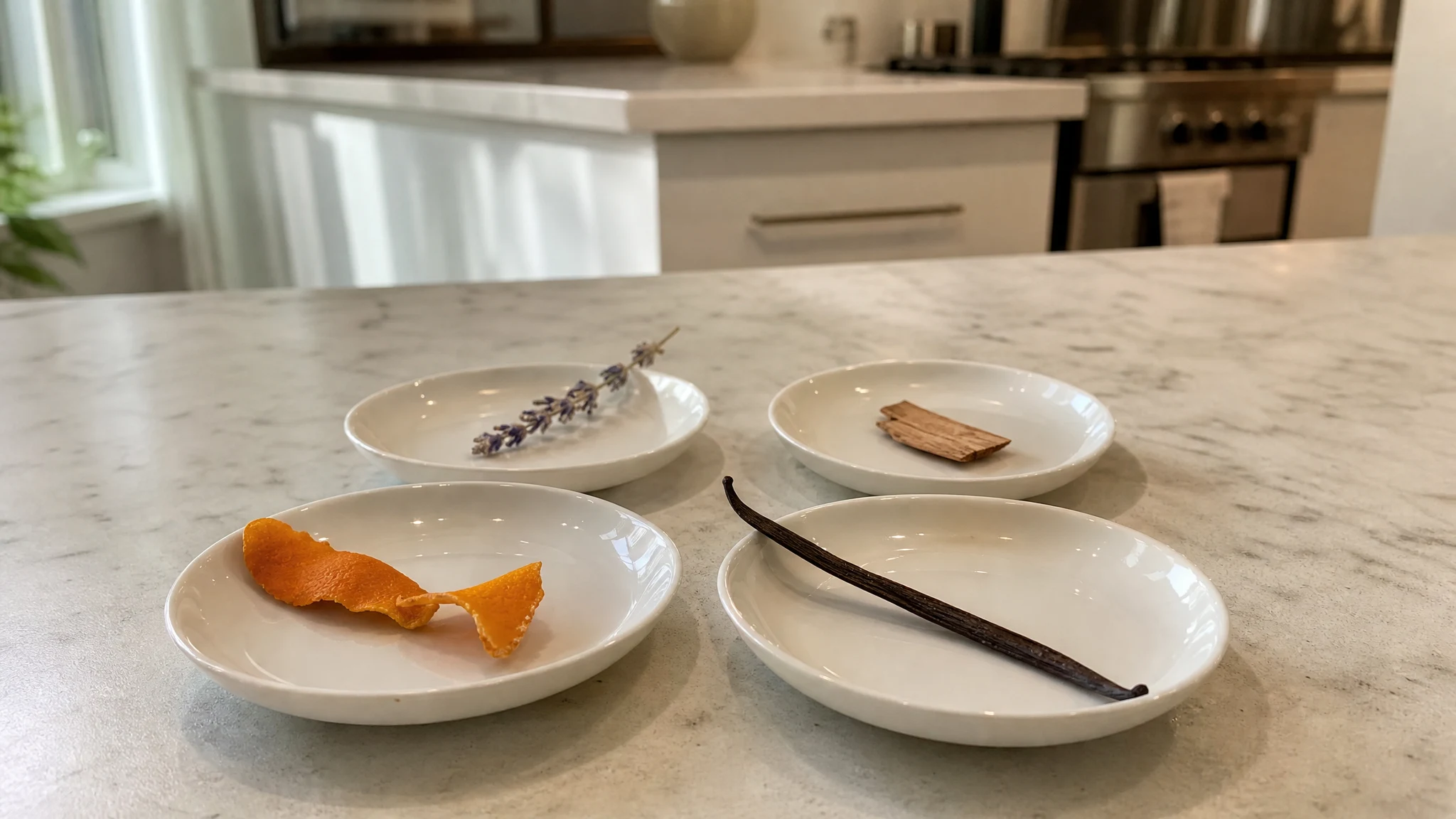
In the diffuser, in a diluted body oil, or in a seasonal blend with cinnamon and vanilla, tangerine rewards the person who opens the bottle and simply smells it first. Do that, and you will understand the name better than any label can explain.
Tangerine Essential Oil
Tangerine Essential Oil from our own shop, in sizes from 0.5 oz to bulk.
From $12.99
Shop Now →Sources & Further Reading
- Safety and efficacy of a feed additive consisting of expressed mandarin oil from the fruit peels of Citrus reticulata Blanco for use in all animal species (FEFANA asbl) (EFSA Journal, 2021)
- Authentication of Citrus spp. Cold-Pressed Essential Oils by Their Oxygenated Heterocyclic Components (Molecules, 2022)
- Genomics unlocks the potential of genetic resources for citrus breeding (Breeding Science, 2025)
- Phototoxicity: essential oils, sun and safety (Tisserand Institute)
- Is my bottle of essential oil oxidized or no longer good to use? (Tisserand Institute)