Blending Tangerine Oil: Six Partners That Work
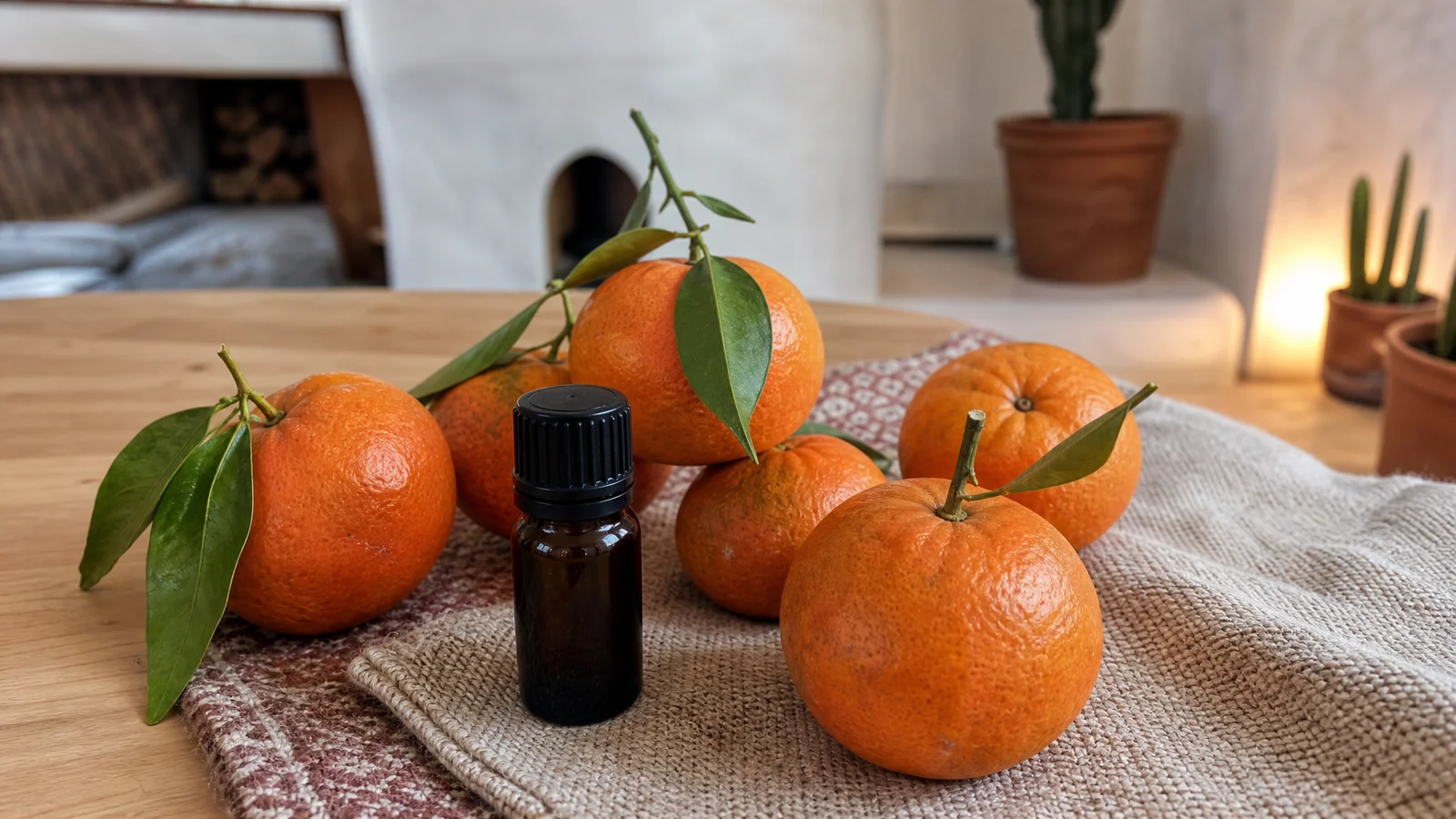
Tangerine oil smells like the moment you break a peel: vivid, juicy and sweet, with a candy-bright edge. It is also one of the first scents to leave a blend, which is the single most useful thing to know before you start mixing. A top note opens the performance and then steps aside, so the best partners are the ones that carry the story after it has gone.
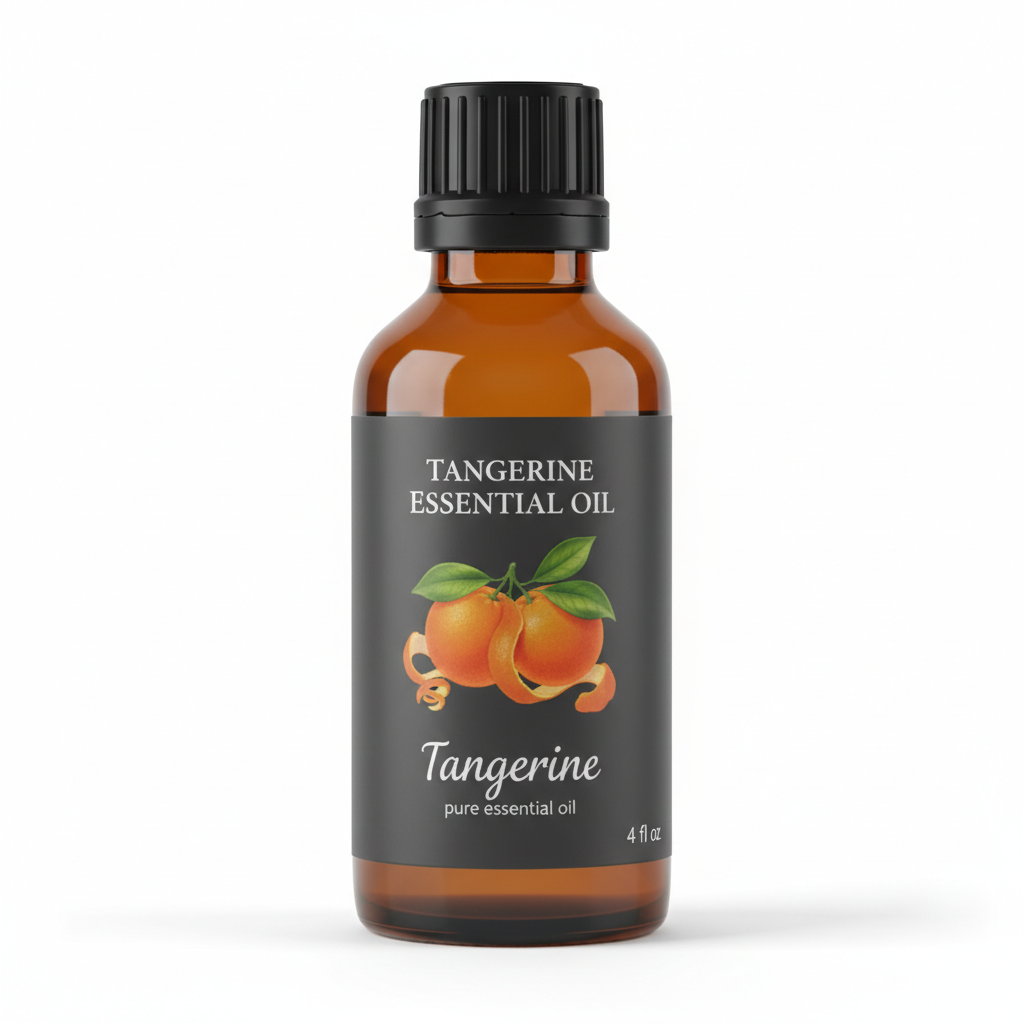
Tangerine Essential Oil
Our own Tangerine Essential Oil, in sizes from 0.5 oz to bulk.
From $12.99
Shop Now →Why tangerine wants an anchor
Perfumers talk about notes as a kind of timeline. Top notes arrive first and fade first, middle notes shape the heart of the blend, and base notes linger. Tangerine sits firmly at the top, and we describe it that way on our shop page for exactly this reason. Compared with mandarin, it has more sparkle and less floral hush, which makes it a cheerful opener and a poor foundation.
So build the blend around what you want to smell at the end, and let tangerine be the first impression. We suggest six partners, and each brings something different:
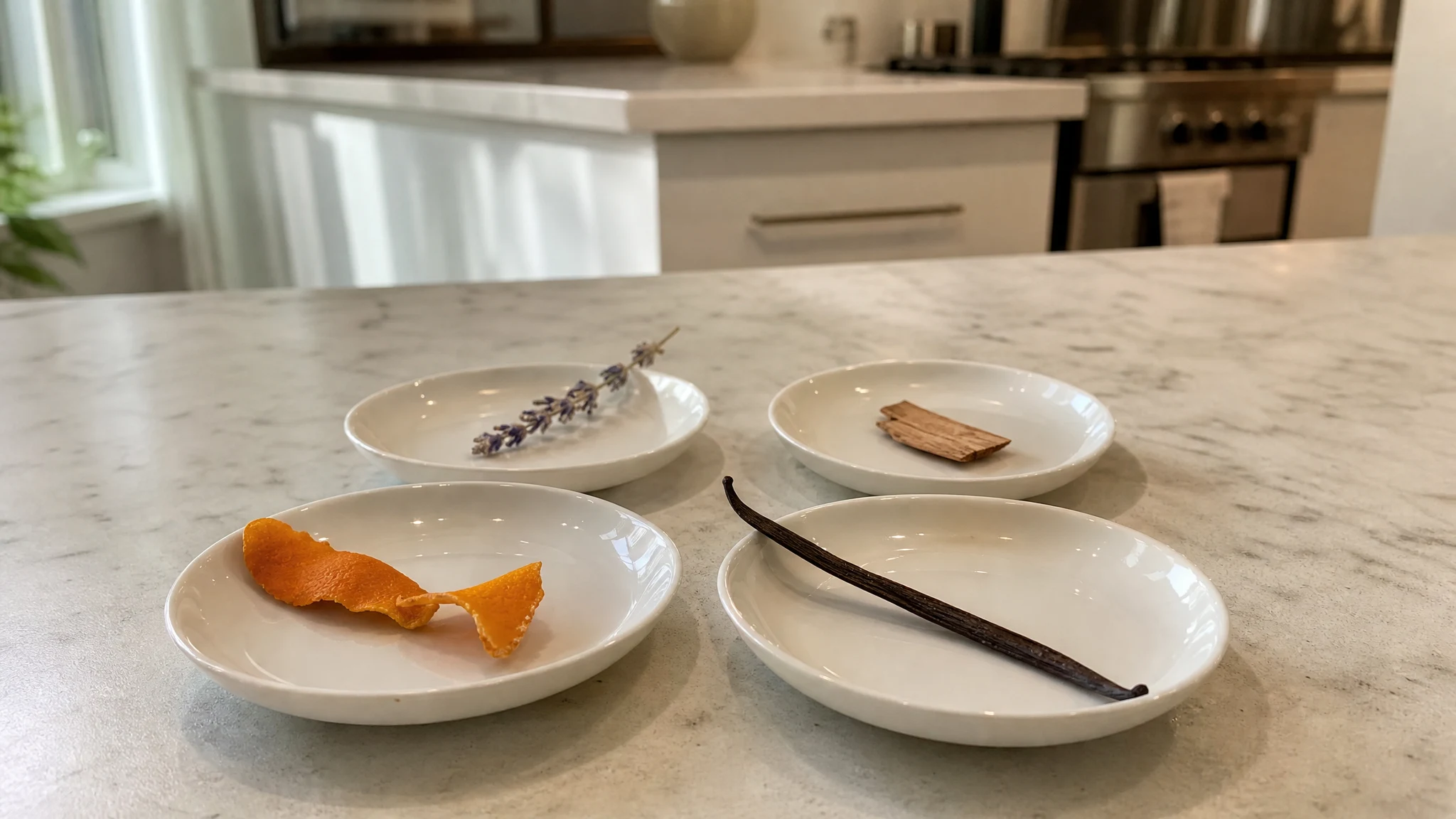
- Vanilla rounds the brightness into something creamy, rather like an orange cream sweet.
- Cinnamon adds spice and warmth, which is why tangerine feels so at home in winter blends. Spice oils are strong, so a little goes a long way.
- Neroli brings a soft floral depth that tangerine does not have on its own.
- Sweet orange makes a mellow, familiar citrus chord, and our comparison of tangerine and orange shows how the two differ.
- Bergamot adds a green, slightly tea-like sparkle.
- Ylang ylang gives a lush, creamy floral heart.
We sell only tangerine oil, so you will find these partners at an essential oil retailer or a craft supplier. If a seller offers the oils, ask for their safety documentation as you would for any other bottle.
To get a feel for each partner, smell them on a paper strip side by side with tangerine before you mix anything. Tangerine and vanilla smell like a creamsicle. Tangerine and cinnamon smell like a December kitchen. Tangerine and neroli smell like a sunny garden. The strip tells you in ten seconds what a recipe takes a paragraph to describe.
A way to set proportions
Here is a simple approach for a scent blend: three parts tangerine to one part of a strong partner such as cinnamon or ylang ylang, or two parts tangerine to one part of a gentler partner such as vanilla or sweet orange. Treat these as starting suggestions, and adjust by nose. Write each blend down by parts, not drops, so you can scale it from a diffuser to a bigger bottle.
Building a blend you will love
Start with just two oils. It is tempting to pour in four or five at once, but two is enough to learn how a partner changes tangerine. Mix a small amount, label it, and let it sit for a day before judging. Blends often smell a little different after resting, as the sharp edges soften and the pieces settle together.
When you find a pair you like, write down the parts and the date. If you later want to adjust, change only one partner at a time. That is how you end up with a blend that is truly yours, not a copy of someone else's.
If the blend is going on skin
Everything above applies to a diffuser, and skin adds one step: think of the total amount of oil in the blend as one budget. Our dilution guidance is 0.5% to 2% in a carrier oil, and for leave-on blends we like to stay toward the lower end, at around 1% in total, and lower still on the face. Every oil you add shares that budget.
The arithmetic is gentle. Tisserand's working figure is about 30 drops to the millilitre, though real droppers vary from roughly 20 to 40 (How big is a drop? - Tisserand Institute), so we use 20 per ml as a simple round number for this. In a 10 ml bottle, 1% is 0.1 ml of oil, which comes to about two drops across the whole blend. Two drops is not much room, so a small bottle is a good place for a single partner at a very light touch.
Bergamot deserves a word, since it is the pairing everyone reaches for. Among citrus oils it is the high-furanocoumarin one: the Tisserand Institute puts expressed bergamot at about 0.2% bergapten against about 0.005% for tangerine, and advises keeping treated skin out of UV for at least 12 hours when an oil is phototoxic (Phototoxicity: essential oils, sun and safety - Tisserand Institute). If you blend with bergamot for skin, ask the seller for its safety documentation, and keep the blend for evening use. Our guide to sun and citrus oils goes deeper.
Try a quick comparison to understand what each partner adds. Put a drop of tangerine on one paper strip, and a drop of tangerine plus a drop of a partner on another. Smell both after a minute. The second strip shows you, in a single breath, what the partner is doing: warming, softening, brightening or sweetening. It is a small experiment that costs almost nothing.
Keeping a citrus blend fresh
Limonene-rich oils change with air, so blends age faster than the bottles they came from. Make small batches, use clean dark glass, keep the cap tight and store the bottle cool. Our storage guide has the details, and our holiday diffuser ideas put a few of these pairings to work for the colder months.
Start with tangerine and one partner, notice what each adds, and enjoy discovering the combination that smells like yours.
Tangerine Essential Oil
Tangerine Essential Oil from our own shop, in sizes from 0.5 oz to bulk.
From $12.99
Shop Now →