Tangerine Oil and Sunlight: How Careful Should You Be?
Citrus oils have a reputation for turning a sunny afternoon into a skin problem, and bergamot earned most of it. Tangerine belongs to the same family, so the question is fair: should a few drops on your arms keep you out of the sun? The short answer from the people who study this is that tangerine sits at the gentle end of the citrus range. Our own habit is still to keep sun off freshly oiled skin, and the reasons are worth a few minutes.
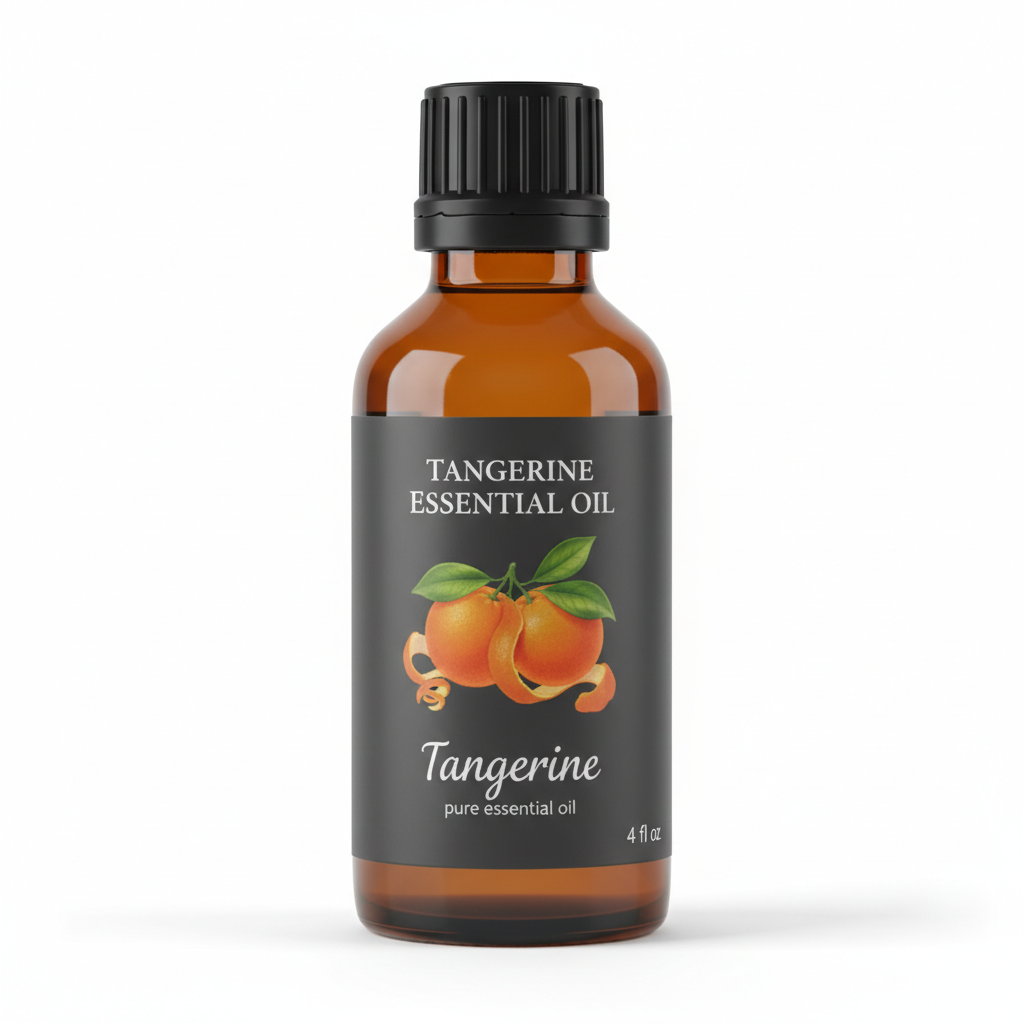
Tangerine Essential Oil
Our own Tangerine Essential Oil, in sizes from 0.5 oz to bulk.
From $12.99
Shop Now →Why citrus oils are sorted by sun reaction
The skin reactions in question come from compounds called furanocoumarins, which are found in the peel and end up in oils that are pressed rather than distilled. The Tisserand Institute lists expressed tangerine and expressed mandarin among the oils with extremely small amounts of them, not enough to make them phototoxic. Its figure for tangerine's bergapten, one of the most potent of these compounds, is about 0.005%, against a typical 0.11% to 0.33% in bergamot. That is a gap of more than twenty-fold at the low end.
IFRA, the fragrance industry's safety body, agrees on the general picture. Its standard on citrus oils lists tangerine oil, cold pressed, among oils that contain small amounts of phototoxic furocoumarins, with a typical level of 50 ppm, "not high enough to require special restrictions if used alone." The oils it does restrict include bergamot, bitter orange, grapefruit, cold-pressed lemon and lime.
What that means at 0.5% to 2%
IFRA recommends keeping bergapten at or below 15 ppm in a finished leave-on product used on sun-exposed skin. Here is the arithmetic, ours, assuming the typical 50 ppm level:

- At 0.5% oil in a carrier, the blend carries about 0.25 ppm bergapten.
- At 2%, it carries about 1 ppm.
- You would need roughly 30% oil in the blend to reach 15 ppm.
Those numbers sit comfortably below the limit, which is reassuring. They rest on the typical level for the oil in general, though, not on a measurement of our batch; the Certificate of Analysis we publish gives density, refractive index and optical rotation, not furocoumarin data. A figure also varies between sources. A 2022 study of 374 cold-pressed citrus oils reported total furanocoumarins of 94.31 ppm for Brazilian tangerine oil and 1.95 ppm for an Italian one, a gap of roughly fifty-fold. So we treat the general numbers as a helpful guide and the oil in your own bottle as the real unknown.
Our habit, and why we suggest it
That is why our guidance for any cold-pressed citrus oil is to dilute to 0.5% to 2% in a carrier, patch test first, and avoid sun on freshly applied areas. For skin that will be out in the open, such as arms or face, we suggest the low end of the range. If you want a number for the waiting time, the Tisserand Institute recommends keeping a treated area out of UV light for at least 12 hours after a phototoxic oil. That figure is for oils that are phototoxic at the amount used, so it is a cautious reading for tangerine rather than a rule. Sunscreen is a separate matter and nothing here replaces it.
Anyone who takes a medicine that makes skin sensitive to light, or who has a skin condition, should ask a dermatologist or pharmacist, not rely on a general page like this one. If skin turns red, darkens or itches after sun, stop using the blend and have it looked at.
A simple evening routine
The easiest way to take the question off your mind is to choose when you wear the blend. A tangerine body oil fits neatly after an evening shower, when you are heading indoors anyway and the next sun is hours away. If you want it on your arms in the morning, use the lower end of the range and keep the area out of direct sun for the day, or save the blend for another time. A routine you can repeat without thinking beats a rule you have to remember.
Blends, diffusers and rinse-off products
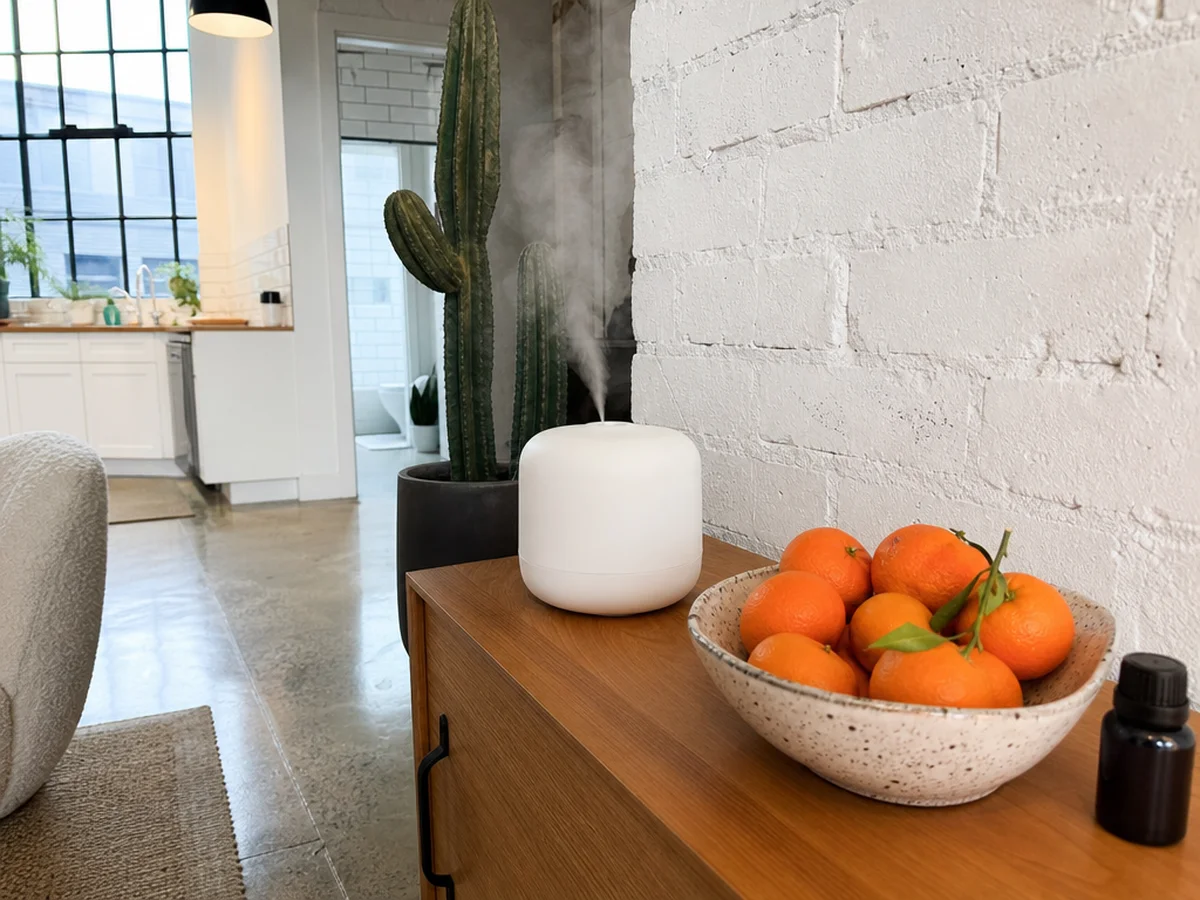
The 15 ppm limit applies to leave-on products on skin that sees sun, and it excludes rinse-off and incidental-contact products. In practice, a diffuser or a soap raises the sun question much less than a body oil does. IFRA adds one caution for blends: if tangerine shares a bottle with a restricted oil such as bergamot, the combined bergapten must still stay under 15 ppm. Our blends guide checks partners one by one.
Reading any citrus bottle the same way
Whatever citrus oil you pick up next, whether lemon, lime or grapefruit, look for the words cold-pressed or expressed, then check the maker's own sun guidance. Citrus oils are not all alike: the IFRA list above names several that ask for more care than tangerine does. Treat each bottle as its own case, and you will rarely be surprised.
Why "cold-pressed" is the word to read
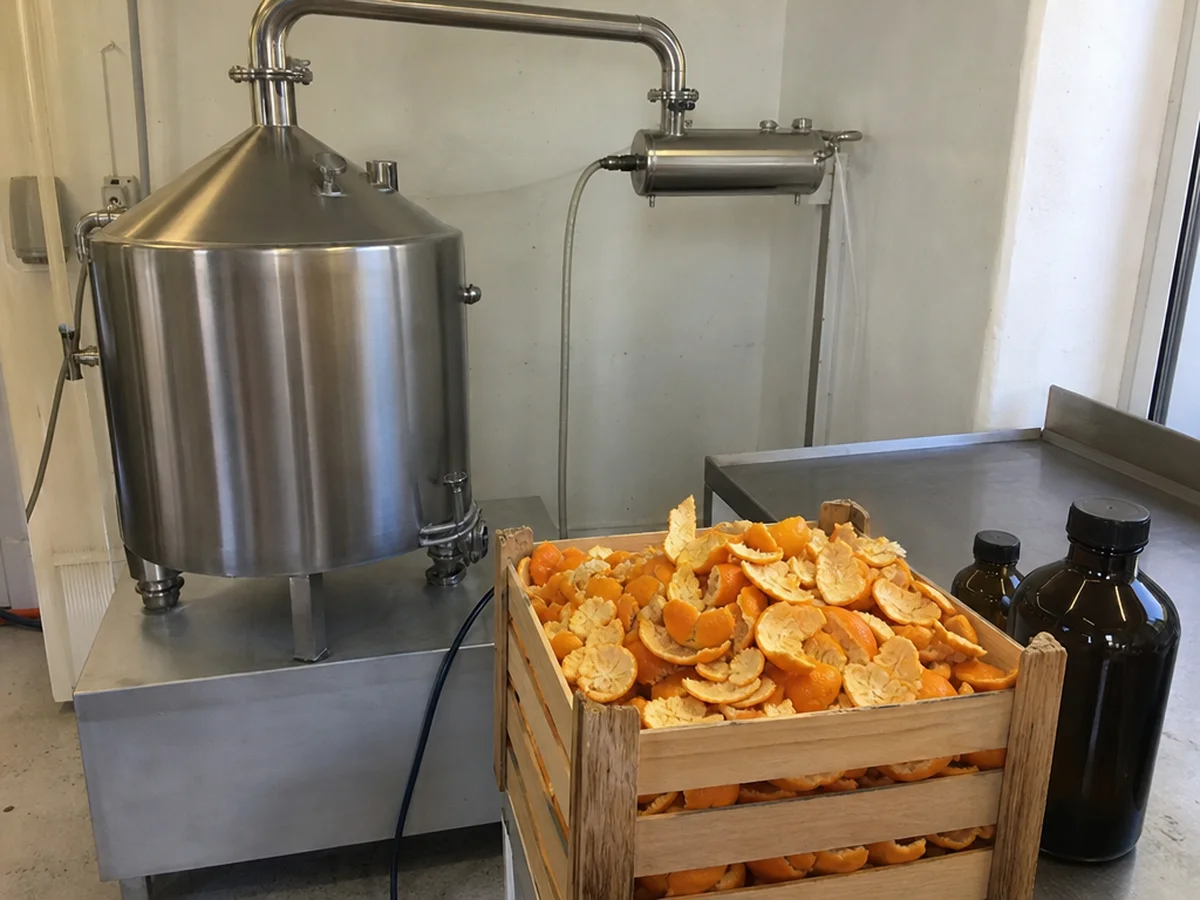
Distillation leaves the heavy furanocoumarins behind in the still, so distilled citrus oils carry virtually none, according to the Tisserand Institute. Pressed oils keep them, and the amounts vary. That is why the word on the label matters: ours is a cold-pressed peel oil, and everything above is read through that lens. For next steps, see our safety overview and our dilution guide.
The reassuring part of all this is that citrus lovers can enjoy tangerine without much fuss. Dilute it, patch test it, let it sit on shaded skin for a day, and you will have the benefit of a bright aroma and the peace of a sensible margin.
Tangerine Essential Oil
Tangerine Essential Oil from our own shop, in sizes from 0.5 oz to bulk.
From $12.99
Shop Now →Sources & Further Reading
- Tisserand Institute. Phototoxicity: essential oils, sun and safety. tisserandinstitute.org
- IFRA. IFRA Standard: Citrus oils and other furocoumarins containing essential oils, 2020 (Amendment 49). IFRA Standard 089
- Dosoky NS, Satyal P, Setzer WN, 2022. Authentication of Citrus spp. Cold-Pressed Essential Oils by Their Oxygenated Heterocyclic Components. Molecules. PMC9572141