Limonene in Tangerine Oil: What the Number Means
"Mostly limonene" is the standard one-line description of citrus peel oil, and it is true. It is also nearly useless as a way to tell one bottle from another. Published mandarin-type oils run from about two-thirds limonene to more than nine-tenths, and the small compounds sitting beside limonene decide whether an oil smells like a mandarin at all. Here is what the chemistry means for the nose, and for how you store the bottle.
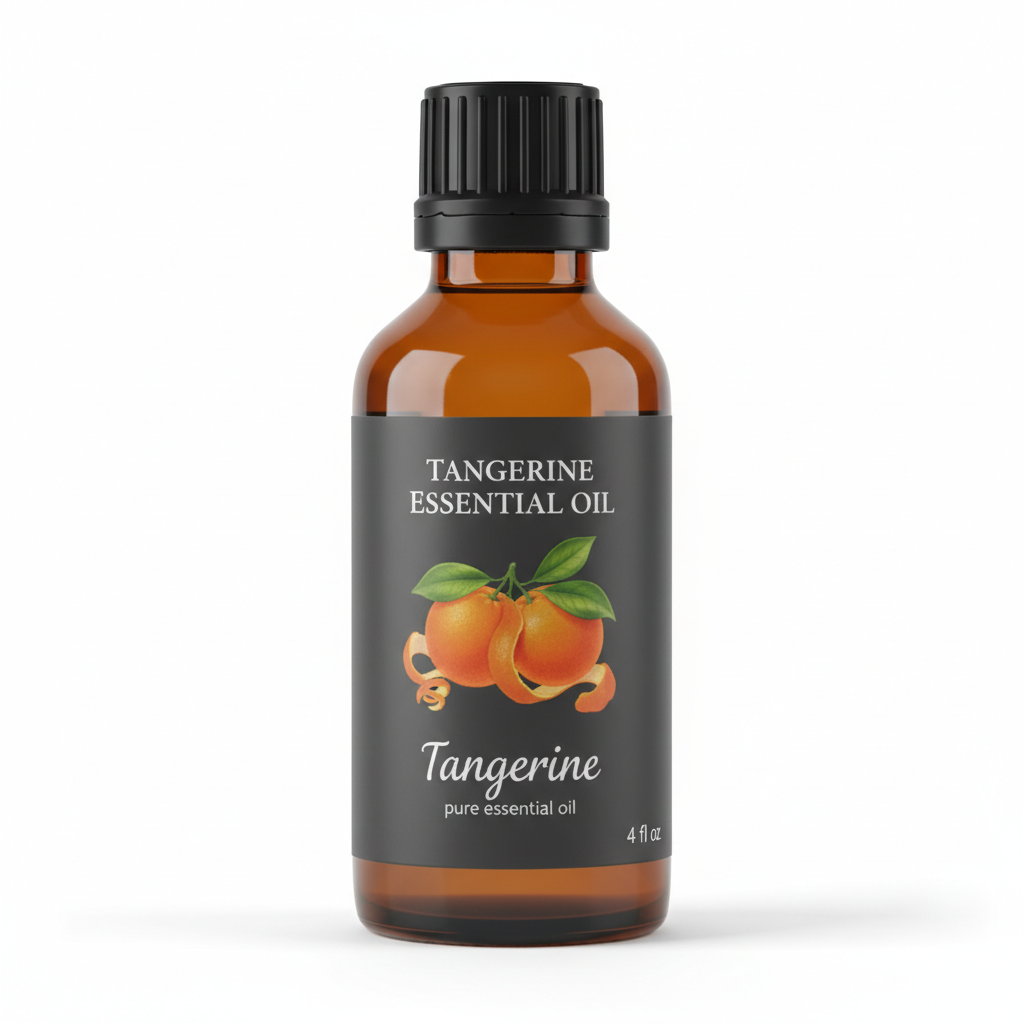
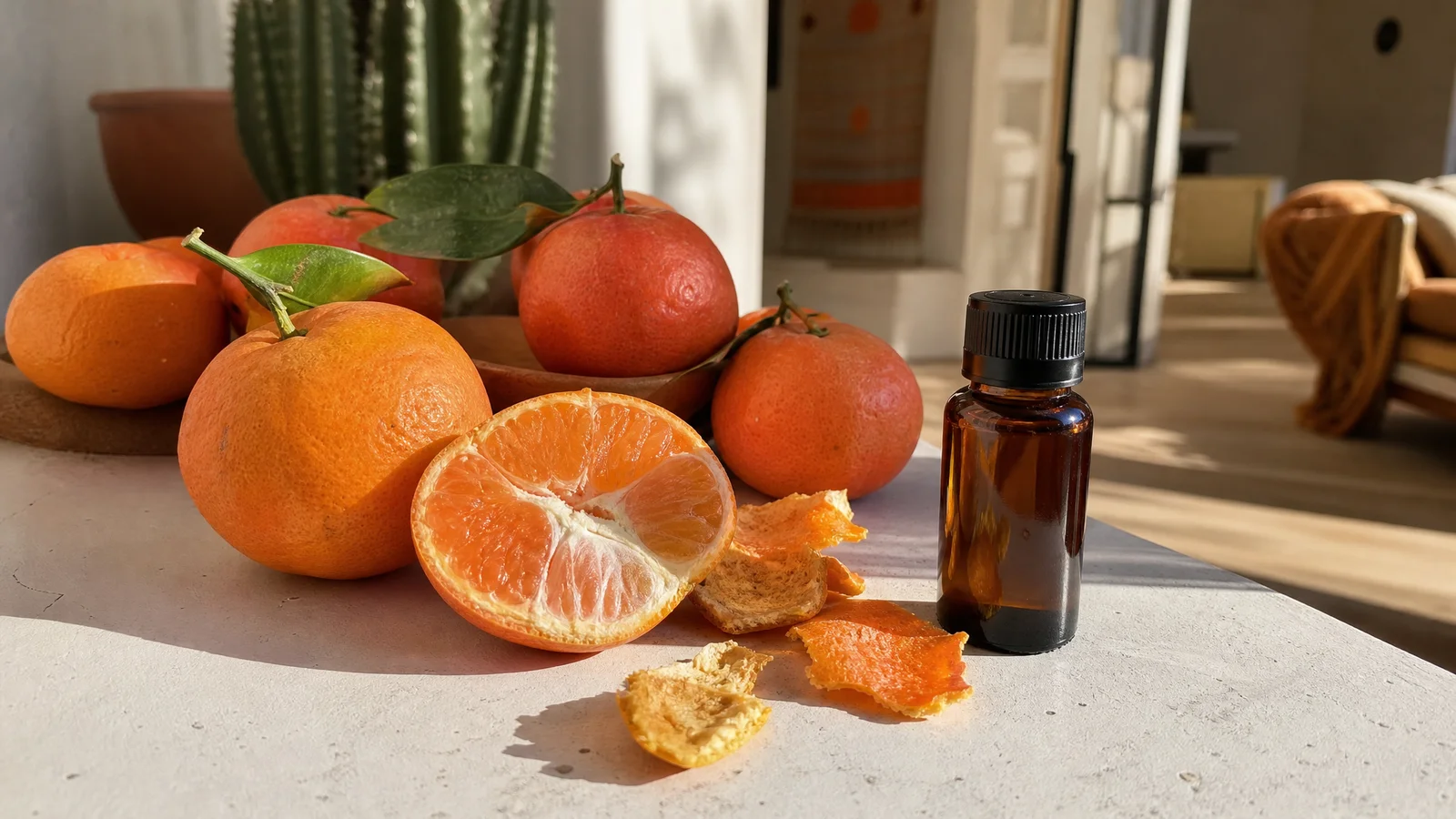
Tangerine Essential Oil
Our own Tangerine Essential Oil, in sizes from 0.5 oz to bulk.
From $12.99
Shop Now →A big number with a wide spread
The European Food Safety Authority sets a specification of 65% to 80% d-limonene for expressed mandarin oil. In its opinion, ten production batches averaged 65.63%, and it adds that the GC-MS method used underestimates d-limonene, which makes every other compound look slightly larger than it is. A 2026 review of published Citrus reticulata oil profiles found a mean of 76.65% limonene in peel oils. And in a 2021 survey of oils bought online, one premium tangerine sample measured 93.4%.
These numbers are not a league table. The samples, the methods and the way percentages are calculated all differ, and relative percentages from GC-MS are not absolute concentrations. The takeaway is the spread itself. If someone tells you tangerine oil is "90% limonene" or "65% limonene" as a flat fact, they have picked one row from a varied literature.
The supporting cast does the identifying
Below limonene sits a short list of smaller compounds that give mandarin-type oils their character. The EFSA specification names gamma-terpinene at 13% to 22%, and methyl N-methylanthranilate at 0.15% to 0.7%, alongside small amounts of alpha-pinene, myrcene and beta-pinene. In the ten batches, gamma-terpinene averaged 21.85%, and methyl N-methylanthranilate averaged 1.04%, above the specified range, so the paper specification and real production do not line up perfectly.
That last compound deserves a moment, because the researchers behind the 2021 survey describe it as an important odorant molecule for mandarin oil. Two oils sold as mandarin in their survey sat near 95% limonene with none detected, which the authors read as a sign of sweet orange oil. Their tangerine sample had gamma-terpinene at 2.9%, where they say tangerine is expected near 4%. In plain terms: limonene says "citrus", and the minor compounds say "which citrus". A report that lists only limonene hides the interesting part. Our orange comparison shows how sweet orange, also mostly limonene, differs in practice, and the smell profile follows the aroma side.
Tiny amounts can matter a great deal to the nose. The 2026 review lists decanal, a low-abundance aldehyde, at 0.40% to 0.57% in mandarin peel oils, and notes that many aldehydes and oxygenated compounds have very low odor thresholds. A small percentage does not mean a small smell.
What your nose does with all this
You do not need a chromatogram to enjoy any of this. Your nose is remarkably good at sorting citrus oils, and you can train it in minutes. Smell a bottle of tangerine oil, then rest, then smell another citrus oil if you have one. Notice what is sweet, what is sharp, what is round and what is green. That is the supporting cast at work, even if you could never name the compounds.
Tangerine tends to read as bright and playful, a little juicier and sparklier than the softer citrus oils. That is the character we love about it, and the reason we think it opens a blend so well.
Limonene's other trait: it reacts with air
The molecule that gives the oil its body is also the one that changes over time. In 1992 Karlberg and colleagues showed that limonene exposed to air for a long period sensitized guinea pigs, while limonene kept from air did not, and that oxidation products such as carvone and limonene oxides were among the potent sensitizers. In 2013 a six-country patch test of 2,900 dermatitis patients with oxidized R-limonene found 5.2% reacting, with a range from 2.3% to 12.1% between centres. Those patients were already being investigated for dermatitis, so the figure is not a rate for the public. It shows why a freshness habit is worth having.
An oil that is mostly limonene has a lot of material that can oxidize, so storage matters more than a few points of difference in limonene percentage. The Tisserand Institute says most oils keep at least one to two years before oxidation sets in, that refrigeration about doubles that, and that citrus oils may turn cloudy as moisture gets in. We describe a tightly capped bottle kept from light and warmth as typically staying vibrant for 12 to 18 months, and our storage guide walks through the habits.
A report is a good companion to your nose, not a replacement. The numbers tell you what is there, and your nose tells you whether you like it. When the two agree, you have a bottle you can feel good about. When they disagree, pause and ask a question before you go further.
Reading a report, ours included
The Certificate of Analysis we publish for one batch lists appearance, smell, a relative density of 0.846, a refractive index of 1.474 and an optical rotation of +94 degrees at 20 C. Those are physical constants, and they cannot be turned back into a composition table. If you need GC-MS data, ask us in writing through our contact page before you order, and keep the answer in writing.
When you compare any bottles, three questions do most of the work. Does a composition report exist for this lot, and does it list the minor compounds? When was the oil pressed or packed, and how has it been kept? And what is the report measured against: a mandarin specification, a tangerine reference, or nothing? Our GC/MS reading guide shows how to check. Limonene tells you the oil is citrus, the minor compounds tell you which citrus, and the age tells you whether it is still the oil it started as.
Tangerine Essential Oil
Tangerine Essential Oil from our own shop, in sizes from 0.5 oz to bulk.
From $12.99
Shop Now →Sources & Further Reading
- Safety and efficacy of a feed additive consisting of expressed mandarin oil from the fruit peels of Citrus reticulata Blanco for use in all animal species (FEFANA asbl)
- Citrus reticulata Essential Oil as a Bioactive Food Ingredient: Composition Variability, Extraction, Functional Bioactivities, and Cross-Study Quantitative Analysis.
- Type and magnitude of non-compliance and adulteration in neroli, mandarin and bergamot essential oils purchased on-line: potential consumer vulnerability.
- Air oxidation of d-limonene (the citrus solvent) creates potent allergens.
- An international multicentre study on the allergenic activity of air-oxidized R-limonene.
- Is my bottle of essential oil oxidized or no longer good to use? - Tisserand Institute