Citrus Scent and Nerves: What Waiting Room Studies Found
Picture a dental waiting room that smells faintly of oranges. That was the setup in some of the best-known citrus scent studies, and it is a lovely image: a small, cheerful smell in a place where most of us feel a little tense. It is also where a lot of "citrus calms you down" talk comes from, so it is worth looking at what those studies actually did.
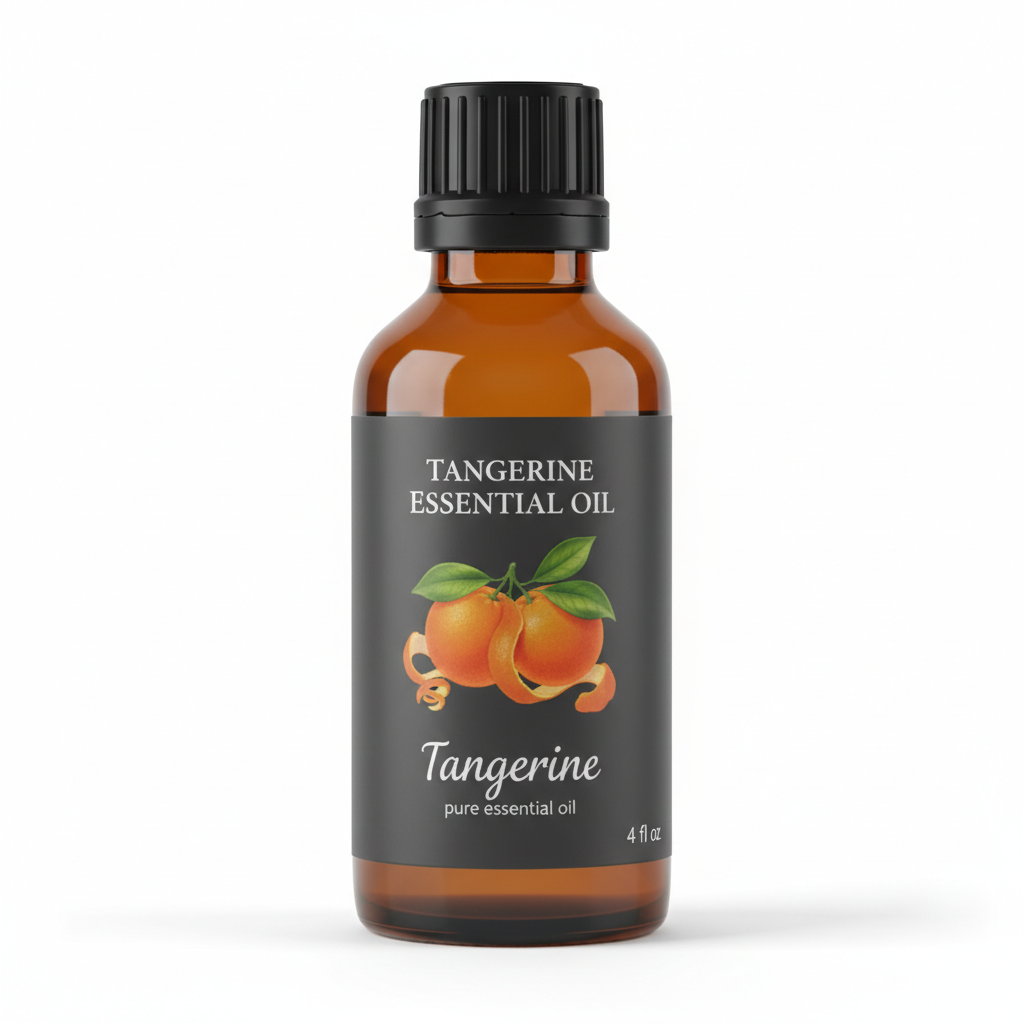
Tangerine Essential Oil
Our own Tangerine Essential Oil, in sizes from 0.5 oz to bulk.
From $12.99
Shop Now →The waiting room experiments
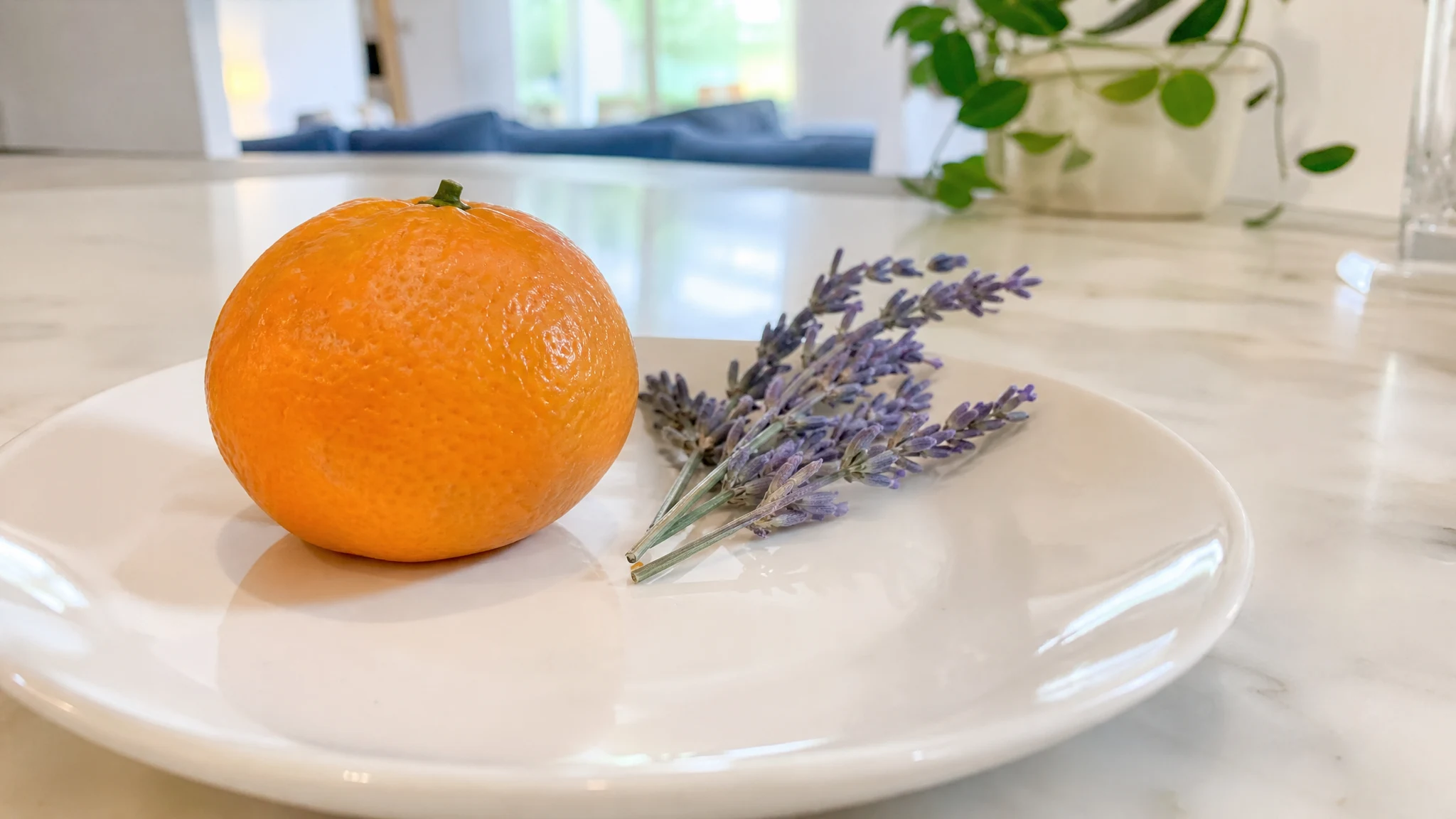
In 2005 a research group put 200 dental patients into four groups: orange scent in the room, lavender scent, music, or nothing at all. Patients in the orange and lavender rooms reported less anxiety and a better mood than the group left with no scent or music (Lehrner and colleagues, 2005). It is a nice result, and it is also honest about its limits. The patients were waiting for an appointment, they rated their own feelings, and everyone could tell which room they were sitting in.
A second experiment moved the idea into the lab. Forty men breathed sweet orange oil, tea tree oil or plain water while they worked through a deliberately irritating color-word test. In the groups given 2.5 or 10 drops of orange, the anxiety scores did not climb the way they did in the other groups, yet heart rate and muscle activity rose for everybody, so the body still had its stress response (Goes and colleagues, 2012). The authors themselves say more work is needed before anyone talks about clinical meaning.
What a smell can and cannot do
A third study, with lemon and lavender in 56 healthy adults, gave a similar flavor of answer. Lemon lifted reported mood, while hormones, heart rate and blood pressure stayed largely where they were (Kiecolt-Glaser and colleagues, 2008). The US National Center for Complementary and Integrative Health sums up the field in a similar spirit: scents are most often inhaled or used diluted on the skin, and the research on conditions like these is limited.
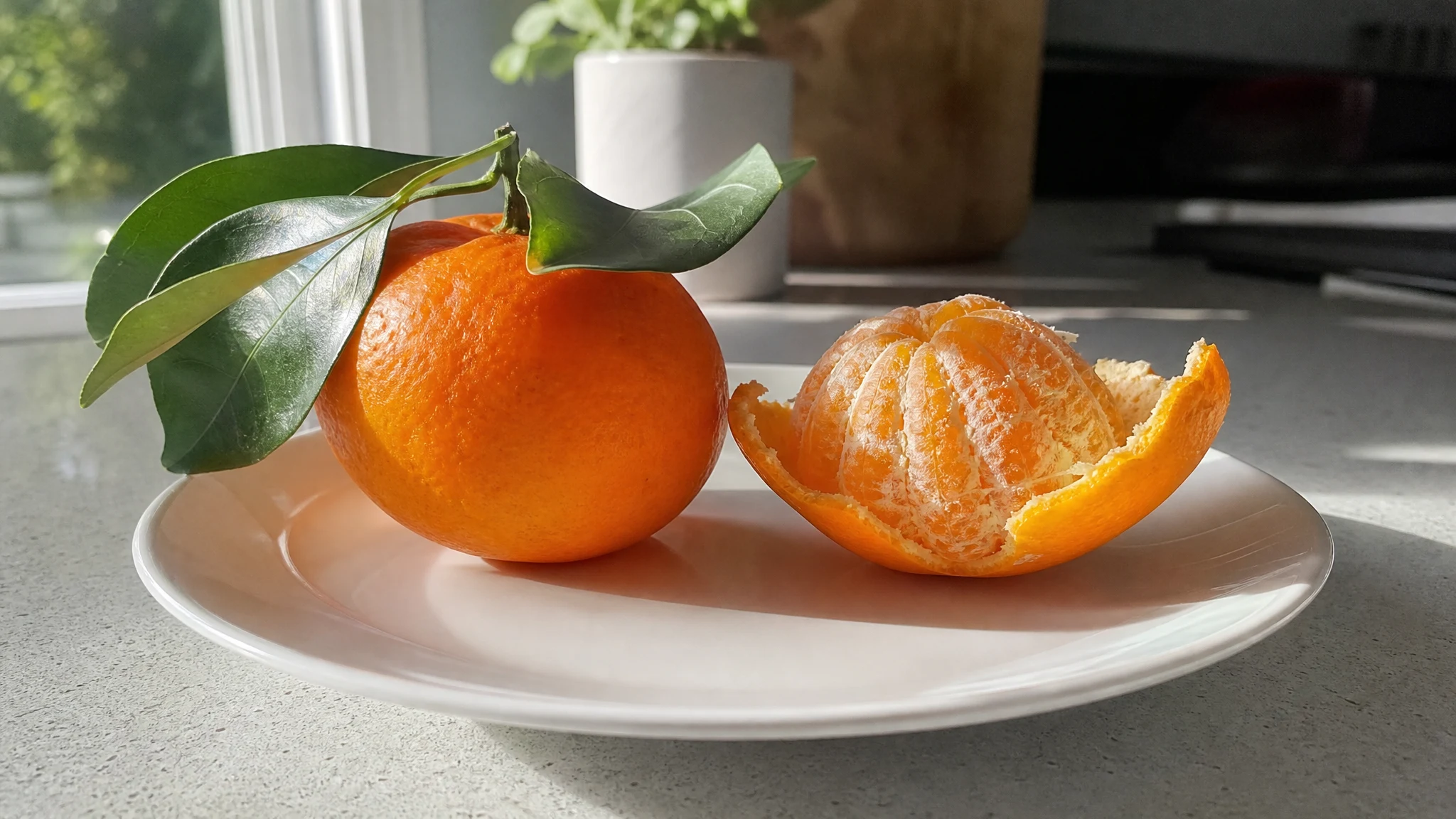
Read together, the studies suggest something modest and rather charming. A smell people like can brighten how they feel for a short while in a particular setting. That is a sensory pleasure, which is a perfectly good thing for a fragrance to be, and it is different from a way of managing anxiety. Notice too that every oil in these trials was sweet orange or lemon. We did not find a trial of tangerine peel oil on this question, so we would not hand its results to tangerine. What we can say is that tangerine belongs to the same family of limonene-rich citrus oils, and that its aroma, which we describe as vivid, juicy and sweet, is the part we are happy to stand behind.
Why a familiar smell feels friendly
Smell is tied closely to memory, which is part of why a citrus scent feels so friendly. For many of us it brings back a lunch box, a holiday bowl of fruit or a grandparent's kitchen. We are not claiming that does anything medical. We simply find it charming that a fragrance can carry you to a particular afternoon, and it is a good reason to choose the scent you personally love over one that is simply fashionable.
If worry is the real issue
We sell an external cosmetic oil, and we do not present it for anxiety. If worry or stress is hard to control and getting in the way of daily life, the right person is a doctor. The NHS describes talking therapies such as cognitive behavioural therapy as the usual first step for generalised anxiety, and notes that adults can refer themselves to NHS talking therapies in England (Generalised anxiety disorder (GAD) - NHS). In the United States, a doctor or mental health professional can point you to local options, and the 988 Suicide and Crisis Lifeline is open any hour by call or text if you are in distress.
A lighter hand in shared rooms
The orange-scented waiting rooms in those studies were faint on purpose. That is a useful lesson for anyone who scents a room, whether it is a small office, a hallway or a living room when friends come over. A little goes a long way, and people differ a lot in how they react to smells. Start with a drop or two in a diffuser, give the room a few minutes, and step in from the doorway to check whether you can barely notice it. If you can only just catch it, you have probably got it right.
Enjoying citrus in your space
None of this means you should skip the scent you love. A bright citrus note in a room is a lovely addition to a quiet evening, the same way a lamp or a candle is. If a diffuser is your choice, our guide to diffusing tangerine oil covers the practical side, and the aromatherapy overview looks at what scent studies in general have measured. Keep pets and young children in mind when you scent a room; our page on children and essential oils shares what authorities say.
We like to think of a scent as the finishing touch on a room, like a plant on a windowsill. Tangerine has a juicy, candy-bright sparkle, and when it is used lightly you notice it as you walk in and then it drifts into the background. Open a window now and then so the air stays fresh, and let guests tell you if it is too much. Being a good host with a scent is mostly a matter of listening.
Smell the oil first, decide whether it makes you smile, and let that be the whole reason. That is a very good reason to like a bottle of citrus.
Tangerine Essential Oil
Tangerine Essential Oil from our own shop, in sizes from 0.5 oz to bulk.
From $12.99
Shop Now →Sources & Further Reading
- Ambient odors of orange and lavender reduce anxiety and improve mood in a dental office (Physiology & Behavior, 2005)
- Effect of sweet orange aroma on experimental anxiety in humans (Journal of Alternative and Complementary Medicine, 2012)
- Olfactory influences on mood and autonomic, endocrine, and immune function (Psychoneuroendocrinology, 2008)
- Aromatherapy | NCCIH
- Generalised anxiety disorder (GAD) - NHS