Does Scent Help You Concentrate? What the Studies Show
Ask people which scent helps them concentrate and you will hear peppermint, rosemary, and sometimes lemon. The reality behind those answers is more interesting than the slogans, because the studies show that scents pull in different directions, and that your expectations matter nearly as much as the oil.
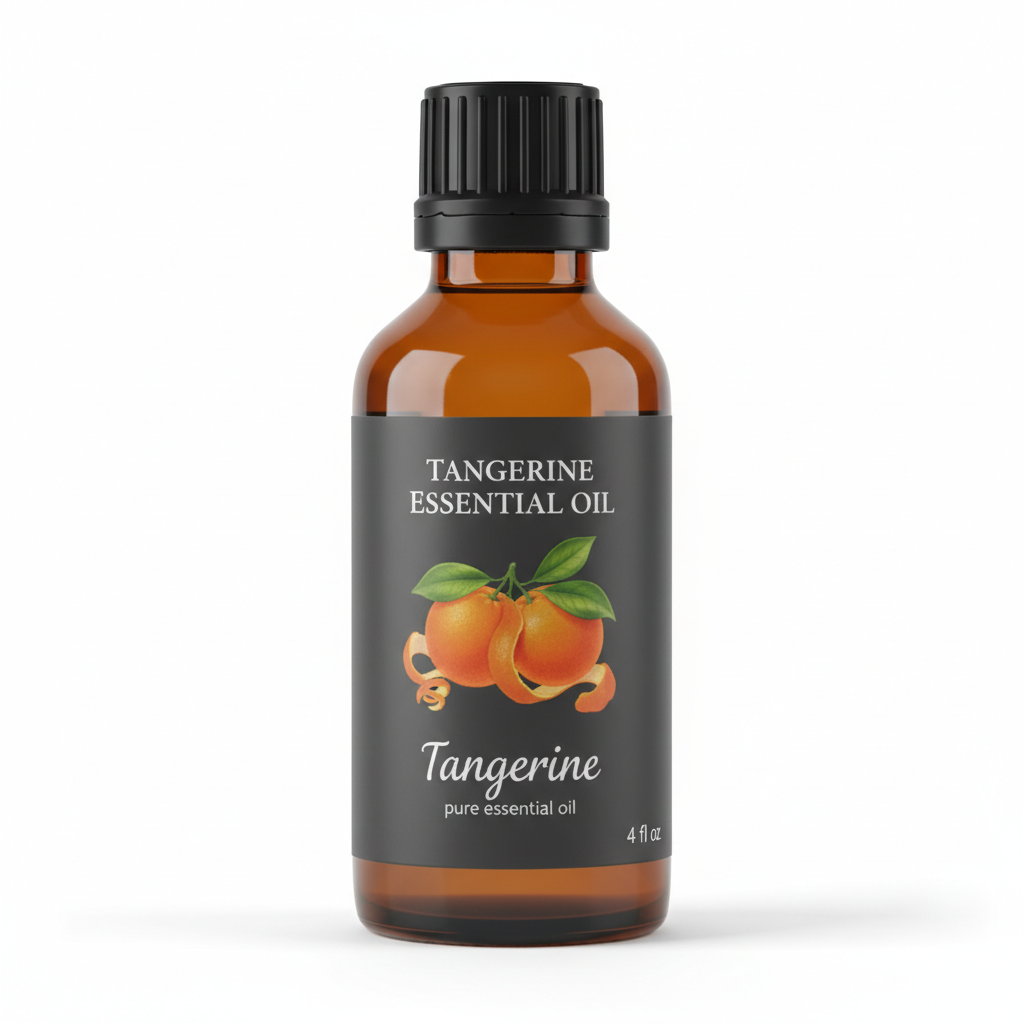
Tangerine Essential Oil
Our own Tangerine Essential Oil, in sizes from 0.5 oz to bulk.
From $12.99
Shop Now →One aroma sharpens, another slows
The clearest experiment we know of gave 144 volunteers peppermint aroma, ylang-ylang aroma or no aroma and then ran them through a computer-based set of memory and attention tasks. Peppermint went with better memory and higher alertness. Ylang-ylang went with poorer memory, slower processing and a calmer feeling (Moss and colleagues, 2008). The takeaway is not that one oil is good and the other bad. It is that "uplifting scent" is not one category, and the direction of the effect depends on the aroma itself.
Rosemary got a more detailed look. Twenty volunteers breathed it for 4 to 10 minutes, and the researchers measured a rosemary compound, 1,8-cineole, in their blood. People with higher levels tended to do better on mental arithmetic and respond faster (Moss and Oliver, 2012). It is a lovely piece of work because it measured something absorbed, but with 20 people and no control group it points to a link, not a cause, and the authors say as much.
Where citrus comes in
For citrus, the best-known study used lemon. Fifty-six healthy adults were exposed to lemon, lavender or plain water, and lemon raised reported mood. It did not shift stress hormones or heart rate, and it was not a concentration test (Kiecolt-Glaser and colleagues, 2008). We did not find a trial of tangerine peel oil on attention or memory, so we will not tell you it sharpens anything. What we will say is that tangerine's sweet, juicy top note makes a cheerful companion for a work table, and that liking your surroundings is not a small thing.
Why expectation counts
In the lemon study, some volunteers were told what the smell was supposed to do and others were not, and the information changed some of the body measurements. That detail is worth keeping in your pocket. If a bottle promises focus, you arrive already expecting it, and that expectation can color how a task feels. The studies are also short, with exposures of minutes rather than a full working day, and oils vary with where and how they were grown and pressed, so a result for one bottle may not match another.
So here is our plain view, offered as judgment rather than a study result. If a scent affects concentration at all, it likely depends on the oil, the person and the situation, and the effect is small enough that sleep, daylight and regular breaks are better first bets. A scent you enjoy is still a pleasant extra.
It also helps to remember that the rosemary study followed a rosemary compound, cineole, while citrus peel oils are led by limonene. Different molecules, different stories, so one oil's reputation does not travel to another. That is a good habit for reading any scent claim.
Set up the desk before the scent
If we are honest, the biggest wins for a working afternoon have little to do with fragrance. Put the desk by a window if you can, so daylight reaches your page. Clear the clutter you do not need. Keep a glass of water close, stand up and stretch every hour or so, and let your eyes rest on something far away for a minute. These are small habits, but they are the ones that tend to keep people going, and a scent can sit pleasantly on top of them.
Choose by liking, not by reputation
Since the studies point in different directions, the most reliable guide is the simplest one: do you like it? If you find a smell distracting or heavy, it is not helping you, whatever the label says. Put a drop on a paper strip and leave it near your desk rather than filling the room. You can always add more later, but you cannot take it back out of the air. If a colleague shares your space, ask what they think before you scent it.
A tangerine break
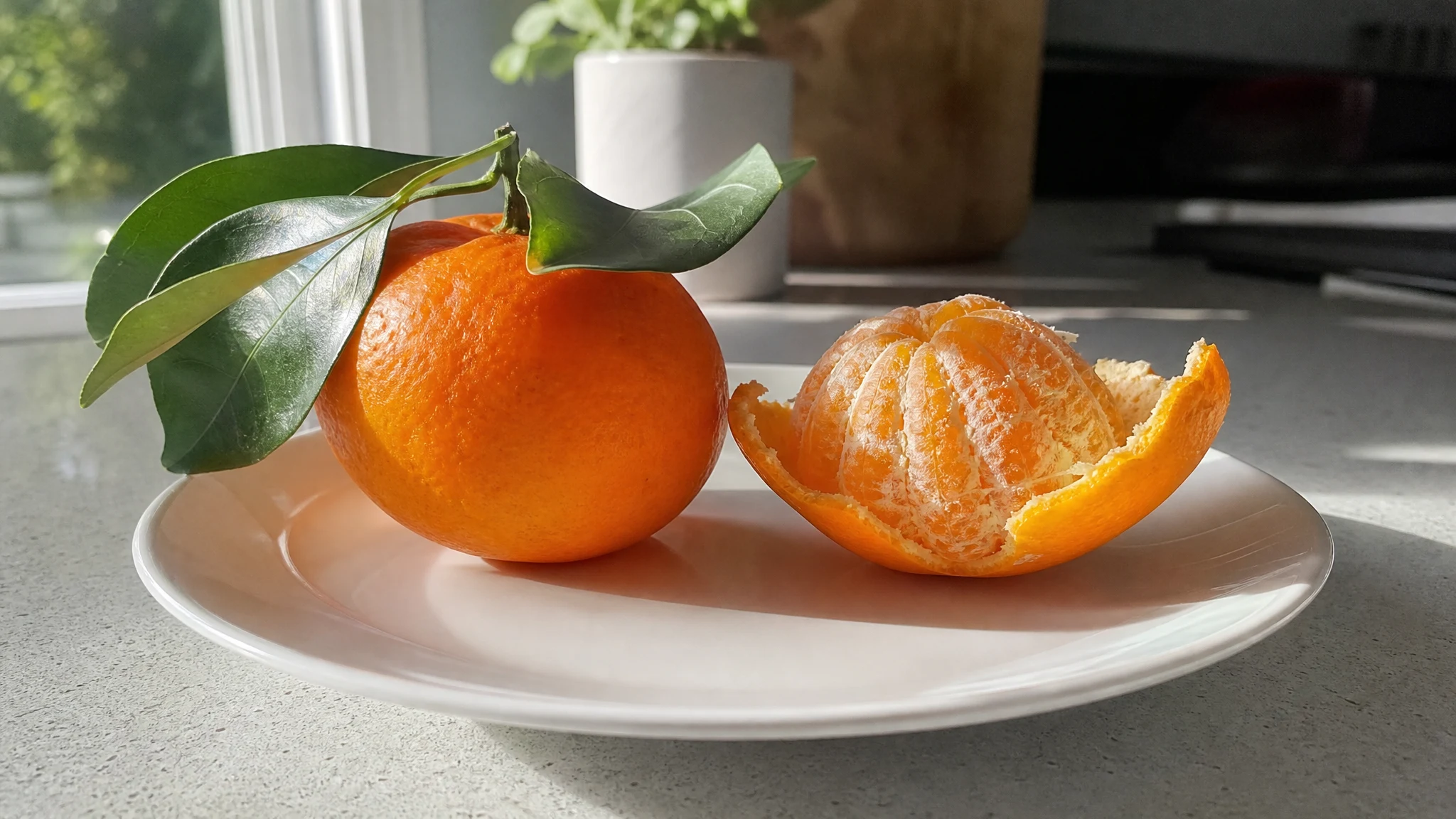
One of the nicest ways to enjoy citrus at a desk needs no oil at all. Peel a fresh tangerine slowly, breathe in the burst from the skin, and eat it away from your keyboard. It is a tiny pause with a lovely smell, and a break like that is probably worth more to your afternoon than any bottle. When you do want the oil, tangerine's juicy, candy-bright top note is there to make the room feel cheerful, which is reason enough.
A desk scent that makes sense
If a citrus note makes your workspace feel fresher, enjoy it on its own terms. Our guide to diffusing tangerine oil covers drops and run time, and the uses guide lists other ways people enjoy it. A diffuser's own manual is the best source for how many drops to add. Ventilate, and keep it away from pets and small children. For the bigger picture on scent research, the aromatherapy overview goes further.
Attention that keeps slipping, especially with low mood, heavy worry or poor sleep, is a conversation for a doctor rather than a bottle. We sell an external cosmetic oil and make no promises about the mind. What we offer is a good smell, and we think that is plenty.
Tangerine Essential Oil
Tangerine Essential Oil from our own shop, in sizes from 0.5 oz to bulk.
From $12.99
Shop Now →Sources & Further Reading
- Modulation of cognitive performance and mood by aromas of peppermint and ylang-ylang (International Journal of Neuroscience, 2008)
- Plasma 1,8-cineole correlates with cognitive performance following exposure to rosemary essential oil aroma (Therapeutic Advances in Psychopharmacology, 2012)
- Olfactory influences on mood and autonomic, endocrine, and immune function (Psychoneuroendocrinology, 2008)