Citrus Scent and Nausea: What the Trials Actually Showed
Anyone who has ever felt queasy knows the pull of a fresh, sharp citrus smell. A cut lemon under the nose is an old home habit, and a few small trials have looked at it. They are worth a close read, because they say less than the headlines suggest, and none of them involved tangerine.
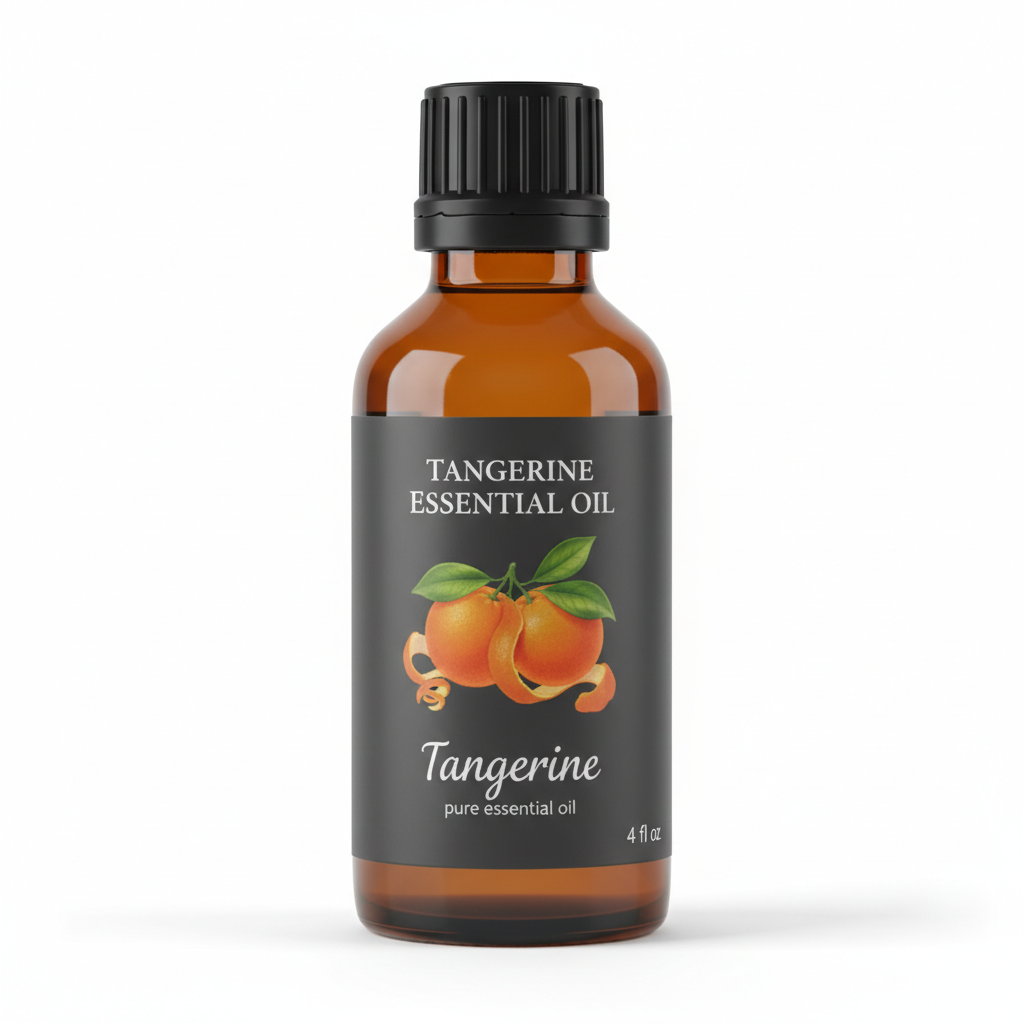
Tangerine Essential Oil
Our own Tangerine Essential Oil, in sizes from 0.5 oz to bulk.
From $12.99
Shop Now →The lemon trial everyone cites
The most-quoted study followed 100 women in early pregnancy who had mild to moderate nausea and vomiting. Half put two drops of lemon oil on a cotton ball whenever nausea struck, held it a few centimeters from the nose and took three slow breaths; the other half did the same with a lookalike almond oil placeholder (Yavari Kia and colleagues, 2014). Scores on a nausea scale fell more in the lemon group on days 2 and 4 of the four-day study, though not on days 1 and 3. The groups also did not start level, and the placebo group improved too, which the authors say a placebo effect may explain. The gap on day 4 was about half a point on a scale that runs from 3 to 12.
So the fair reading is gentle: a pleasant, familiar smell may have taken the edge off for some women, in a small trial, and the evidence is not strong. The authors point out that people react differently to scents, and that psychology is hard to control for in this kind of work.
What a big review found
A Cochrane review pooled 16 trials with 1,036 people who had nausea after surgery. The agents were mostly rubbing alcohol pads, then peppermint, ginger and blends. Aromatherapy did not clearly reduce how bad nausea felt compared with placebo, though people who used it needed fewer rescue anti-sickness medicines. The reviewers wrote that there is no evidence aromatherapy can replace medicines for this (Aromatherapy for treatment of postoperative nausea and vomiting). No citrus oil was among the agents reviewed.
Why lemon is not tangerine
It is tempting to say all cold-pressed citrus oils behave alike. They share a lot, since limonene leads in all of them, but a trial tests one oil, in one setting, on people who like or dislike that particular smell. A result for lemon says nothing certain about a tangerine you enjoy. That is why we do not suggest our tangerine oil for queasiness. We sell a cosmetic oil, and we would rather be clear about that than borrow another oil's results.
One more thing worth noticing is the delivery. In the trial the lemon oil was in an almond oil base on a cotton ball, held near the nose for a few breaths, and the placebo looked the same. That is a very specific, very small ritual. Part of what people may be responding to is the act of pausing, breathing slowly and holding something fresh-smelling, which anyone can do with a cut piece of fruit from the kitchen.
Fresh air and a quiet moment
Whatever you decide about scent, the old comforts are still the nicest ones: a window open a crack, a cool cloth, a glass of water within reach and a few slow breaths somewhere quiet. We mention it because it is easy to forget that the room matters as much as the bottle. A stuffy, over-scented room is rarely the answer to feeling queasy, and a light, airy one often is more pleasant.
When it is time to call someone
Ongoing vomiting in pregnancy can be a medical condition called hyperemesis gravidarum. The NHS says that if you are being sick frequently and cannot keep food down, you should tell your midwife or doctor or contact the hospital as soon as possible, and that safe medicines exist (Severe vomiting in pregnancy - NHS). Outside pregnancy, nausea that persists, comes with severe pain, blood, fever, confusion or signs of dehydration needs a doctor, and a pharmacist can advise on options that fit the medicines you already take. For children, ask a pediatrician. If anyone swallows an essential oil, call poison control right away (1-800-222-1222 in the US).
The smell of peeling fruit
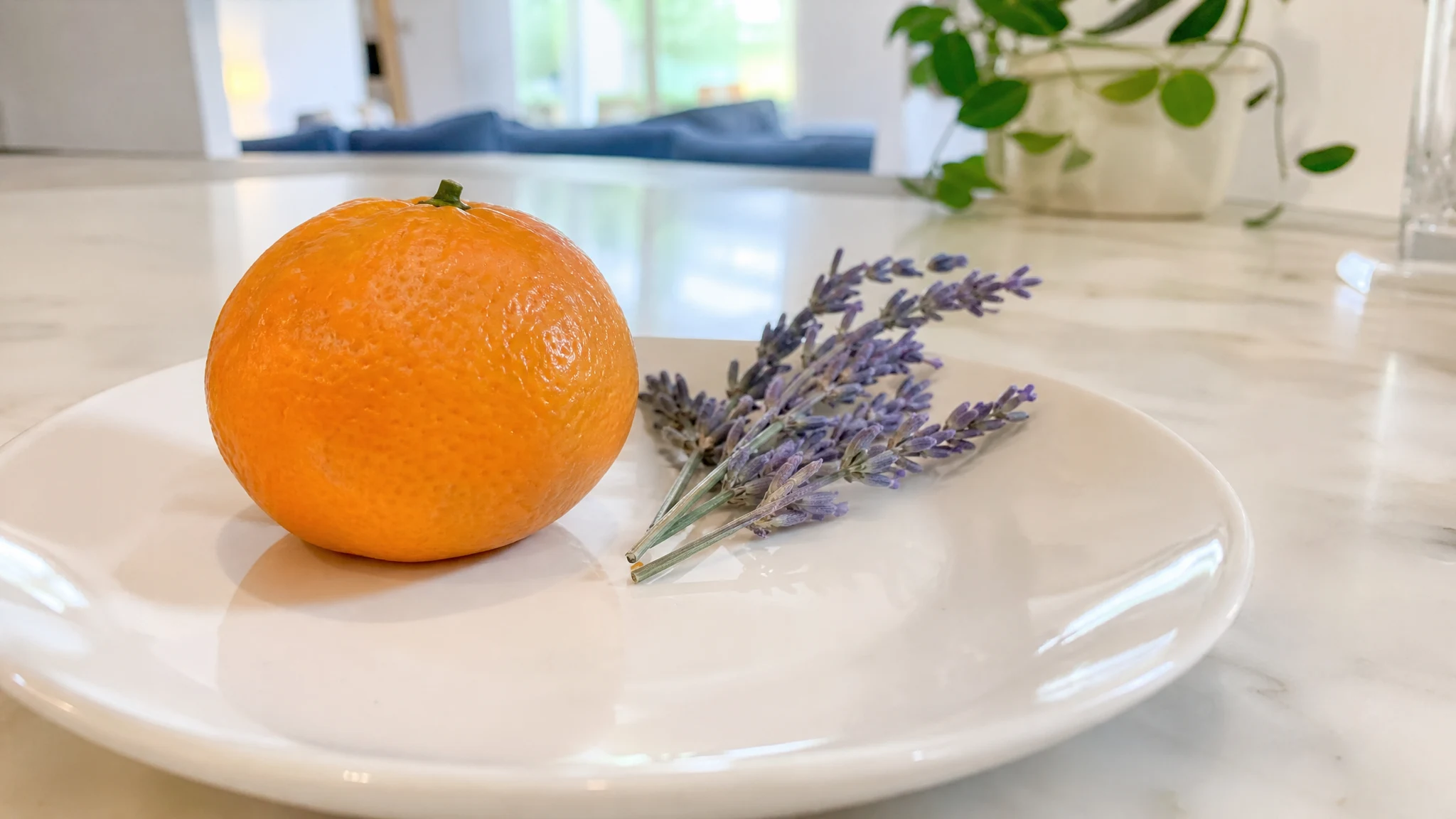
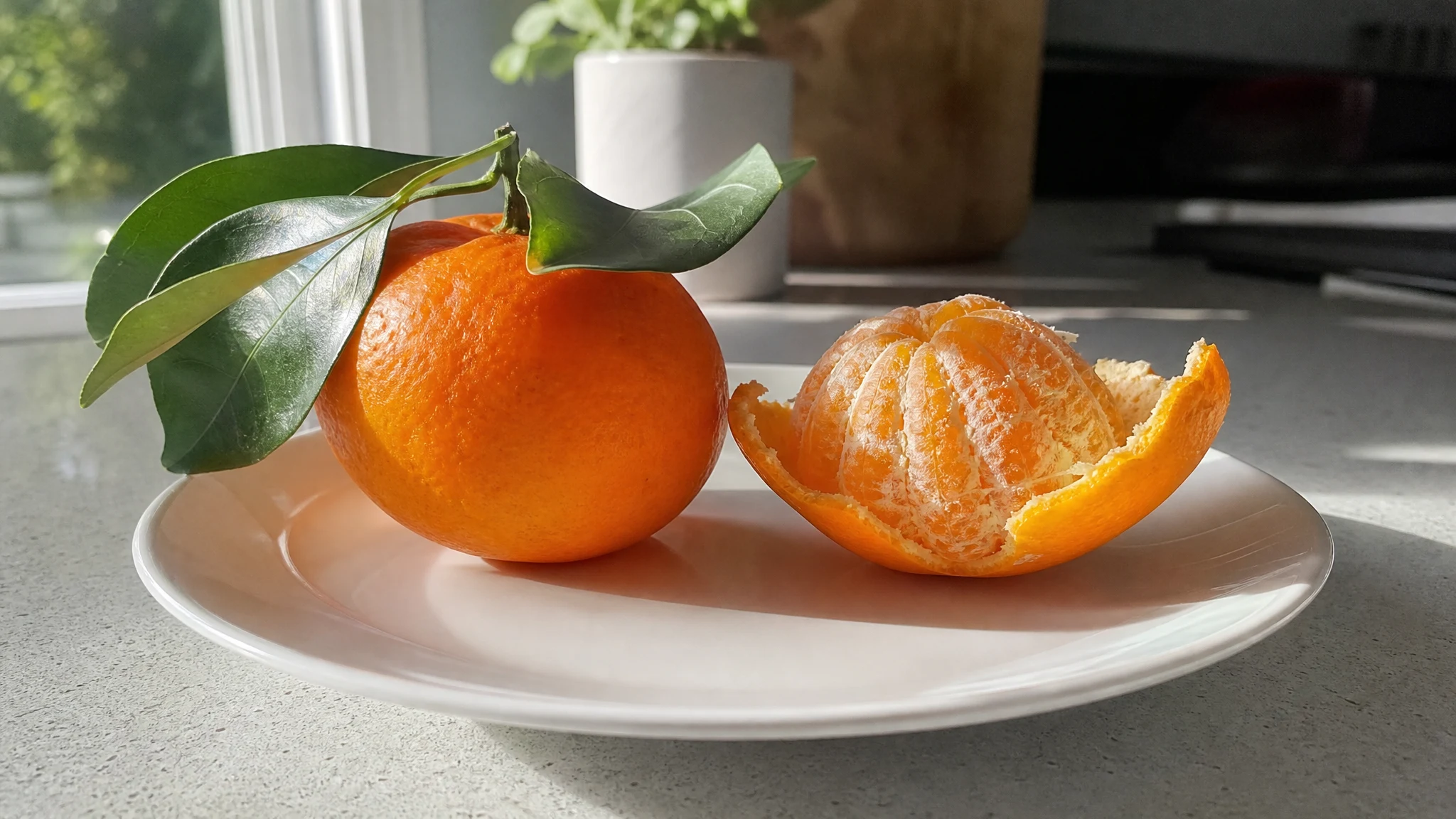
Anyone who has pushed a thumbnail into the skin of a tangerine knows the little burst that follows: a fine, glittering mist of peel oil that you can sometimes see in a sunbeam, and a smell that fills the kitchen at once. It is a small pleasure, and a very old one. There is no study needed to enjoy it. If you like that moment, it is the same family of aroma that sits in a bottle of cold-pressed peel oil, only more concentrated.
If you just love the smell
That is a lovely reason to open a bottle. Keep the oil for the air or for a diluted skin blend, never to be swallowed, and keep it fresh. Our guide to storing tangerine oil shows how, because oils that have aged in the cupboard lose their sparkle. Expectant readers may like our page on pregnancy and essential oils, which shares what authorities say, and the aromatherapy overview covers the wider research.
If you do open a bottle on a day you are feeling off, keep it simple. Put a drop on a paper tissue rather than your skin, hold it at arm's length instead of right under your nose, and open a window. Strong scents are not everyone's friend when the stomach is unsettled, and a smell you usually enjoy can suddenly be too much. That is perfectly normal, and the kind thing to do is put the cap back on and let fresh air win.
A bright citrus smell can be a small comfort in a room. It just is not a substitute for care from the people trained to give it.
Tangerine Essential Oil
Tangerine Essential Oil from our own shop, in sizes from 0.5 oz to bulk.
From $12.99
Shop Now →Sources & Further Reading
- The effect of lemon inhalation aromatherapy on nausea and vomiting of pregnancy: a double-blinded, randomized, controlled clinical trial (Iranian Red Crescent Medical Journal, 2014)
- Aromatherapy for treatment of postoperative nausea and vomiting (Cochrane Database of Systematic Reviews, 2018)
- Severe vomiting in pregnancy - NHS