Citrus Scent at Bedtime: What Comes Before the Diffuser
A bedroom that smells softly of tangerine sounds like the start of a good night. It is a nice picture, and we love the idea of a scent that makes a room feel like yours. When sleep is the actual problem, though, the order of operations matters more than the oil, so let us start with what comes first.

Tangerine Essential Oil
Our own Tangerine Essential Oil, in sizes from 0.5 oz to bulk.
From $12.99
Shop Now →What the guidelines put first
The NHS says insomnia usually gets better by changing your sleeping habits: going to bed only when sleepy, keeping a regular time to get up and keeping screens away just before bed. It suggests seeing a GP if that does not help or if the trouble has lasted months, and says a GP may offer cognitive behavioural therapy. It also notes that pharmacy sleep aids with natural ingredients are not a fix for insomnia (Insomnia - NHS). The American College of Physicians says the same in firmer language, recommending cognitive behavioral therapy for insomnia as the initial treatment for all adults with chronic insomnia (Management of Chronic Insomnia Disorder in Adults: A Clinical Practice Guideline From the American College of Physicians). Neither document lists an essential oil as a step.
What the scent research looks like
The US National Center for Complementary and Integrative Health says that for insomnia little rigorous research has been done on aromatherapy (Aromatherapy | NCCIH). A 2025 pooled review of 27 publications on people with insomnia alongside another condition reported better sleep scores with inhaled scents, but it also noted that the studies varied for reasons it could not explain and that blinding was often absent (Inhalation aromatherapy for the treatment of comorbid insomnia: a systematic review and meta-analysis). It names no oils, so nothing in it points to tangerine. We did not find a trial of tangerine peel oil on sleep.
The nearest citrus experiment we read looked at a different mandarin-type fruit oil, shikuwasa, in 40 young women (Yamaguchi and colleagues, 2026). It measured short-term tension and physiology rather than sleep, and found no significant difference from plain air. We mention it only to show how thin the citrus evidence is. We would rather say that plainly than suggest our oil does something it has no evidence for.
A scent you enjoy at night
People diffuse at bedtime because they like the smell, and liking it is a real reason. A few practical thoughts. Follow your diffuser's manual for the drop count, and run it for a limited time rather than all night. Ventilate the room afterward. Keep it out of a baby's or young child's sleeping space unless a pediatrician agrees, and keep cats, birds and other pets out of the room unless a veterinarian approves. Our pages on children and on dogs and cats go through what authorities say. If a scent brings on a headache, a cough or wheezing, stop and open a window.
Tangerine is a top note, bright and quick, so it is an afternoon-into-evening kind of aroma more than a heavy, lingering one. Whether it suits your bedroom is a matter of taste. Our diffusing guide covers the details of drops and cleaning.
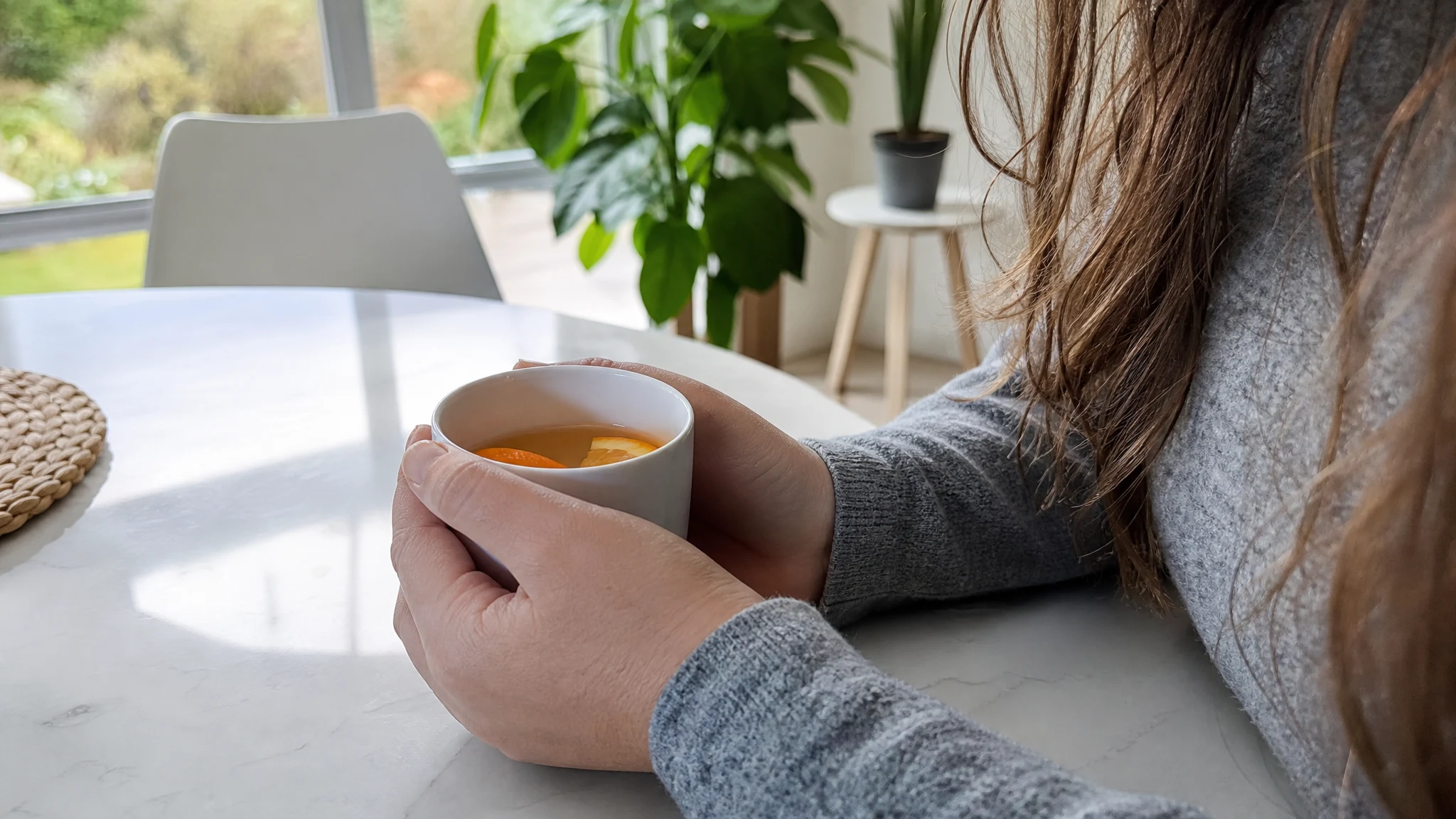
A small evening ritual can help, whatever the scent. Dimming the lights, putting screens away and wiping down the room before bed all tell your body that the day is ending, and a familiar smell can become part of that routine. Treat the scent as one pleasant cue in a set of habits, and the habits as the part doing the real work.
Making the room pleasant first
Before any scent goes in, the simple things set the tone of a bedroom: fresh sheets, a tidy bedside table, a window cracked open to let the day's stuffiness out. If you enjoy tangerine, one idea we like is to scent the room earlier in the evening while you tidy up, fold laundry or read, and then switch the diffuser off well before you turn out the light. You get the cheerful smell as you move around, and the room has time to air before you settle in.
Another small point: you may find the fragrance feels stronger in a closed bedroom than it did in the kitchen. Keep the drop count low, the same as you would for any room where people spend hours.
A word on bedside bottles
If you keep a bottle in the bedroom, keep it capped, upright and out of reach of children and pets. A bedside table is easy to knock over in the dark, and spilled citrus oil on a wooden surface or a rug is a mess nobody wants at midnight. A high shelf or a closed drawer is a better home, and the bottle will also stay cooler and fresher there.
When to ask for help
Use the NHS markers: habits tried and not enough, trouble lasting months, or days made hard by tiredness. A doctor or sleep specialist can look for causes that no scent will reach, such as pain, breathing problems, medicines or caffeine. We sell an external cosmetic oil, and we make no claim that it helps anyone sleep.
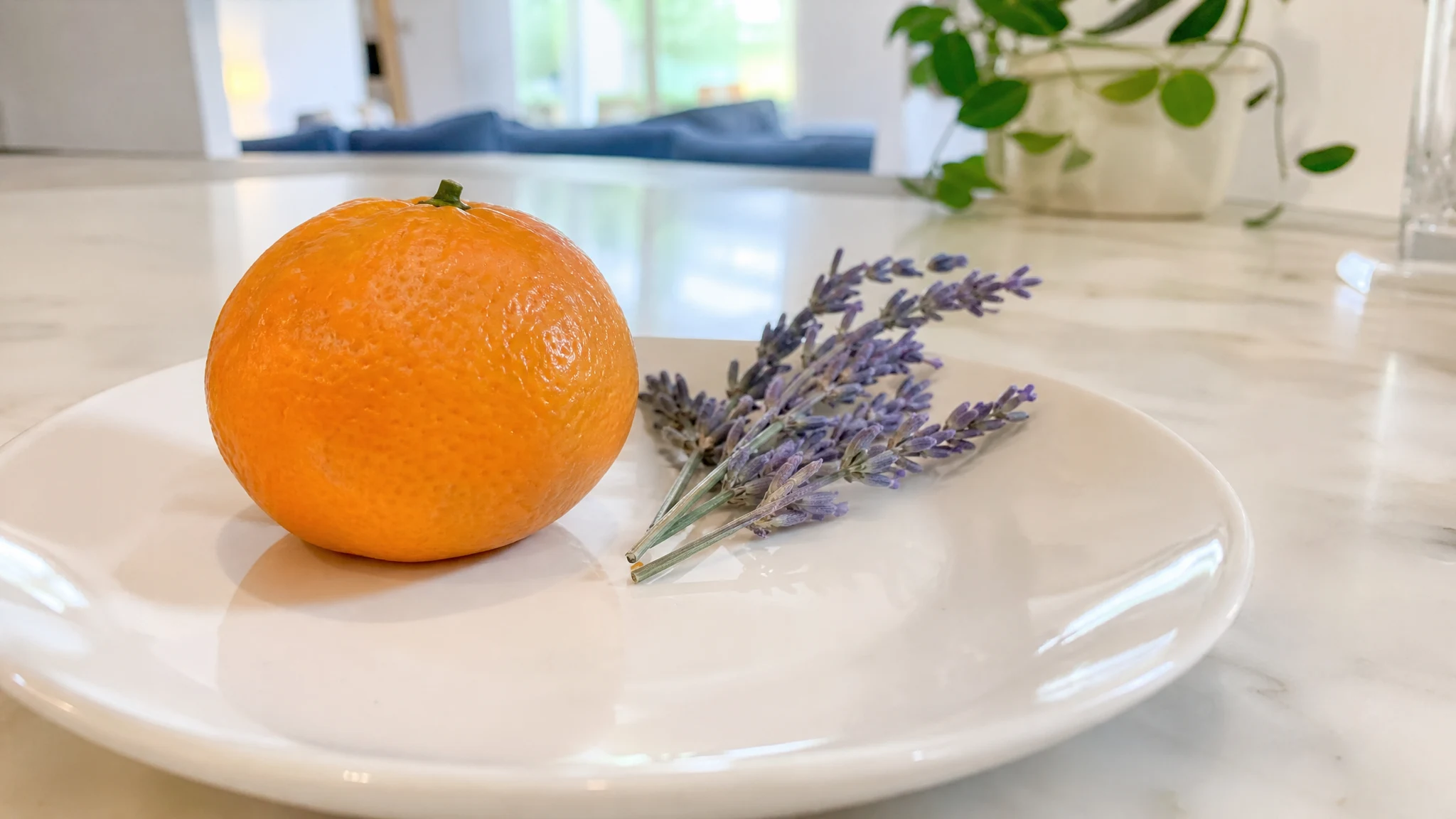
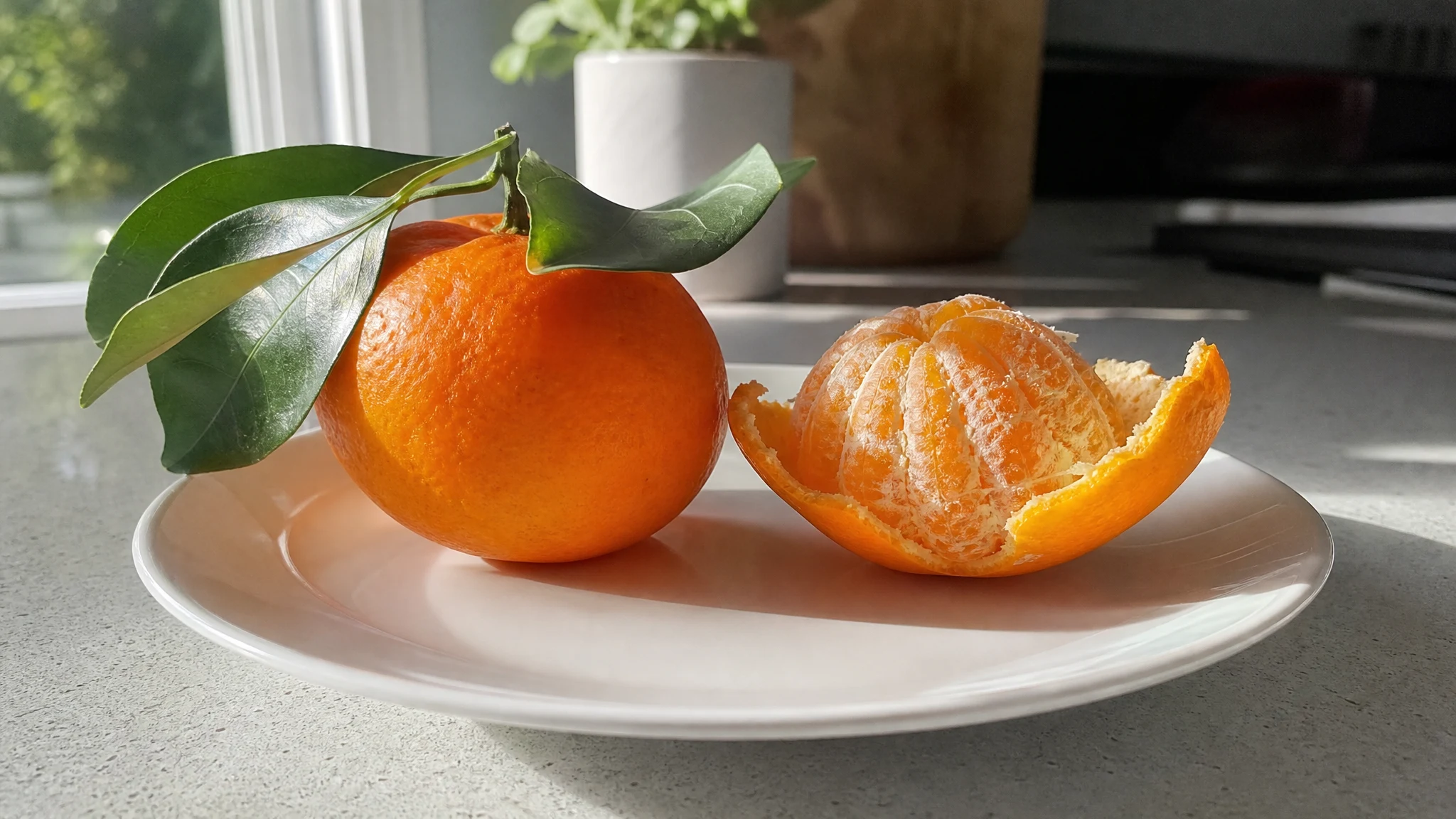
A bowl of tangerines on the kitchen table does a lovely job as a bedtime scent of a different kind: peel one slowly while you are winding down, enjoy the fragrance on your fingers, and wash your hands before bed. It is an old, humble pleasure, and it costs nothing.
Enjoy citrus in the evening because it smells like sunshine, and let your sleep plan come from the people trained to build one.
Tangerine Essential Oil
Tangerine Essential Oil from our own shop, in sizes from 0.5 oz to bulk.
From $12.99
Shop Now →Sources & Further Reading
- Insomnia - NHS
- Management of Chronic Insomnia Disorder in Adults: A Clinical Practice Guideline From the American College of Physicians (Annals of Internal Medicine, 2016)
- Aromatherapy | NCCIH
- Inhalation aromatherapy for the treatment of comorbid insomnia: a systematic review and meta-analysis (Frontiers in Psychiatry, 2025)
- Relaxation effects of Shikuwasa (Citrus depressa Hayata) essential oil inhalation: A randomized controlled trial in young adult females (Contemporary Clinical Trials Communications, 2026)