Tangerine vs Lemon Oil: Sweet or Sharp Citrus?
Slice a lemon and you get a quick, bright snap. Peel a tangerine and the smell is rounder, closer to a sweet. Both fruits give oils that sit near the top of a blend, yet they behave quite differently in a diffuser, on the skin and in the bottle. We sell only tangerine, so here is a fair side-by-side, and a clear opinion on which one to reach for.
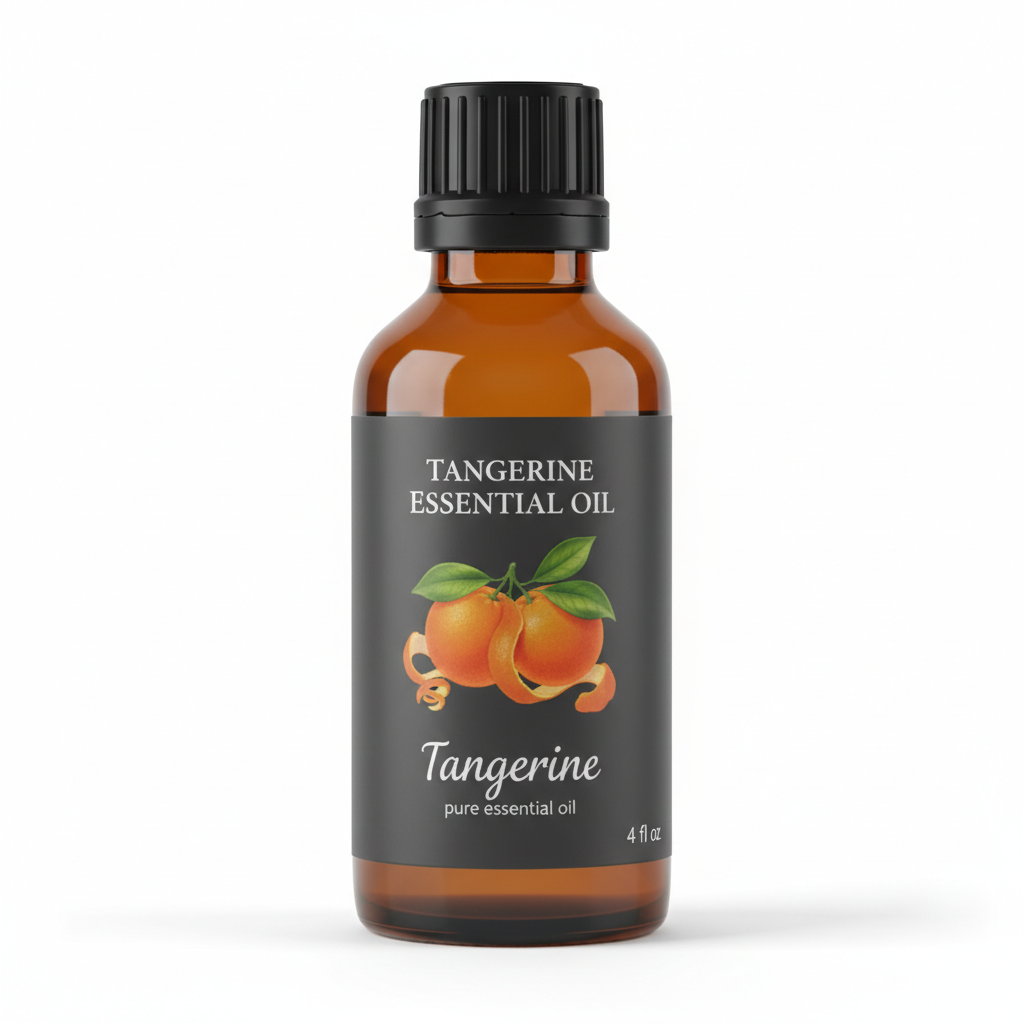
Tangerine Essential Oil
Our own Tangerine Essential Oil, in sizes from 0.5 oz to bulk.
From $12.99
Shop Now →Sweet or sharp: what the chemistry hints at
Both oils are mostly limonene. The European Food Safety Authority (EFSA) lists d-limonene at 60% to 73% for expressed lemon oil and 65% to 80% for expressed mandarin oil, a close relative of tangerine. The difference is in the supporting cast. Lemon's specification includes beta-pinene at 9% to 18% and the citral pair, neral and geranial, in small amounts. Mandarin's carries gamma-terpinene at 13% to 22% and a distinctive compound called methyl N-methylanthranilate. Lemon has its own sharp edge; tangerine is rounder. We describe our oil as vivid, juicy and sweet, candy-bright, with more sparkle and less floral hush than mandarin.
That is a note on the nose, not a ranking. If you want a room to smell crisp and scrubbed, lemon is the classic. If you want it to smell like a bowl of fruit and a cosy afternoon, tangerine is the friendlier choice.
The difference that matters on skin
Pressed lemon oil carries far more of the sun-reactive compounds called furanocoumarins. A 2022 survey of 374 cold-pressed citrus oils measured total furanocoumarins in 97 lemon oils at roughly 2,000 to 8,300 ppm, depending on origin. The Brazilian tangerine oils in the same survey came in at about 94 ppm, and an Italian tangerine at about 2 ppm. The Tisserand Institute lists expressed tangerine among oils with extremely small amounts of these compounds, not enough to make them phototoxic.
The fragrance industry treats the two accordingly. As summarised in the Cosmetic Ingredient Review's 2014 safety assessment of citrus peel oils, IFRA's limit for cold-pressed lemon oil in leave-on products used on sun-exposed skin is 2%, while the Tisserand Institute lists expressed tangerine as too low in furanocoumarins to be phototoxic. Distilled lemon oil is a different material: Tisserand notes it has about 22 times less bergapten than the expressed oil.
We pay attention to that gap, but it is not a licence to skip the basics. Our own guidance for tangerine is to dilute to 0.5% to 2% in a carrier oil, patch test first and keep sun off freshly applied areas. If you choose a cold-pressed lemon for a leave-on blend, its published ceiling matches the top of our range, which is why we would start well below it. Check the current IFRA standards for your own formulation, because this is a summary, not a recipe.
Using them together
The two get along well, and tangerine softens lemon's edge. As suggestions in drops for a small diffuser, try 3 drops tangerine to 1 drop lemon for a sweet, lemony-orange room, or 2 to 2 for something sharper. Treat them as starting proportions and follow your diffuser's manual; the diffusing guide covers timing, and our room-by-room blends give more ideas. Lemon oil comes from an essential oil or craft supplier, since we do not sell it.
Keeping them fresh
Because both are limonene-rich, both age the same way. EFSA's lemon opinion cites a typical shelf life of at least 12 months in tightly closed containers in a cool, dry place protected from light, and the storage habits we suggest for tangerine suit lemon equally well. Our comparison with sweet orange and mandarin comparison cover the other two near neighbours.
Our pick
If you only want one citrus on the shelf and prefer a juicy, rounded scent, tangerine is a lovely place to start, and it asks fewer sun-related questions of your skin blends. If you love the zing of lemon, enjoy it, and respect its higher furocoumarin content. Either way, your nose gets the final vote.
Tangerine Essential Oil
Tangerine Essential Oil from our own shop, in sizes from 0.5 oz to bulk.
From $12.99
Shop Now →Sources & Further Reading
- EFSA FEEDAP Panel, "Safety and efficacy of feed additives consisting of expressed lemon oil and its fractions from Citrus limon (L.) Osbeck and of lime oil from Citrus aurantiifolia (Christm.) Swingle for use in all animal species (FEFANA asbl)," EFSA Journal, 2021
- EFSA FEEDAP Panel, "Safety and efficacy of a feed additive consisting of expressed mandarin oil from the fruit peels of Citrus reticulata Blanco for use in all animal species (FEFANA asbl)," EFSA Journal, 2021
- Dosoky, Satyal and Setzer, "Authentication of Citrus spp. Cold-Pressed Essential Oils by Their Oxygenated Heterocyclic Components," Molecules, 2022
- Tisserand Institute, "Phototoxicity: essential oils, sun and safety"
- Cosmetic Ingredient Review, "Safety Assessment of Citrus-Derived Peel Oils as Used in Cosmetics," 2014