Tangerine vs Bergamot Oil: How They Differ in a Blend
Bergamot is the scent many people know from Earl Grey tea, and tangerine is the scent of a peeled fruit. Put them in one blend and something interesting happens: the sweetness of tangerine meets a green, tea-like edge that tangerine never had alone. They are close cousins in the citrus world but quite different oils, and the biggest difference sits in how you use them on skin.
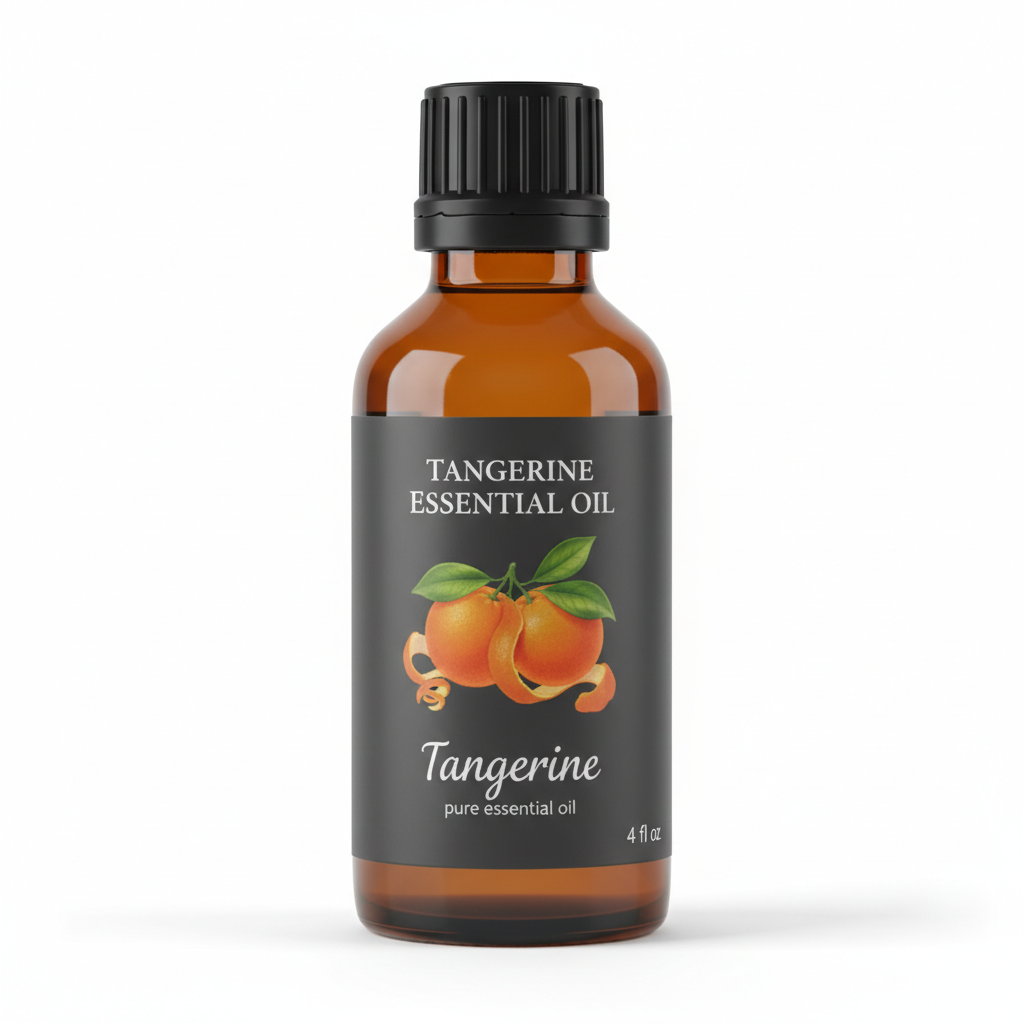
Tangerine Essential Oil
Our own Tangerine Essential Oil, in sizes from 0.5 oz to bulk.
From $12.99
Shop Now →Two citrus peels, two personalities
Bergamot is its own fruit, Citrus bergamia, and its oil reads differently from tangerine's on paper as well as on the nose. A 2026 review reports limonene at typically 25% to 50% of bergamot's volatile fraction, with linalyl acetate at 15% to 40% and linalool at 2% to 20%. Linalyl acetate and linalool are the pair also associated with lavender, which helps explain bergamot's soft, floral, almost herbal feel. Tangerine, like mandarin, is far more limonene-led, with gamma-terpinene as its main supporting compound in the European Food Safety Authority's specification for expressed mandarin oil.
In plain terms, tangerine is the juicy fruit and bergamot is the fruit with a tea cup. We describe our tangerine as vivid, juicy and sweet, candy-bright, and bergamot is one of the oils we list as blending well with it.
Where bergamot needs more care: skin and sun
Cold-pressed bergamot is rich in bergapten, a furanocoumarin that reacts with sunlight. The Tisserand Institute gives a typical 0.11% to 0.33%, against about 0.005% for expressed tangerine, so a gap of more than twenty-fold at the low end. The fragrance industry's standard reflects that: Tisserand reports a maximum of 0.4% bergamot oil in a finished leave-on product used on sun-exposed skin, and recommends keeping skin out of UV for at least 12 hours after use. Bergamot oils with the furanocoumarins removed, often sold as bergamot FCF, are considered non-phototoxic, so ask a seller which kind is in the bottle.
That 0.4% figure is below our own 0.5% to 2% line for tangerine, and it controls the blend. Here is the arithmetic, in suggestions rather than prescriptions. At Tisserand's working figure of about 30 drops per millilitre, 9 drops of oil in 30 ml of carrier makes roughly a 1% blend. Make 6 of those drops tangerine and 3 bergamot, and bergamot is about 0.33% of the finished product, under the cap. Go up to a 2% blend and bergamot must drop to no more than a fifth of the oils to stay at 0.4%. We start at the lower end for the same reason in any citrus blend, and our piece on tangerine and sunlight explains our habit of keeping sun off freshly applied areas. Drop counts vary with the bottle, so weigh when you can. The limit for your own formula belongs with the current IFRA standards.
Blending them for scent
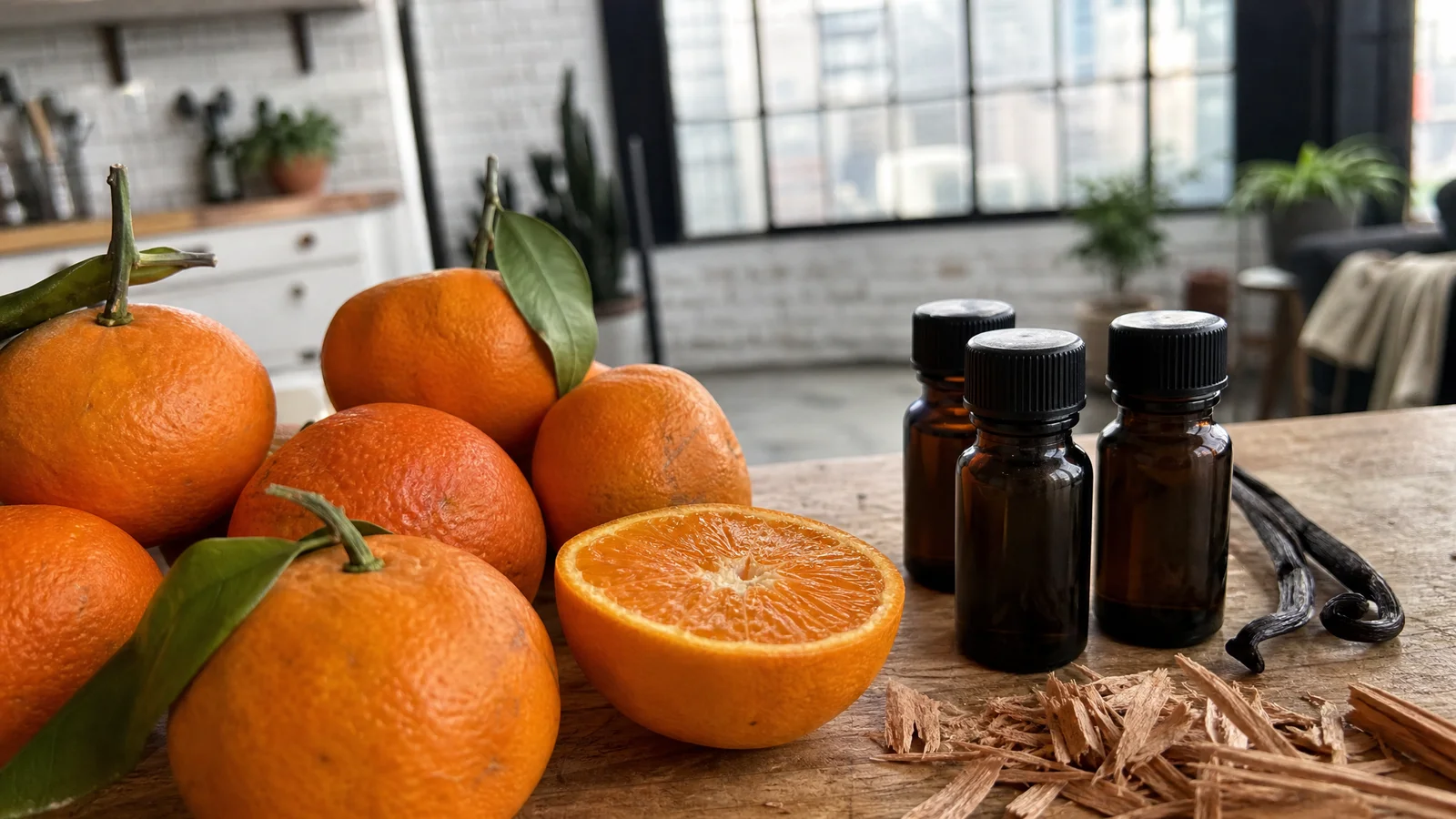
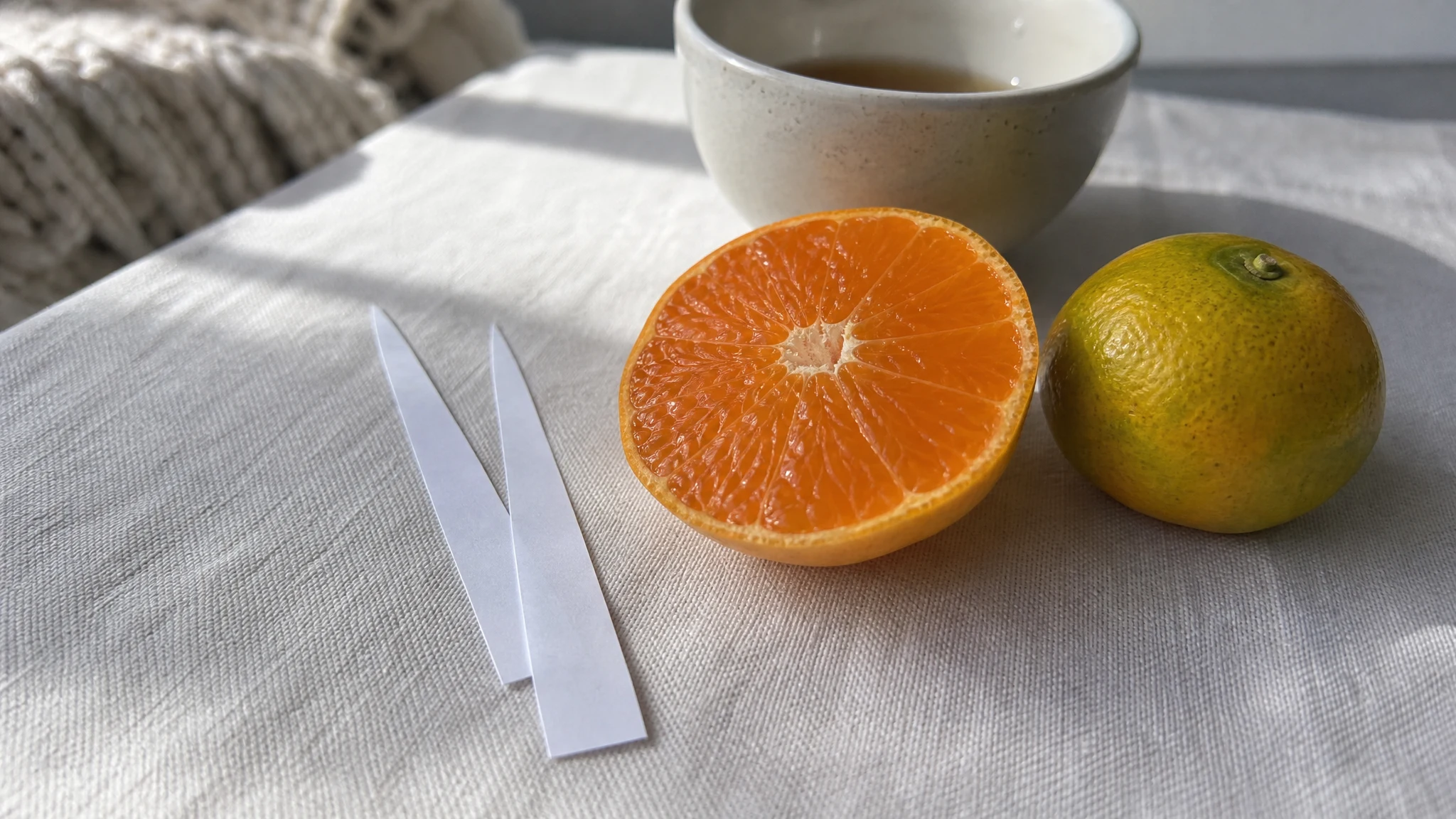
If skin is not involved, the story is simpler. In a diffuser, try 2 drops tangerine to 1 drop bergamot for a bright room that finishes a little more refined, treated as a starting point. A sniff test on paper strips beats any recipe: smell each alone, then together, then again ten minutes later. Tangerine is a top note that fades faster than heavier oils, so a partner with a little more staying power helps, which is the thinking behind the six partners that work and our notes explainer. For roll-ons, see how many drops you really need.
We sell only tangerine oil, so bergamot comes from an essential oil or craft supplier. Ask for the botanical name, the safety data sheet and whether it is a furanocoumarin-free grade.
So which one?
Choose tangerine when you want sweetness and a simpler path through the sun-safety paperwork. Choose bergamot when you want a layered, tea-like citrus and you are comfortable following its lower ceiling. Tangerine up front with a small measure of bergamot behind it is a pairing worth smelling for yourself.
Tangerine Essential Oil
Tangerine Essential Oil from our own shop, in sizes from 0.5 oz to bulk.
From $12.99
Shop Now →Sources & Further Reading
- Tisserand Institute, "Phototoxicity: essential oils, sun and safety"
- Tisserand Institute, "How big is a drop?"
- "Green Recovery of Bioactive Compounds from Bergamot (Citrus bergamia) By-Products: Sustainable Extraction, Food Applications, and Health-Promoting Properties," 2026
- EFSA FEEDAP Panel, "Safety and efficacy of a feed additive consisting of expressed mandarin oil from the fruit peels of Citrus reticulata Blanco for use in all animal species (FEFANA asbl)," EFSA Journal, 2021