Tangerine Vanilla Cedar Blend: Mixing by Weight, Not Drops
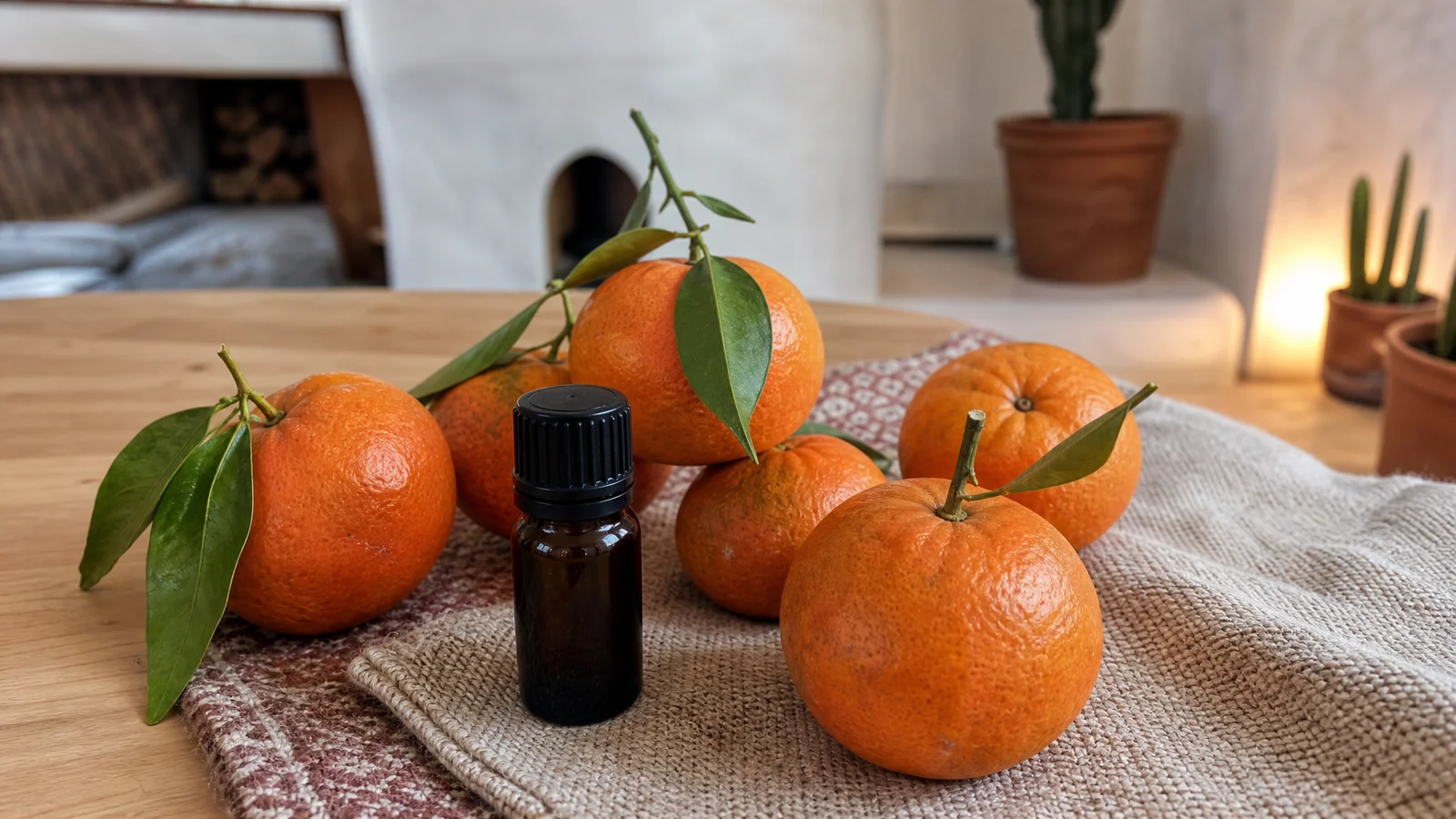
Picture the first ten minutes of a bright morning: the snap of a tangerine peel, a warm sweetness drifting in from the kitchen, and something woody underneath that makes the whole room feel settled. That is the idea behind a tangerine, vanilla and cedar blend, and it works on paper because each oil does a different job. Tangerine opens, vanilla rounds, cedar holds the floor.
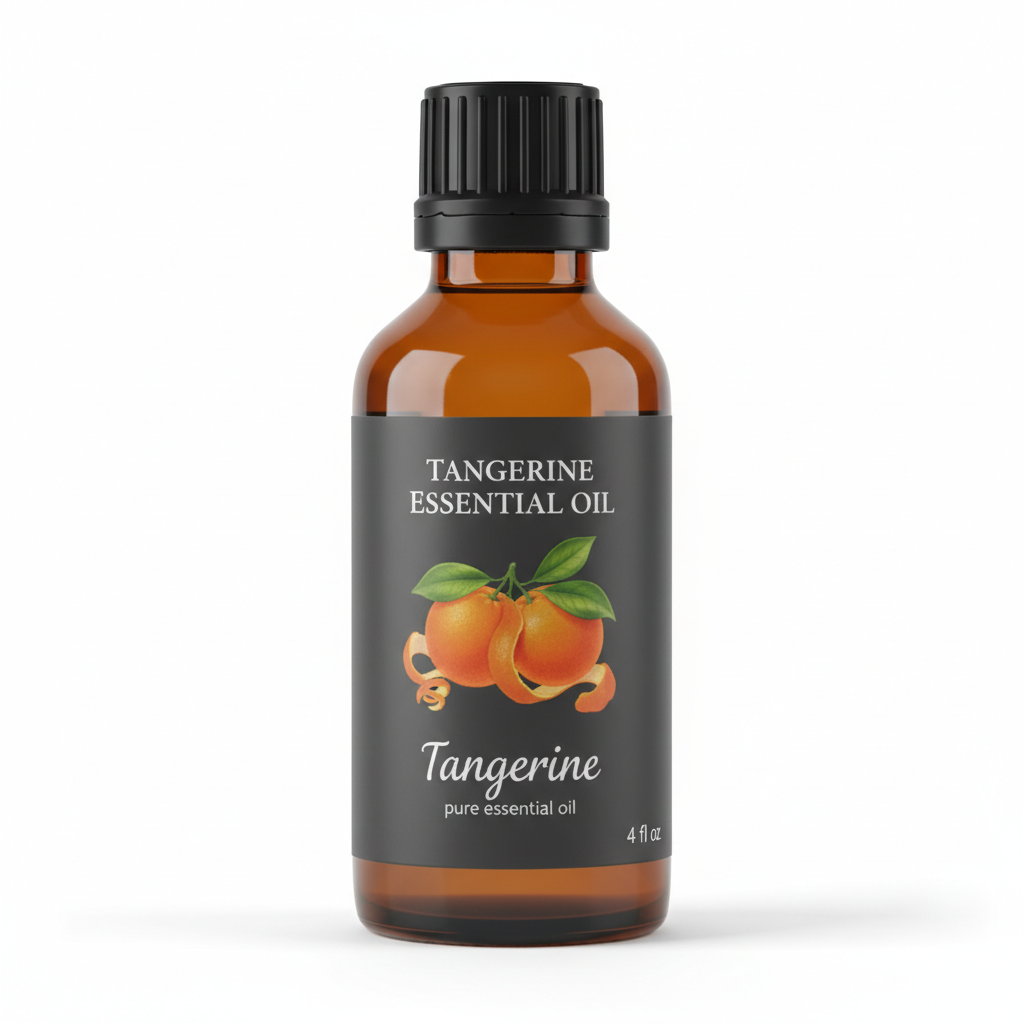
Tangerine Essential Oil
Our own Tangerine Essential Oil, in sizes from 0.5 oz to bulk.
From $12.99
Shop Now →Three jobs, three oils
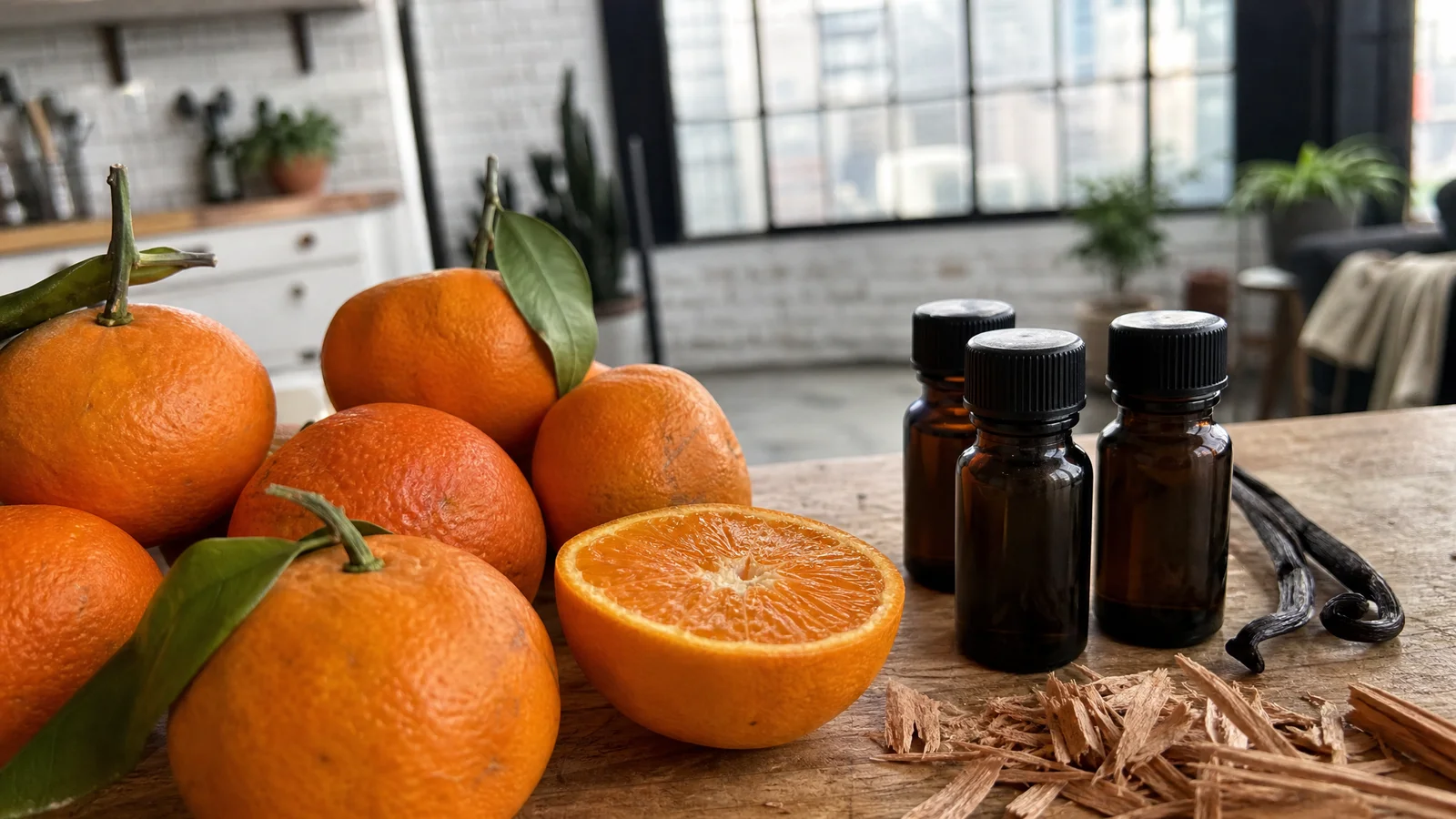
Perfumers describe scent as a timeline. Tangerine is a top note, which is why it greets you first and is also the first to leave; we say so on our shop page, and vanilla is one of the partners we list as blending well with it. Vanilla supplies the creamy, sweet middle that turns sharp citrus into something closer to an orange cream sweet. Cedar sits below both as the base, the part of the blend that is still there when the sparkle has gone.
That timeline is also the reason to build the blend backwards. Decide what you want to be smelling an hour in, which is the vanilla and the wood, and let tangerine be the lively first impression rather than the bulk of the mixture. Making it louder does not make it last longer; it only raises the share of the dose that is citrus.
Which cedar, which vanilla
Both names are looser than they sound. In a 2026 review of cedarwood oils, Setzer and Satyal point out that the true cedars belong to the genus Cedrus, while oils from juniper, cypress and other trees are also sold as "cedar". For Atlas cedar (Cedrus atlantica), their 48 commercial samples were dominated by a family of compounds called himachalenes, which gives the oil its soft, dry, woody character. So read the botanical name on the label; that one line tells you which tree you are buying.
Vanilla is the same story. On a shelf it may be an alcohol extract, an oleoresin, an absolute, a CO2 extract or synthetic vanillin, and they do not all mix into oil the same way. For a blend that goes into a carrier oil, look for a vanilla product that says it is made to be blended with oils, and expect to find it at a craft or aromatherapy supplier, since vanilla and cedar are not oils we carry.
The sunrise blend, worked out by weight
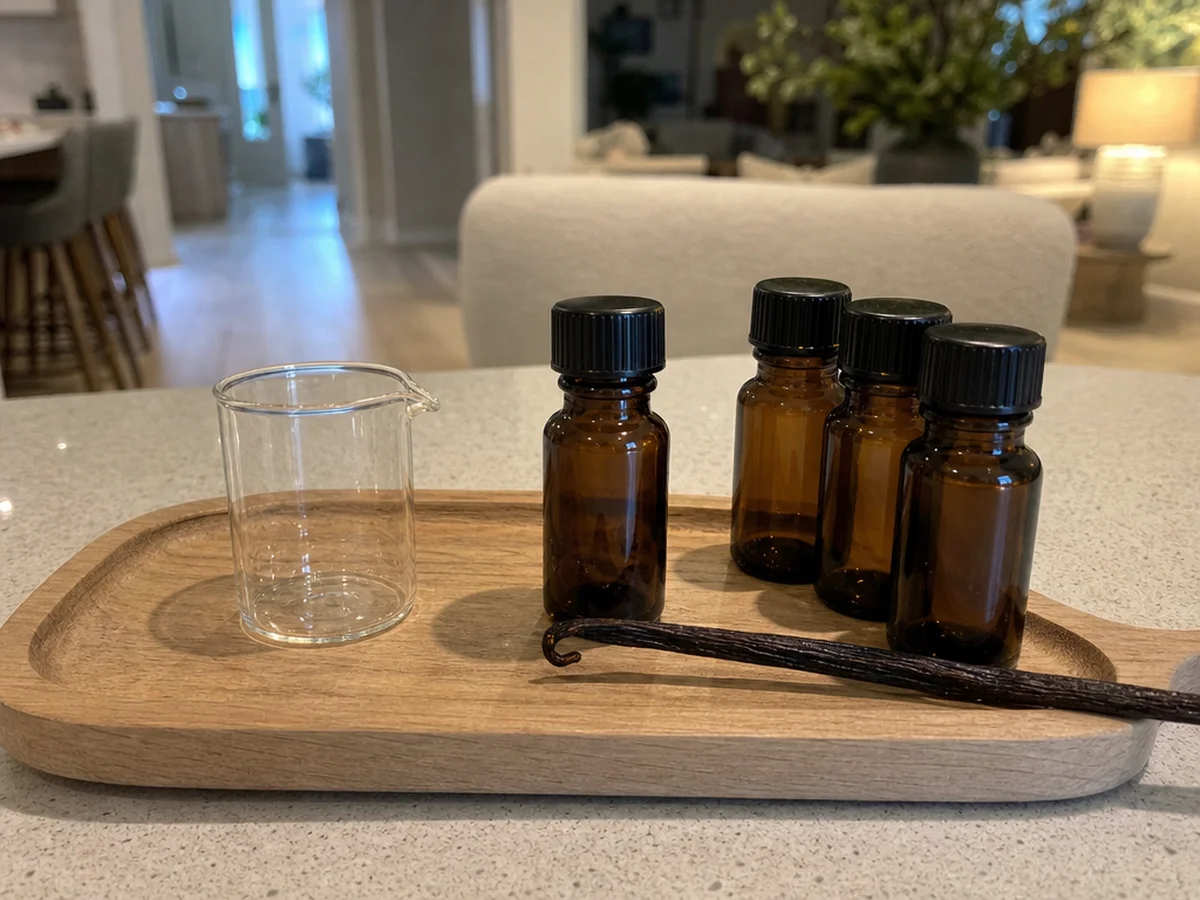
Here is a starting formulation, built from arithmetic rather than a tested batch. Take 30 g of carrier oil (about an ounce) and a total essential oil load of 1%, the middle of our 0.5% to 2% guidance for skin. That is 0.30 g of oil altogether. Split it 3 : 1 : 1 by weight:
| Oil | Parts | Weight in 30 g of carrier |
|---|---|---|
| Tangerine | 3 | 0.18 g |
| Vanilla (oil-blendable) | 1 | 0.06 g |
| Atlas cedar | 1 | 0.06 g |
Those are tiny amounts, and this is where drops let you down. The Tisserand Institute reports that drops per millilitre vary from about 20 to 40 between droppers, so a recipe written in fractions of a drop cannot be followed. Two easy fixes: weigh the oils on a scale that reads to a hundredth of a gram, or scale up to 100 g of carrier, where the same ratio becomes 0.6 g tangerine, 0.2 g vanilla and 0.2 g cedar. Either way, the whole blend counts as one dose, not three separate ones, so keep the combined total inside the range you chose.
Smelling it as it unfolds
Make the blend, then give it a day in the bottle before you judge it. Smell it on a tissue first, then on your wrist, and come back to it after ten minutes, an hour and the end of the day. You are listening for the order of the story: the bright tangerine first, the creamy vanilla in the middle and the dry wood underneath. If the tangerine is shouting, use a little less next time. If the wood is hiding, raise it by a tiny amount, and write each change down.
We love blends like this because they teach you how a scent is built. Even if you never make this exact one, the habit of weighing and writing it down carries over to every blend you try afterwards.
Wearing it and keeping it
Vanilla's skin story is a quiet one. A 2026 review by Lis describes reactions to vanilla and vanillin as rare but probably underestimated, with much of the older evidence thin. That is simply a good reason to do what we recommend with any new blend: patch test first, using the steps in how to dilute tangerine oil. We also advise keeping sun off freshly applied areas, because cold-pressed citrus oils can heighten skin's sensitivity to sunlight. The safety checks for the partner oils belong with the supplier, whose paperwork covers that particular cedar and vanilla.
Because the tangerine is the part that fades, make small batches and keep them capped and cool; our notes are in how to store tangerine oil. If you enjoy the idea of a bright oil with a warm anchor, tangerine oil blends walks through more partners, and how to blend essential oils by notes explains the top, middle and base logic in more depth.
A blend like this is a pleasure to tinker with. Start small, write the weights on the bottle, and adjust one part at a time until the first minute and the last minute both smell the way you hoped.
Tangerine Essential Oil
Tangerine Essential Oil from our own shop, in sizes from 0.5 oz to bulk.
From $12.99
Shop Now →